Quick Info
- 📍 Area: Busan, South Korea
- 🕒 Best time: Spring (Apr–Jun) and fall (Sep–Nov); clear views for the open-top deck
- 💰 Budget: Mid-range: pass + attraction fees + snacks (expect extra costs beyond the pass)
- 🚇 Getting there: Hop-on hop-off open-top bus with loop routes; combine with subway/taxi for gaps
- 👥 Best for: First-time visitors, short stays (1–2 days), families, travelers who want easy landmark hopping
- ✅ TL;DR: Choose a route based on your must-see stops, buy the right-day pass, start early, and plan hop-off times so you don’t miss the next loop.
Before you dive in
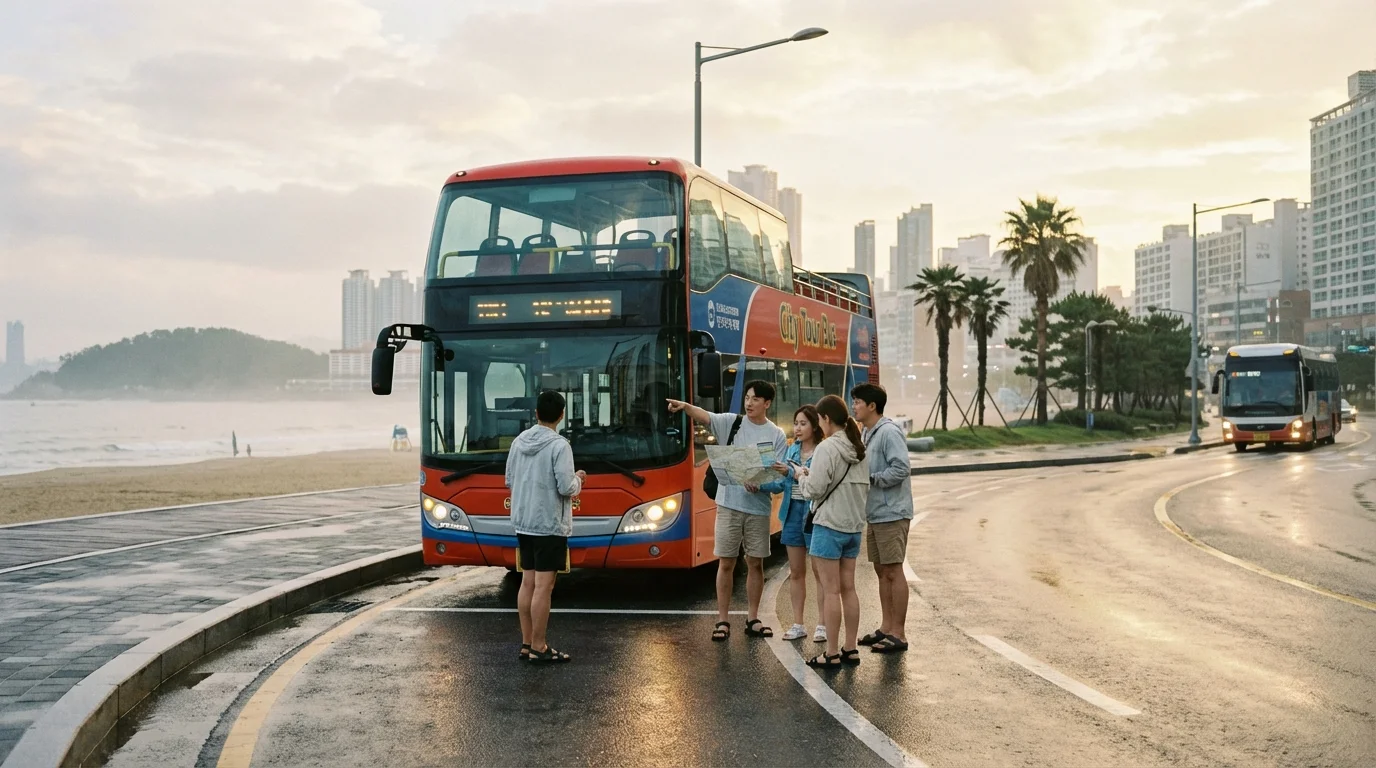
If any part of this guide feels useful, take 10 seconds to bookmark it.
Quick Info
- 📍 Area: Busan, South Korea
- 🕒 Best time: Spring (Apr–Jun) and fall (Sep–Nov); clear views for the open-top deck
- 💰 Budget: Mid-range: pass + attraction fees + snacks (expect extra costs beyond the pass)
- 🚇 Getting there: Hop-on hop-off open-top bus with loop routes; combine with subway/taxi for gaps
- 👥 Best for: First-time visitors, short stays (1–2 days), families, travelers who want easy landmark hopping
- ✅ TL;DR: Choose a route based on your must-see stops, buy the right-day pass, start early, and plan hop-off times so you don’t miss the next loop.
Before you dive in
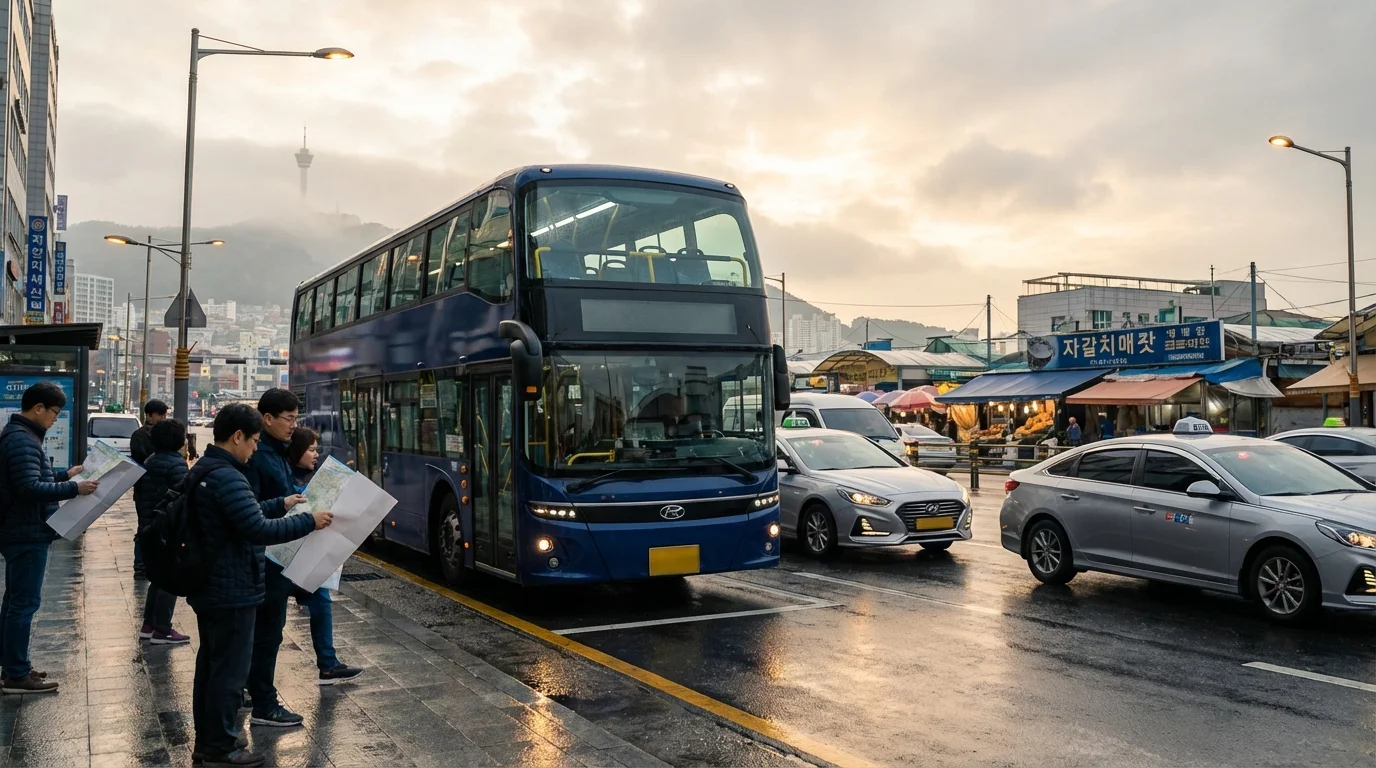
If any part of this guide feels useful, take 10 seconds to bookmark it.
Busan is a city that rewards curiosity—beaches, cliffside temples, street markets, colorful hillside neighborhoods, and waterfront views that look different every hour of the day. The catch is distance: many of Busan’s “must-sees” are spread out, and first-time visitors often lose time juggling subway transfers, bus apps, and walking routes.
That’s exactly why the Busan City Tour Bus is so popular. It’s designed for travelers who want to cover major sights efficiently without turning their day into a logistics exercise. With Hop-on Hop-off flexibility, multi-language audio guides (including English), and the fun factor of an open-top double-decker experience, it’s a practical (and surprisingly scenic) way to move around.
This guide focuses on two things you actually need to decide: (1) pass prices and which pass is cheaper for your schedule, and (2) which route best matches your must-see list. I’ll also cover real-world tips (seating, timing, weather), plus common regrets you can avoid.
Complete Guide to 부산 시티투어버스 패스 가격 정리 + 노선 비교
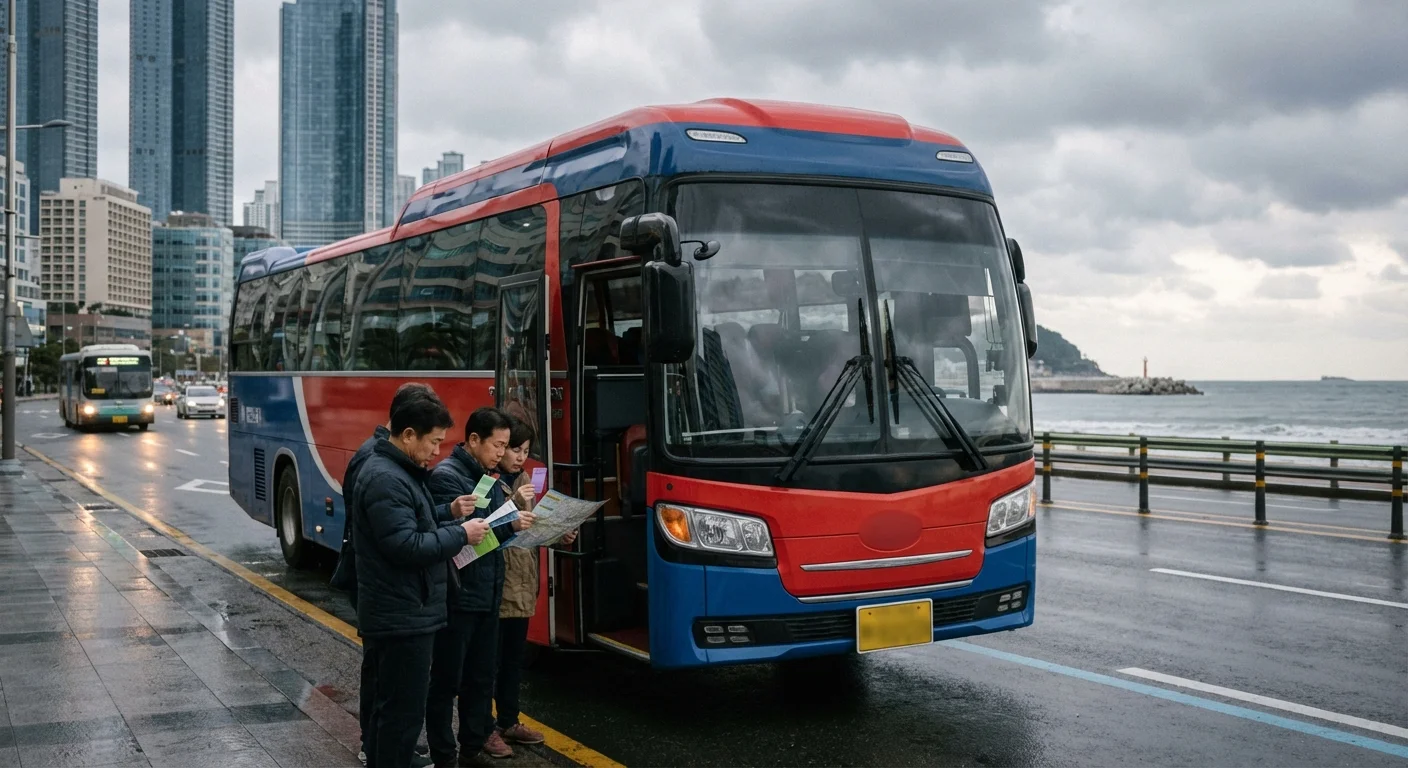
If you’re searching in Korean—“부산 시티투어버스 패스 가격 정리 + 노선 비교”—you’re probably trying to answer one of these:
- Is the Busan City Tour Bus worth it vs public transportation?
- Should I get a 1-day pass or 2-day pass?
- Which route includes my top attractions (temple / markets / beach / village)?
- How do I avoid sold-out times, long waits, or missing the last loop?
Here’s the core idea: the Busan City Tour Bus shines when you want to visit multiple spread-out areas in one day (or across two days) and you don’t want to constantly re-route. You’re trading a bit of “local commuting realism” for simplicity and coverage—especially helpful if you’re short on time, traveling with family, or simply want a lower-stress day.
What it is (in practical terms):
- A city sightseeing bus that circulates major attractions on set routes
- Hop-on Hop-off boarding at stops (you can get off, explore, and re-board later)
- Open-top double-decker seating on many services (great views, but weather-dependent)
- Audio guide support in multiple languages, including English (helpful for context and navigation)
- App-based tools often available for booking and real-time route checking (exact features can change—always confirm before your trip)
Decision shortcut:
- If your “must-see” list is clustered within one area and you love subways, you might skip it.
- If your list spans temples + markets + beaches + cultural villages, the tour bus can save time and mental energy.
Soft planning CTA: before you lock your itinerary, check current route maps and the day’s first/last bus times (these vary by season and operations).
Busan City Tour Bus Pass Prices (1-Day vs 2-Day) and Discount Notes
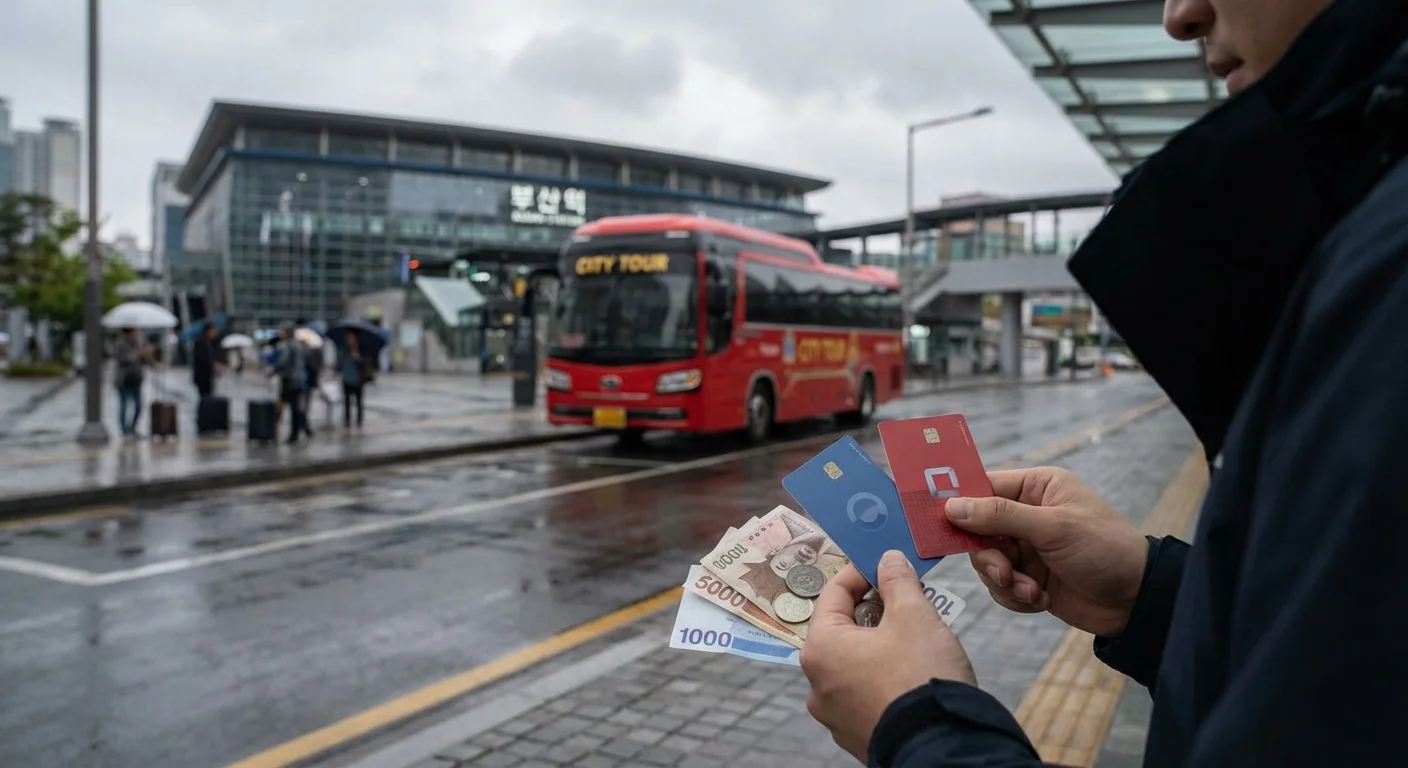
Typical pass structure (what you’re choosing between)
Most travelers are deciding between:
- 1-day pass (best for a single packed day)
- 2-day pass (best if you want a slower pace, or want to split east/west sights)
Based on the research summary, the most commonly referenced pricing is:
- 1-day pass: around ₩20,000 (supported by the summary)
- 2-day pass: around ₩25,000 (supported by the summary)
To follow smart budgeting practice and avoid outdated info, treat these as a typical range as of 2026/2027, and check current prices before booking (seasonal promotions and policy updates do happen).
Which option is cheaper for your trip?
In many cities, the “2-day pass” is not double the cost—and that’s the appeal. With the figures above, the upgrade from 1-day to 2-day is often a relatively small jump.
Use this rule:
- Choose 1-day if you can realistically hit your priority stops in one loop-heavy day and you don’t mind a faster pace.
- Choose 2-day if:
- you want to avoid rushing (especially if you plan to shop, take beach breaks, or linger at markets),
- you’re traveling with kids/parents,
- you want to hedge against weather (rain or wind can make open-top seating less enjoyable),
- you expect weekend crowds and slower boarding.
Discount notes (who should ask at purchase)
The research summary notes that discounts may apply for:
- Seniors
- People with disabilities
- Children
Discount eligibility can require ID or documentation, and the definition of “child” can vary by operator. If you’re traveling as a family, it’s worth checking current requirements and comparing the final total at checkout.
Where to book (and why it matters)
Because popular departure times can fill up, especially on weekends and peak seasons, you’ll generally want to:
- Compare deals and booking options in advance (official channels, major ticketing platforms, or approved resellers)
- Prefer options that clearly show:
- what routes are included,
- pass validity (calendar day vs 24/48 hours),
- first/last bus times,
- refund/change policies.
If your schedule is tight, book early and treat the pass like a timed experience rather than “I’ll figure it out later.”
Route Comparison: Major Loops, Key Stops, and Who Each Route Fits
Busan’s tour bus routes are designed to connect signature sights. The research summary highlights two example routes and key stops. Operators sometimes rename or tweak routes, but the logic usually stays consistent: one loop leans toward certain landmark clusters, while another covers different neighborhoods and coastal views.
Also noted in the research summary: buses can run at about 15–20 minute intervals (service frequency can vary by season and traffic, so always confirm day-of using the app or stop signage).
Route 1 (high-level vibe: iconic highlights + classic Busan mix)
Key stops mentioned:
- Haedong Yonggungsa (해동용궁사) – famous seaside temple views
- Gwangbok-ro (광복로) – shopping street energy
- Jagalchi Market (자갈치시장) – classic seafood market culture
- Haeundae Beach (해운대해수욕장) – Busan’s most famous beach area
- Dongbaekseom (동백섬) – coastal walk + scenery
Best for:
- First-timers who want a “postcard Busan” day
- Travelers who want markets + beach + a major temple in one route
- People who like a balance of urban streets and coast
Potential downside:
- If you try to do everything in one day, you can end up rushing (especially if you want a long temple visit plus beach time).
Route 2 (high-level vibe: coast-to-culture + photo spots)
Key stops mentioned:
- Dadaepo (다대포) – waterfront sunset vibes (often less central)
- Gamcheon Culture Village (감천문화마을) – colorful hillside lanes and views
- Busan Tower (부산타워) – city viewpoint, central sightseeing
- National Maritime Museum (국립해양박물관) – maritime-focused exhibits
- Haeundae Beach (해운대해수욕장) – major beach hub
- Gwangandaegyo Bridge (광안대교) – iconic bridge views (especially at night)
Best for:
- Travelers prioritizing photography and scenery variety
- Visitors who want Gamcheon without managing multiple public transport transfers
- Families who want a museum option in the mix
- Anyone who wants bridge views as a highlight
Potential downside:
- This can be a bigger “coverage” day—distance plus traffic can influence timing.
How to choose the right route (simple decision tool)
Ask yourself what you care about most:
- Temple + classic market culture + Haeundae?
Start with Route 1. - Gamcheon + bridge views + museum options?
Start with Route 2. - You only have one day and want the most “headline” sights?
Pick the route that includes your top 2 priorities and commit—trying to “switch everything” can backfire. - You have two days?
Consider doing Route 1 on Day 1 and Route 2 on Day 2 to avoid a frantic pace.
Soft CTA: before choosing, check current route maps and confirm that the stop names match your must-see list (operators sometimes adjust stops seasonally or due to road conditions).
Sample 1-Day Itineraries Using Hop-on Hop-off (Fast vs Relaxed)
Hop-on Hop-off is powerful when you use it intentionally. The mistake is treating it like a guided tour with rigid timing—or, the opposite, getting off everywhere and then realizing you missed the last convenient bus back.
Below are two 1-day styles you can copy. They’re written to help you decide how many stops to hop off at and where you should linger.
Option A: Fast “Highlights Collector” Day (2–3 major hop-offs)
Who it’s for:
- Short stays (one full day in Busan)
- People who prefer photos + signature sights over long meals/shopping
Sample flow (choose a route that matches your priorities):
- Start early at a major starting point so you have maximum flexibility.
- Hop-off #1: Haedong Yonggungsa OR Gamcheon Culture Village
Pick one “big ticket” stop that’s hardest to reach by subway alone. - Hop-off #2: Jagalchi Market OR Gwangbok-ro
Eat something quick, walk, shop, get the atmosphere. - Hop-off #3: Haeundae + Dongbaekseom OR Gwangandaegyo viewpoint area
End with coastline. If you want night views, time it so you’re in the right area before sunset.
How this saves you stress:
- You limit hop-offs, reducing the chance of missing the next bus and spiraling into timetable anxiety.
Option B: Relaxed “Taste + Stroll” Day (1–2 hop-offs + longer stays)
Who it’s for:
- Couples, families, and anyone who wants breaks
- Travelers sensitive to heat/cold who need indoor cafés or rest time
Sample flow:
- Late morning start (after rush hours and with warmer daylight in winter).
- Hop-off #1: Market + neighborhood wandering (Jagalchi/Gwangbok-ro area)
Take your time with food and browsing. - Ride-through scenic segments without hopping off repeatedly
The open-top view is part of the experience—let the bus do the work. - Hop-off #2: Beach/coastal walk (Haeundae/Dongbaekseom area)
Spend the afternoon walking and resting.
Why this works:
- You still see a lot from the bus, but you avoid turning your day into constant re-boarding.
Budget note (as of 2026/2027):
- If you’re debating value, compare your pass cost (typical ₩20,000–₩25,000 range, check current prices) against the “mental cost” of route planning plus the time you’d otherwise spend transferring.
Tips for First-Time Visitors: Seating, Timing, and App/Audio Guide Use
Seating strategy (open-top realities)
Open-top double-decker seating is a highlight—until it isn’t.
- Best views are usually upstairs, toward the front, but they fill quickly.
- If it’s windy or cold, the upper deck can feel much colder than expected (especially near the coast).
- If it’s sunny, you’ll want sun protection (more on this below).
If you’re traveling with someone who gets motion sickness, the lower deck can be more comfortable, and sitting mid-bus can help.
Timing strategy (don’t lose your day to waiting)
The research summary notes buses often run at 15–20 minute intervals, but traffic and seasonal demand matter.
To avoid frustration:
- Start earlier on weekends/peak season.
- Choose fewer hop-offs if you’re traveling on a tight schedule.
- Always keep a mental buffer so you’re not stuck far from your hotel at the end of service.
A practical rule: if you’re debating whether to hop off late in the day, check whether you can still comfortably complete your plan if you have to wait longer than expected.
App and real-time tracking (use it like a navigation tool)
If the operator provides an app for booking and real-time route checks:
- Use it to confirm next bus arrival estimates
- Double-check stop names (some stops have similar-sounding areas)
- Screenshot your pass or booking confirmation in case of weak signal
Even if you don’t love apps, having real-time arrival info can save you from “standing at a stop wondering if you missed it.”
Audio guide tips (get more than “background noise”)
Multi-language audio guides (including English) can be genuinely useful—if you treat them as:
- a quick context layer (what you’re passing),
- a confirmation tool (matching what you see to the stop),
- and a way to decide whether a stop is worth your limited time.
If you’re traveling with kids or parents, audio guides can keep everyone engaged during longer ride segments.
What to Know Before You Go: Weather, Crowds, and Seasonal Packing
Busan’s coast makes weather feel stronger than the forecast suggests. Open-top seating amplifies everything: sun, wind, mist, and temperature drops after sunset.
Summer (hot + bright)
The research summary recommends:
- Bring sunscreen for open-top rides.
Also consider:
- A hat with a brim (wind-resistant if possible)
- Sunglasses
- A light layer for indoor stops (AC can be intense)
If it’s extremely hot, plan at least one longer indoor stop (museum, café, department store area) so your day doesn’t become a heat endurance test.
Winter (wind-chill is real)
The research summary recommends:
- Dress warmly.
Also consider:
- Gloves and a scarf if you plan to sit upstairs
- Heat packs if you’re sensitive to cold
- A warm layer even if it looks “not that cold” on your weather app
Rainy days (still doable, but adjust expectations)
Open-top seating may be limited or uncomfortable. If rain is likely:
- Choose a 2-day pass if your schedule allows, so you can shift your open-top time to the better day.
- Build in indoor-heavy stops (museum or shopping streets).
Crowds and peak seasons (why pre-booking matters)
The research summary warns that on weekends and peak seasons, boarding at your preferred time can be difficult. That’s when:
- pre-booking becomes valuable,
- arriving earlier helps,
- and being flexible with your first route choice can save your day.
Soft CTA: if you’re traveling during school holidays, long weekends, or summer, compare deals and reserve ahead, then re-check timing the evening before.
Common Regrets to Avoid + Quick Checklist Before Boarding
Many Busan City Tour Bus “regrets” come from mismatched expectations rather than the service itself. Here’s how to avoid the classic mistakes mentioned in the research summary—plus a checklist you can use in your hotel room.
Regret #1: Not confirming your route includes your must-see
The research summary calls out route-checking failures as a common issue. Avoid it by:
- listing your top 3 stops,
- matching them to the route’s key stops,
- and confirming the current map (routes can change).
If your #1 attraction isn’t on the loop, don’t buy the pass hoping it will “still be close.”
Regret #2: Poor time management (missing the next bus)
Hop-on Hop-off only works if you manage your stop time.
Avoid it by:
- deciding in advance which stops are “quick look” vs “long visit”
- limiting long visits to 1–2 stops per day
- keeping buffer time for photo stops, queues, and snacks
Regret #3: Not booking ahead during busy periods
The research summary notes that popular times can be hard to board without reservations. If your trip dates are fixed and you’re traveling in peak season:
- book in advance when possible,
- and keep a screenshot of your confirmation.
Regret #4: Dressing for the street, not the open-top deck
Even on mild days, the coastal wind can surprise you. Pack layers and sun protection so the ride stays enjoyable.
Quick checklist before you board
- Pass type chosen: 1-day vs 2-day (decide based on pace and weather risk)
- Route confirmed: Route 1 vs Route 2 aligns with your top priorities
- Timing checked: first/last bus + approximate frequency (often 15–20 min, confirm day-of)
- Reservation status: booked if traveling on weekends/peak season
- Essentials packed:
- sunscreen (summer), warm layers (winter)
- water
- portable charger
- screenshot of ticket/QR
- Hop-off plan: 2–3 stops max for a fast day; 1–2 stops for a relaxed day
If you match the pass to your pace and pick the route that fits your must-sees, the Busan City Tour Bus can turn a “too spread out” city into an easy, scenic day you’ll actually enjoy from start to finish.
FAQ
Q: What’s the typical price for the Busan City Tour Bus pass?
Prices vary by ticket type and validity (commonly 1-day and 2-day options). Expect different rates for adults vs. children/seniors/eligible discounts.
Q: Which route is better: coastal spots like Haeundae or cultural areas like Gamcheon?
Pick the route that includes your priority stops. Coastal-focused loops suit beaches and skyline views; cultural-focused loops suit markets, old-town areas, and murals.
Q: How often do buses come, and how do I avoid long waits?
Intervals commonly fall around 15–20 minutes depending on season and traffic. Start earlier, avoid peak weekend midday, and check real-time info in the official app if available.
Q: Is the open-top second floor worth it in summer or winter?
Yes for views, but prepare: sunscreen/hat and water in summer; warm layers and wind protection in winter. Weather can change quickly near the coast.
Q: What are the most common mistakes first-timers make?
Not confirming the route includes their must-see attraction, misjudging time at each stop and missing the next bus, and traveling on peak days without checking crowd levels.
What you can do next
Pick just one action from this guide and do it today—small steps add up.