Quick Info
- 📍 Area: South Korea (Seoul, major cities; best selection at Olive Young & department stores)
- 🕒 Best time: Year-round; easiest shopping during seasonal sales (spring/fall) and duty-free promos
- 💰 Budget: Mid-range KRW 30,000–50,000; premium KRW 50,000–90,000+
- 🚇 Getting there: Subway to Olive Young flagships, malls, and department stores; online delivery widely available
- 👥 Best for: Travelers building a Korean base routine, office workers needing quick touch-ups, first-time K-beauty shoppers
- ✅ TL;DR: Choose cushion for portability and natural touch-ups; choose foundation for higher coverage and finish control (matte/glow). Match by skin type and keep tools clean.
Before you dive in
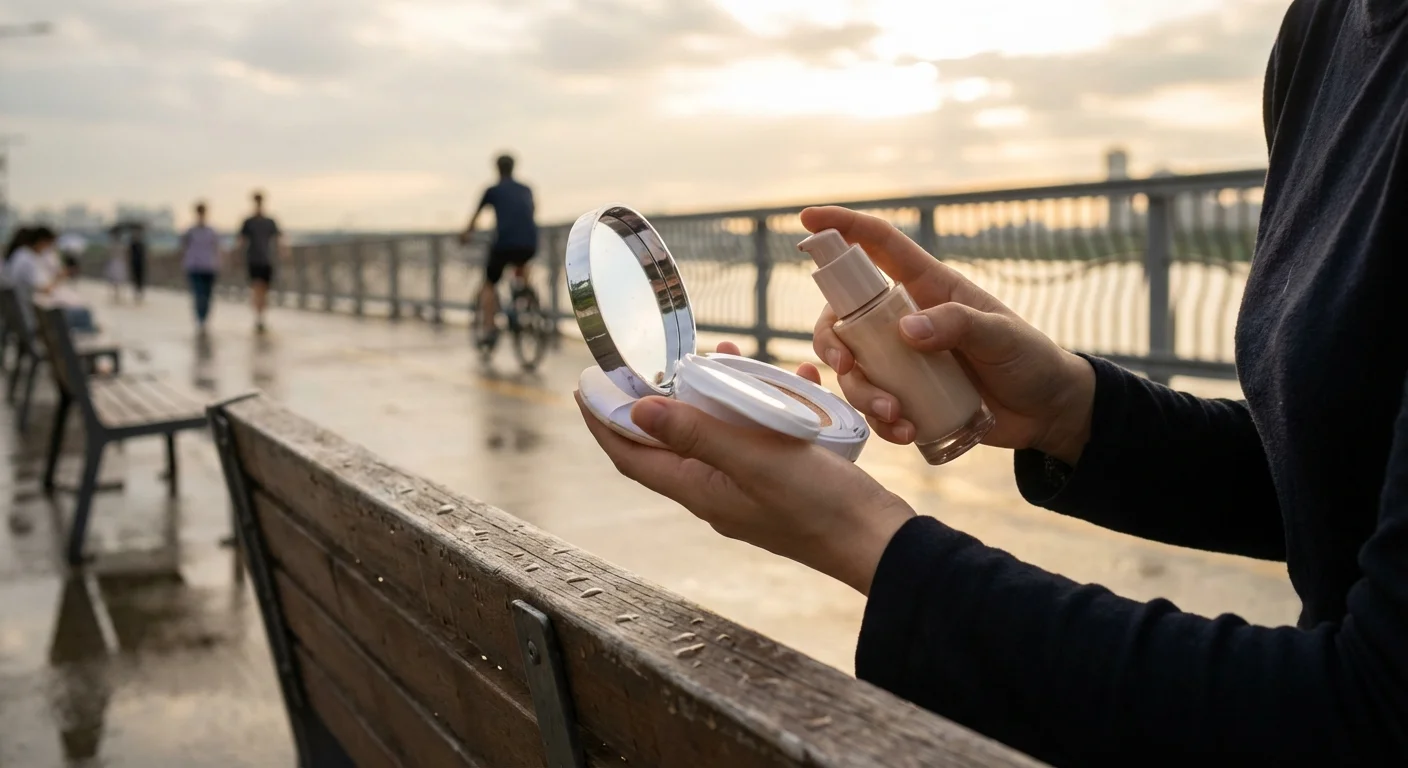
If any part of this guide feels useful, take 10 seconds to bookmark it.
Quick Info
- 📍 Area: South Korea (Seoul, major cities; best selection at Olive Young & department stores)
- 🕒 Best time: Year-round; easiest shopping during seasonal sales (spring/fall) and duty-free promos
- 💰 Budget: Mid-range KRW 30,000–50,000; premium KRW 50,000–90,000+
- 🚇 Getting there: Subway to Olive Young flagships, malls, and department stores; online delivery widely available
- 👥 Best for: Travelers building a Korean base routine, office workers needing quick touch-ups, first-time K-beauty shoppers
- ✅ TL;DR: Choose cushion for portability and natural touch-ups; choose foundation for higher coverage and finish control (matte/glow). Match by skin type and keep tools clean.
Before you dive in
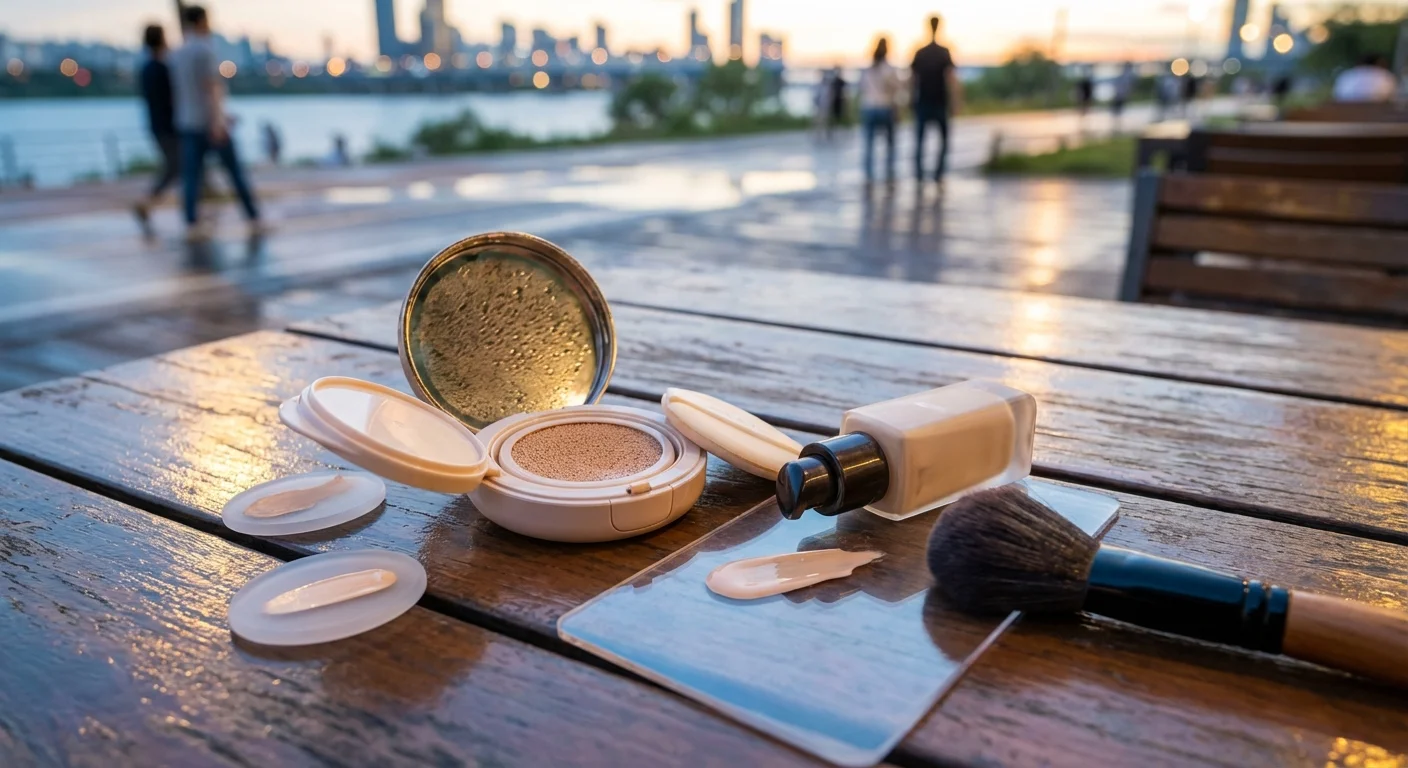
If any part of this guide feels useful, take 10 seconds to bookmark it.
Korean base makeup is famous for looking like skin, not a mask—smooth, even, softly lit, and believable up close. If you’ve ever stood in an Olive Young aisle (or scrolled a Korean beauty app at midnight) wondering whether you should buy a cushion or a foundation, you’re not alone. In Korea, both are everyday staples, but they’re used differently depending on lifestyle, skin type, and the exact “finish” you’re chasing: velvety matte, dewy glow, or that elusive semi-matte “blur” that still looks alive.
This guide compares cushion vs foundation through a very Korean lens—how people actually choose in 2026, where to buy in Korea, what price ranges to expect (including refills and sets), and how to apply either option for the modern “Korean skin” look. You’ll also find practical tips to avoid common tourist mistakes like buying the wrong undertone, skipping patch tests, or letting a cushion puff turn into a bacteria sponge.
Cushion vs Foundation: Key Differences in Korean Base Makeup
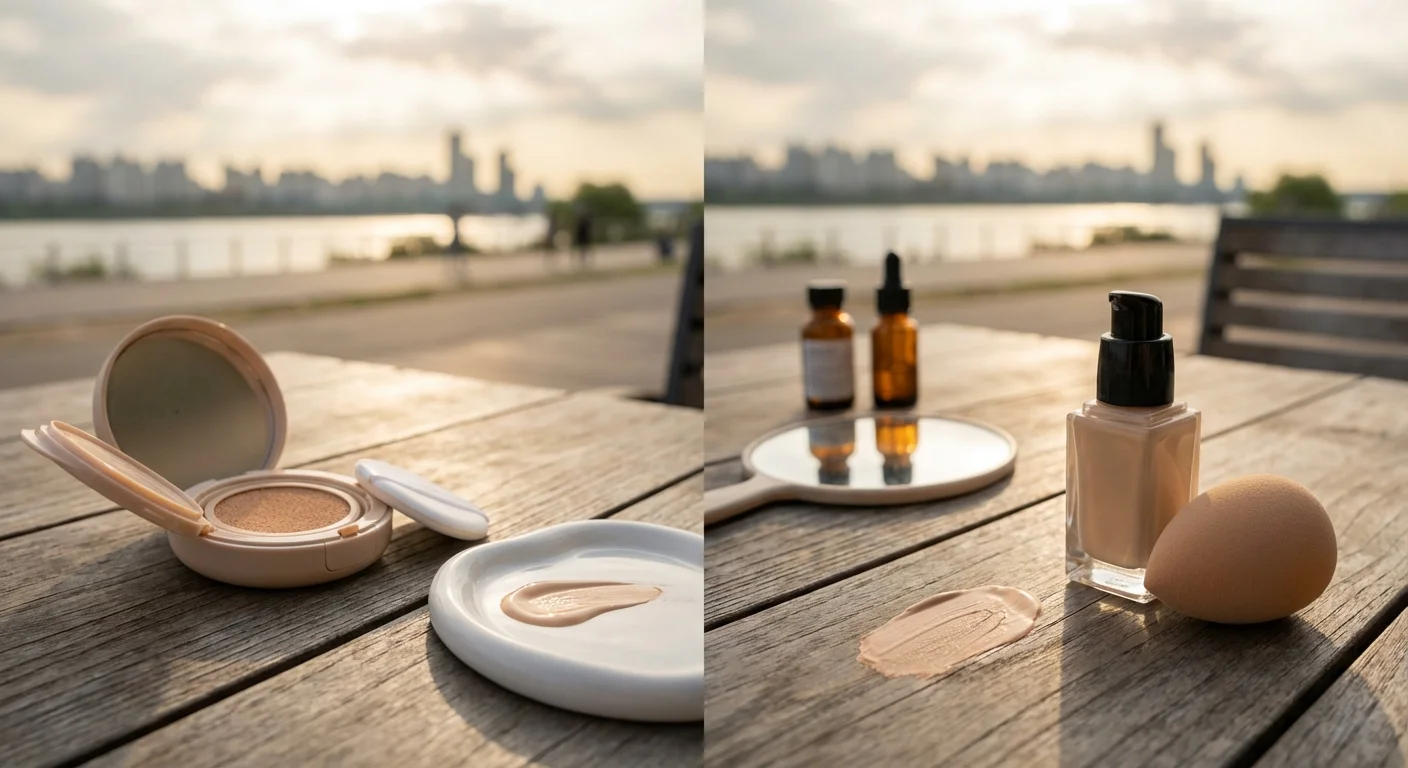
What a cushion is (and why Korea loves it)
A cushion is essentially a multi-function base product—often combining tinted base coverage with elements of sunscreen and primer—stored in a compact with a sponge reservoir and applied with a puff. Korea popularized cushions because they fit real daily routines: fast mornings, humid summers, and constant touch-ups between meetings, café stops, and subway transfers.
Cushion strengths (Korean everyday reality):
- Portability: It lives in your bag like a phone accessory.
- Speed: Easy, quick application (even in a taxi or office restroom).
- Natural finish: Many cushions excel at sheer-to-medium coverage that looks like healthy skin.
- Touch-ups are built-in: The puff and mirror make it designed for reapplication.
Cushion weaknesses (what travelers notice):
- Coverage ceiling: It can struggle with heavy hyperpigmentation, acne texture, or dramatic evening makeup.
- Hygiene risk: You’re repeatedly pressing a puff onto your face and back into the compact.
- Shade range can be narrower: Some lines still prioritize a smaller set of shades.
- Longevity varies: In heat and humidity, you may need blotting and setting.
What foundation is (and why it still matters in Korea)
A foundation typically comes in liquid, cream, or stick form and is designed primarily for evening out tone and covering imperfections. In Korean routines, foundation is often chosen when you need stronger, more controlled coverage or longer wear—think events, filming, weddings, or days when you want your base to look perfect from morning to late night.
Foundation strengths:
- Higher and more customizable coverage: You can sheer it out or build it up.
- Finish variety: More options across matte, satin, and glow.
- Better control over longevity: Especially with long-wear formulas + setting techniques.
- More tool flexibility: Brush, sponge, fingers—each changes the result.
Foundation weaknesses:
- Less convenient for on-the-go touch-ups: Carrying a bottle + tool isn’t as effortless.
- Higher learning curve: Application technique matters more.
- Can look heavy if over-applied: Especially if you’re chasing a natural Korean skin look.
The simplest way to decide
If you want fast, portable, natural: start with a cushion.
If you want coverage control, long wear, special-occasion polish: choose foundation.
And in Korea, many people don’t choose one—they use foundation at home and keep a cushion for touch-ups.
How Koreans Choose: Skin Type, Coverage, and Finish (Matte vs Glow)
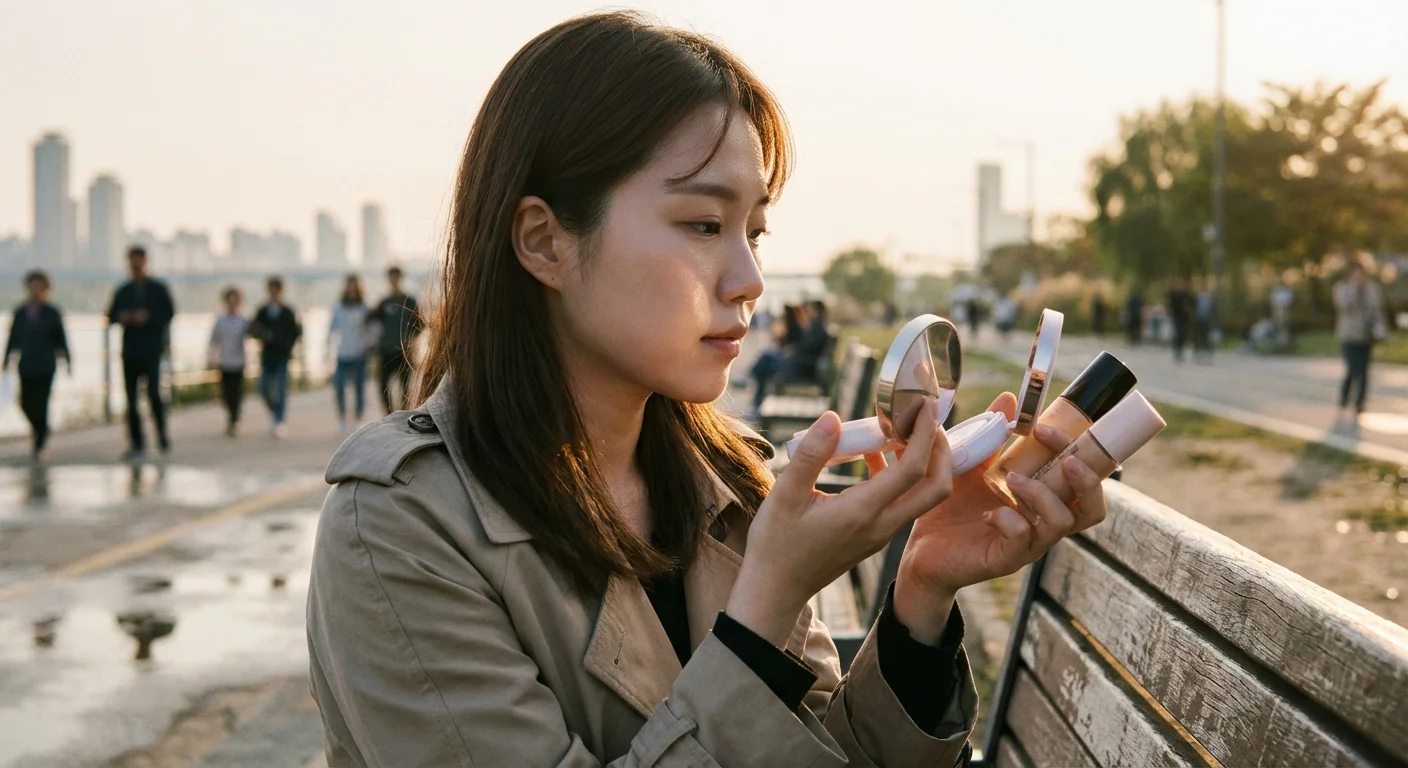
Korean makeup shopping is surprisingly practical. The choice often starts with skin behavior (oil, dryness, sensitivity) and the finish you want on camera and in daylight.
Skin type: what works best in practice
Oily / combination skin
- What Koreans tend to do: choose matte or semi-matte bases with oil control.
- Best match: long-wear matte foundation for full days; oil-control cushion for quick application.
- Watch-outs: dewy cushions can slip around the T-zone and separate around the nose by afternoon.
Dry / dehydrated skin
- What Koreans tend to do: prioritize hydration and glow, but control texture.
- Best match: glow foundation with skincare-like feel; moisture cushion for comfortable wear.
- Watch-outs: overly matte formulas can emphasize dry patches and make “skin” look flat.
Sensitive / acne-prone skin
- What Koreans tend to do: keep base thin, focus on spot concealing, and maintain tool hygiene.
- Best match: either, but choose formulas that sit comfortably and don’t require heavy layers.
- Watch-outs: repeated cushion-puff contact can aggravate breakouts if you don’t clean it often.
Coverage: “natural” doesn’t mean “no coverage”
In Korea, the modern trend is thin layers with strategic concealer. Even when someone looks “full coverage,” the base is often lighter than you’d expect.
- If you need to cover redness + minor unevenness: a cushion can be enough.
- If you need to cover dark spots, acne marks, strong discoloration: foundation + spot concealer is usually easier and more natural than piling on cushion layers.
Finish: matte vs glow (and what looks most Korean in 2026)
Matte (or soft matte)
- Looks clean, polished, and holds up in humidity.
- Great for oily skin and long commutes.
- To keep it “Korean,” avoid chalky heaviness: go for thin, blurred, semi-matte rather than flat matte.
Glow (dewy, radiant, “water” glow)
- The signature K-beauty vibe when done right.
- Best with good prep: hydration + thin layers.
- The trick is controlled glow—radiance on cheeks and high points, not oiliness everywhere.
Most common Korean compromise: semi-matte base + targeted glow (highlighter or luminous skincare underbase only where needed).
Where to Buy Cushion vs Foundation in Korea
Where you buy matters because it affects shade matching, return policies, refill availability, and whether you can compare sets or limited editions. Here are the most practical options for travelers and expats.
Olive Young (offline + online)
- Best for: quick browsing, trending releases, minis, gift sets.
- Why it’s good for decision-making: you can compare textures and finishes across many brands in one stop.
- What to avoid: impulse-buying a cushion without checking undertone—store lighting can be flattering but misleading.
- Tip: if you’re traveling, ask staff for help finding your undertone (neutral vs warm vs cool) and test along the jawline.
Department stores & brand boutiques
- Best for: premium lines, professional shade matching, polished service.
- Why it’s good: better chance of finding a close shade match and getting samples.
- What to avoid: buying a premium foundation without checking how it wears for 2–4 hours (oxidation and dryness can show later).
- Tip: if you’re considering premium, compare deals like sets (often include minis) and ask about seasonal promotions—then check current prices before you commit.
Duty-free (airport / downtown duty-free)
- Best for: travelers planning ahead who already know their shade.
- Why it’s good: convenient for last-minute shopping.
- What to avoid: shade guessing at the airport. If it’s wrong, it’s a pricey mistake and returns can be complicated.
- Tip: if possible, test your shade earlier in the trip, then buy at duty-free later.
Road shops, supermarkets, and convenience “beauty corners”
- Best for: emergency replacements, budget-friendly basics, travel-friendly items.
- What to avoid: expecting a full shade range or the latest launches.
Korean e-commerce platforms
- Best for: wide inventory, refills, and comparing sets.
- Watch-outs: delivery timing (especially if you’re staying short-term) and return processes.
- Tip: if you’re staying in Korea for a few weeks, online is often where you’ll find refills and larger shade selections—just make sure your accommodation can receive packages.
Price Ranges & What to Expect (Mid-Range to Premium, Refills, Sets)
Prices vary by brand positioning, included features, and whether you’re buying a refill, a limited set, or a premium formula. To keep expectations realistic, here are typical price ranges as of 2026/2027—always check current prices since promotions are frequent.
Typical price ranges (as of 2026/2027)
Mid-range cushions and foundations: typically ₩30,000–50,000
Premium tier cushions and foundations: typically ₩50,000–90,000
These ranges align with common market pricing and the research summary that many mid-range products fall in the ₩30,000–50,000 band, while premium can reach ₩50,000–90,000.
Refills: the “Korean value” secret
Cushions often offer refills, which is one reason they’re popular. A compact might come with:
- Case + one cushion
- Case + cushion + refill
- Limited edition case + multiple refills
Refills can make cushions more economical over time, especially if:
- you reapply frequently,
- you want to keep a compact in multiple bags,
- you prefer the same formula year-round.
Decision tip: If you already love a cushion, buying a set with a refill often gives better value than buying a single unit repeatedly. Compare deals and check whether the case is reusable across refills.
Foundation value: more product control, fewer “extras”
Foundations don’t usually have refills in the same way, but you gain:
- more control over how much you dispense,
- less contamination risk compared to a repeatedly used puff,
- more versatility (you can mix shades or adjust finish with skincare).
Budget planning for travelers (as of 2026/2027)
- Budget travelers: plan roughly ₩30,000–50,000 for one solid mid-range base item.
- Mid-range shoppers: roughly ₩50,000–90,000 if you want one premium base or a cushion + refill set depending on promos.
- Treat-yourself/premium explorers: roughly ₩90,000+ if you’re building a mini wardrobe (foundation + cushion + setting product), depending on brands and sets.
Because sets and promotions change weekly, the best move is to shortlist 2–3 formulas, then compare deals in-store and online.
Best Cushion vs Foundation Recommendations (By Skin Type & Lifestyle)
Rather than naming dozens of specific products (and risking outdated info), this section focuses on what to buy based on your skin and schedule—exactly how many Koreans decide.
If you’re a busy traveler (walking 15,000 steps a day)
Pick: a cushion with a natural or semi-matte finish
Why: it’s the easiest way to refresh around the nose, chin, and under-eye area after mask-wearing, café hopping, and weather changes.
Avoid: extremely dewy cushions if you’ll be outdoors in humidity—glow can turn into shine in photos.
Smart add-on: blotting sheets or a compact powder for midday control.
If you work long hours (office + after-work plans)
Pick: long-wear foundation (semi-matte) + small touch-up item
Why: foundation tends to hold structure longer; you can spot-correct later with a tiny concealer or a thin cushion layer.
Avoid: applying thick layers in the morning—Korean long-wear looks usually come from thin layers + setting, not heavy coverage.
If you love the “glass skin” vibe (but want it to look real)
Pick: a glow cushion or glow foundation with skincare-friendly feel
Why: glow formulas give that Korean “lit from within” effect when applied thinly.
Avoid: chasing shine by layering too much. Controlled glow looks more expensive than a thick dewy layer.
Technique note: pair glow base with targeted setting (powder only where needed).
If you have oily skin and your base breaks down fast
Pick: matte / soft matte foundation for your main base
Why: better oil control and less need for constant reapplication.
Alternative: an oil-control cushion if you absolutely need portability, but expect touch-ups.
Avoid: overusing moisturizing primers under matte base—this can cause separation.
If you’re dry or dehydrated (tightness, flaking around nose)
Pick: hydrating glow foundation or moisture cushion
Why: cushions can feel comfortable and flexible; glow foundations can look smooth when skin is well-prepped.
Avoid: heavy setting powder everywhere. Set only the T-zone or areas that crease.
If you’re acne-prone or sensitive
Pick: whichever allows you to keep layers thin and tools clean
- Cushion can work if you wash or replace puffs frequently.
- Foundation can be better if you use a clean sponge/brush and avoid repeated compact contamination.
Avoid: ignoring patch tests. If you’re trying something new, test first and don’t commit right before a big event.
A Korea-specific note on best-selling cushions
Some premium “nude skin” cushions have strong popularity and market presence in Korea (the research summary notes a premium nude cushion line with notable market share). In practice, that category tends to focus on:
- natural finish,
- comfortable wear,
- believable skin texture rather than heavy coverage.
If that’s the look you want, shop by finish and comfort rather than coverage claims on the box.
How to Apply for the “Korean Skin” Look (Layering, Touch-Ups, Setting)
The Korean base look is less about the product and more about the method: thin layers, even texture, and strategic correction.
Step 1: Prep like skincare (because it is)
- Hydrate well (especially around cheeks and mouth).
- Let skincare sink in for a few minutes.
- If you’re oily, keep rich creams to a minimum on the T-zone.
What to avoid: applying base on top of slippery skincare that hasn’t absorbed—this often causes pilling and patchiness.
Step 2: Use thin layers (the #1 “Korean” rule)
With cushion:
- Press puff lightly, then tap onto skin.
- Start at the center of the face and work outward.
- Build only where needed (around nose, redness areas), not everywhere.
With foundation:
- Apply a small amount first (you can always add more).
- Use a damp sponge for the most “skin-like” finish, or a brush for more coverage.
- Tap to blend edges—especially around jawline and hairline.
Step 3: Spot conceal instead of over-layering base
For a natural Korean look:
- Keep base thin.
- Conceal only on dark spots, redness, and under-eye shadows.
- Blend edges so the correction disappears into the base.
This is often the difference between “pretty makeup” and “Korean skin.”
Step 4: Set strategically (not aggressively)
- If you’re oily: set the T-zone, sides of nose, and chin.
- If you’re dry: set minimally (or skip powder on cheeks).
- If you want glow: keep setting powder away from high points of cheeks.
What to avoid: powdering the entire face heavily, which can erase the fresh Korean finish and emphasize texture.
Touch-ups: the Korean way (especially with cushion)
- Blot oil first (don’t trap shine under new layers).
- If makeup has separated, gently smooth with a tissue.
- Tap a small amount of cushion only where needed.
If you’re wearing foundation, touch-ups can be:
- a thin cushion layer on top,
- concealer for spots,
- or a pressed powder for shine control.
Hygiene, Expiration, and Tool Care (Puffs, Brushes, Sponges)
This is the unglamorous section that saves skin—especially if you’re traveling, sweating, or using a cushion daily.
Puff care (cushion users)
- Wash puffs regularly (frequency depends on use; more often if acne-prone).
- Let them dry completely before putting them back into the compact.
- Consider keeping a spare puff so you’re not forced to use a damp one.
What to avoid: reusing a puff for weeks without cleaning. This can contribute to irritation and breakouts.
Brush and sponge care (foundation users)
- Clean brushes and sponges regularly; foundation buildup changes how it applies and can harbor bacteria.
- Replace sponges when they start tearing or holding stains/odor.
Expiration and “open-after” reality
Base makeup performance changes over time:
- old products can oxidize, separate, smell different, or apply unevenly.
- once opened, the usable period is often shorter than people think.
Best practice: check the product’s expiration/PAO marking and don’t hoard multiple open cushions at the same time.
Patch testing (especially if you’re buying in Korea as a tourist)
If you’re trying a new formula:
- patch test before committing to a full-face wear day.
- don’t test five new bases at once—if irritation happens, you won’t know the cause.
Travel hygiene tips
- Avoid sharing cushions (even with close friends).
- Keep tools in breathable pouches so they can dry.
- If you’re touching up outdoors, sanitize hands first when possible.
Choosing between cushion and foundation in Korea isn’t about which one is “better”—it’s about what fits your skin, your day, and the finish you want in real lighting. Start with the option that matches your lifestyle, shop smart by comparing sets and refills, and always check current prices as of 2026/2027 to make sure you’re getting the best value for your routine, and you’ll be much more likely to leave Korea with a base product you’ll genuinely enjoy using back home.
FAQ
Q: Where to buy cushion and foundation in Korea?
For the widest mainstream selection, shop Olive Young (online or in-store). For premium lines, visit department stores and brand boutiques. Duty-free shops may offer sets and promos for travelers.
Q: What prices should I expect for cushions vs foundations in Korea?
Common mid-range products run about KRW 30,000–50,000. Premium options often range KRW 50,000–90,000+. Refills can make cushions cheaper long-term if you repurchase often.
Q: Which is better for oily skin: cushion or foundation?
Oily skin usually does best with long-wear, matte foundations or oil-control cushions. Look for sebum-control/long-lasting claims and set lightly with powder, especially around the T-zone.
Q: Which is better for dry skin and a glow finish?
Dry skin often prefers moisturizing, glow foundations or dewy cushions. Prioritize hydrating ingredients and prep with moisturizer; avoid overly matte formulas that emphasize flakes.
Q: How do I choose shade and undertone in Korean base makeup?
Test on jaw/neck in daylight, and check oxidation after 10–20 minutes. Many Korean ranges lean lighter; consider mixing shades or choosing neutral/yellow-leaning options if you pull gray/pink.
Q: Do cushions go bad faster than foundations? Any hygiene tips?
Cushions can be more contamination-prone because the puff touches the product repeatedly. Wash puffs regularly, close the compact tightly, and follow the PAO/expiry guidance after opening.
What you can do next
Pick just one action from this guide and do it today—small steps add up.