
Quick Info
- 📍 Area: Incheon International Airport Terminal 1 or 2 to Seoul Station, with useful All-Stop connections at Hongik University, Gongdeok, Digital Media City, Magongnaru, and Gimpo Airport
- 🕒 Best time: Check the live timetable after landing; the Express Train runs less often than the All-Stop Train
- 💰 Budget: Official fares rechecked September 25, 2026—Express adult ticket listed at KRW 13,000; All-Stop to Seoul Station KRW 4,750 from T1 or KRW 5,350 from T2
- 🚇 Getting there: Follow Airport Railroad signs to the Transportation Center on B1 at either airport terminal
- 👥 Best for: Express for a reserved seat and direct Seoul Station ride; All-Stop for lower fares and intermediate Seoul connections
- ✅ TL;DR: Choose Express when Seoul Station and a guaranteed seat are worth the premium; choose All-Stop when Hongdae or another intermediate stop fits your hotel better.
AREX Express vs All-Stop at a Glance

AREX, short for Airport Railroad Express, operates two different rail services between Incheon International Airport and Seoul. They share the airport stations and tracks, but they are not interchangeable products. The Express Train runs nonstop between the airport terminals and Seoul Station with assigned seating. The All-Stop Train works like a metropolitan commuter train, stopping at intermediate stations and accepting ordinary transit fare media.
The operator’s fares and timetable were rechecked on September 25, 2026 against the official AREX Express service guide, AREX passenger transport rules and fare table, and Express timetable. The Korea Tourism Organization’s airport transportation guide provides the broader arrival context. Fares and schedules can change, so use those official pages again on travel day.
| Question | Express Train | All-Stop Train |
|---|---|---|
| Where does it stop? | Airport T2, Airport T1, and Seoul Station only | Every AREX station, including Hongik University, Gongdeok, Digital Media City, Magongnaru, and Gimpo Airport |
| Scheduled airport-to-Seoul time | About 43 minutes from T1; 51 minutes from T2 | About 59 minutes from T1; 66 minutes from T2 |
| Adult fare to Seoul Station | Official service page lists KRW 13,000; normal fare is shown as KRW 18,500 from T1 and KRW 19,100 from T2 | Official fare table lists KRW 4,750 from T1 and KRW 5,350 from T2 |
| Seating | Reserved seat | Open commuter seating; a seat is not guaranteed |
| Ticket type | Separate Express ticket for a specific train and seat | Transit card or compatible single-use fare ticket |
| Best destination fit | Seoul Station, nearby hotels, Line 1/4 transfers, or onward rail | Hongdae, Mapo/Gongdeok, western Seoul, Gimpo Airport, or any trip where an intermediate transfer is easier |
| Luggage experience | Dedicated storage and a quieter seated ride | Bring bags into the commuter carriage and keep control of them |
The fastest train is not automatically the fastest door-to-door choice. If your hotel is in Hongdae, the All-Stop Train reaches Hongik University Station directly. Taking the Express to Seoul Station and then backtracking can erase its onboard time advantage. If you are staying around Seoul Station or connecting to KTX, however, the Express gives you a simple nonstop ride and a reserved seat.
For a broader airport-transfer comparison, including road traffic and hotel-near bus stops, read our Incheon Airport limousine bus vs transit guide. The rail choice is usually more predictable than road transport, while the bus can be easier when its stop is close to your accommodation.
Tickets, Fares, and Where to Board
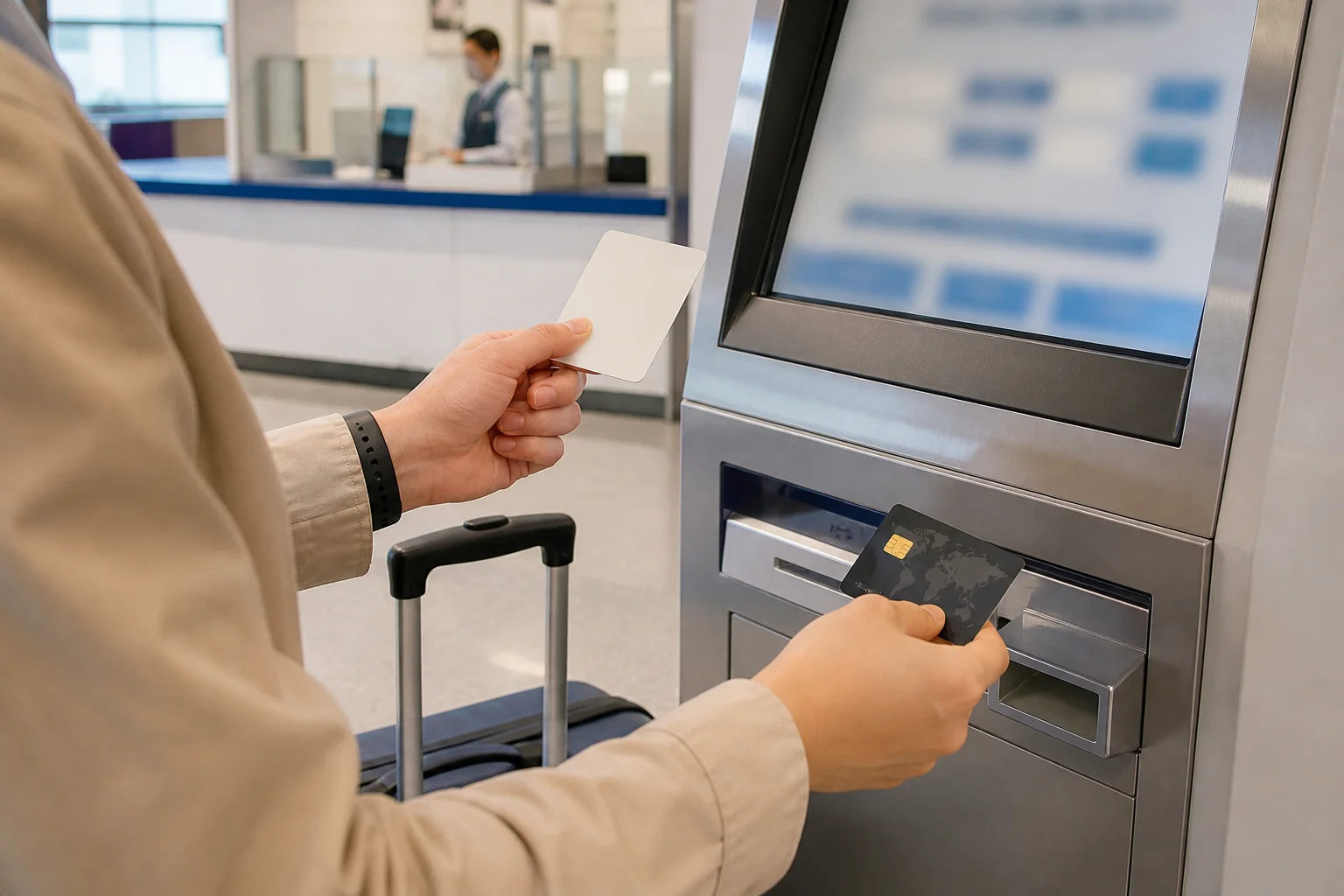
At both Terminal 1 and Terminal 2, follow signs for the Airport Railroad or Transportation Center after entering the public arrivals area. The Incheon Airport guide places the train facilities on B1 at both terminals, with ticket machines, a counter, and the rail entrances in the Transportation Center. Do not follow signs for the airside shuttle train used by connecting passengers; AREX is landside public transport into Seoul.
The two services have separate boarding gates and different tickets. Check the train type before entering, especially when you are tired after a flight.
Booking several parts of your trip at once? Use our seven Korea travel booking checks to compare the airport train with rail passes, SIM plans, tour inclusions and refund rules before paying.
Buying an Express Train ticket
The Express uses assigned seating. Tickets can be purchased through the official AREX channel or at an Express ticket machine or customer information center. The official service page identifies the Express customer centers at Seoul Station B2 and at the T1 and T2 Transportation Centers on B1.
Choose the terminal where you are physically standing, select a departure you can realistically reach, and keep enough time to walk to the platform. A flight’s arrival time is not the same as your train-ready time: immigration, baggage claim, customs, restroom stops, and finding the station all come first. A flexible traveler should check actual departures only after clearing arrivals instead of committing to an unrealistically tight train.
As of the September 25 check, AREX lists an adult Express fare of KRW 13,000 and a child fare of KRW 9,500. The same official page labels the normal adult fares as KRW 18,500 from T1 and KRW 19,100 from T2. Because the displayed selling fare can be revised or tied to the operator’s current pricing policy, treat KRW 13,000 as the official listed fare at this check—not a permanent promise. Confirm the amount before paying, and compare any third-party ticket against the official total and its change or refund conditions.
Optional: buying an Express ticket through Klook
Klook also sells the AREX Express, with app activation to select a departure and seat. Compare its final total with the official fare above. The Klook product terms, checked September 29, 2026, say the booking cannot be cancelled, refunded or changed. Confirm T1 or T2 and your direction before paying: Klook-activated tickets cannot be used at a different terminal. Travelers on one booking must activate together for the same departure; book separately if you will travel separately.
Use this option only if the Express fits your destination. It does not serve Hongdae or Gongdeok, and the All-Stop remains the cheaper rail choice. Check the voucher’s activation instructions before boarding.
Affiliate disclosure: The button below is a paid affiliate link. LoveKorea may earn a commission at no extra cost to you. How our links work.
Paying for the All-Stop Train
The All-Stop service accepts common metropolitan transit fare products. The KTO guide says travelers can use single-use cards, prepaid or postpaid transportation cards, and commuter passes. For most short-term visitors, a rechargeable transportation card is convenient because the same card can continue onto Seoul subway lines and buses.
The official AREX fare table checked for this article lists Seoul Station at KRW 4,750 from T1 and KRW 5,350 from T2. These figures reproduce the published fare table, not a quote for every fare medium. Check any single-use ticket surcharge and refundable deposit separately. Your final gate charge can reflect the fare product and any future metropolitan fare revision, so check the machine or route planner before entering. If you buy a single-use ticket, remember that a refundable deposit or separate ticket handling may apply; follow the machine’s instructions rather than assuming the card itself is free.
If this is your first Korean transit journey, save our Korean subway and bus phrase guide before landing. It includes practical language for asking about platforms, transfers, cards, and missed stops.
Travel Time, Timetables, Seats, and Luggage

The official scheduled journey is 43 minutes between T1 and Seoul Station and 51 minutes between T2 and Seoul Station on the Express. KTO lists the All-Stop journey at about 59 minutes from T1 and 66 minutes from T2. That makes the scheduled onboard difference roughly 16 minutes from T1 and 15 minutes from T2.
Waiting time matters just as much. The Express is less frequent, while All-Stop departures fill many more slots in the station timetable. If an All-Stop train is about to leave and the next Express requires a long wait, the cheaper train can reach Seoul first. Conversely, a conveniently timed Express can remove uncertainty and guarantee you a seat.
The current official Express timetable checked for this guide shows airport-to-Seoul departures broadly from early morning into late evening. It also shows Seoul Station-to-airport trains from 06:00 through 23:00, with roughly 30–50 minutes between many departures. Do not memorize those endpoints as a permanent schedule. AREX announced a full timetable revision effective December 29, 2025, which is a good reminder that saved screenshots and old blog tables age quickly. Recheck the official timetable on the day you travel. Neither service runs continuously overnight. Check the last train that reaches your destination, and arrange a night-bus, taxi or nearby-stay alternative if immigration and baggage may push you past it.
Which train handles luggage better?
The Express is the calmer choice with a large suitcase. It provides assigned seating and dedicated luggage storage, so you do not need to stand beside a bag through a commuter carriage. Keep valuables, travel documents, medication, and electronics in your personal item rather than leaving them out of sight.
If you have hours between checkout and your flight, compare subway lockers, staffed counters, and same-day airport delivery in our Seoul luggage storage guide before choosing a rail departure.
The All-Stop Train is still practical with ordinary luggage, but it is public transit. At commuter peaks, you may stand, move bags away from doors, and make room for other passengers. A carry-on roller is usually simpler than multiple full-size cases. If your party has children, a stroller, or several heavy bags, compare the reserved Express ride with a direct airport bus rather than looking only at fare.
On either service:
- Keep aisles, doors, wheelchair spaces, and priority seating clear.
- Lock the suitcase handle and keep loose straps from catching on other bags.
- Move toward the door before your stop without blocking passengers prematurely.
- Check the carriage and overhead area before leaving.
- Allow extra platform time if you need an elevator instead of an escalator.
Best Train by Seoul Destination
Choose by the address of your accommodation, not by the train name. Put the hotel into a Korean map app, identify the nearest station and exit, then compare total transfers and walking distance.
Seoul Station, Myeongdong, and onward KTX
The Express is strongest when Seoul Station is genuinely useful. It delivers you there without intermediate stops and gives you a reserved seat. From Seoul Station, Line 4 serves Myeongdong, while Line 1 and national rail connections serve other destinations. The station is large, however, and the airport platform sits deep underground. Budget time for corridors, elevators, gates, and finding the correct subway or rail concourse.
If your hotel is in Myeongdong, compare the complete route. An Express plus Line 4 transfer can work well with manageable luggage. A limousine bus stopping nearer your hotel may still involve less walking. Our Seoul hotel neighborhood guide helps match major areas with their transport tradeoffs.
For the destination-specific calculation, see Incheon Airport to Myeongdong: bus or AREX with luggage?. It compares Express plus Line 4 against the bus for one, two and four adults, with named Myeongdong stops and baggage limits.
Hongdae
Take the All-Stop Train to Hongik University Station in most cases. It is direct from both airport terminals, and riding past Hongdae to Seoul Station only to return west adds a transfer. Hongik University Station is also extensive, so check which exit is closest to the hotel and look for elevator symbols before hauling luggage through a long passage.
Gongdeok and Mapo
The All-Stop Train serves Gongdeok directly and can be the cleanest choice for hotels around Mapo. Gongdeok connects with other subway lines, but a direct exit near the accommodation is better than an unnecessary transfer at Seoul Station. Verify the station exit because some properties described as “Mapo” may be closer to a different stop.
Gangnam, Jamsil, or eastern Seoul
Neither AREX service goes directly to Gangnam or Jamsil. The best rail plan depends on the exact neighborhood and transfer tolerance. All-Stop connections at Gimpo Airport, Magongnaru, Digital Media City, Hongik University, or Gongdeok can be better than defaulting to Seoul Station. For a traveler with heavy luggage, a direct airport bus may beat a multi-line subway itinerary even when rail is cheaper.
Gimpo Airport or a domestic connection
Use the All-Stop Train to Gimpo Airport. The Express does not stop there. Leave a generous buffer for changing terminals, checking baggage, and finding the correct domestic departure area. A rail arrival time alone is never a safe flight-connection target.
Step-by-Step Arrival Plan
- Confirm your terminal before landing. Airlines can move, so use your current flight or airport information rather than an old itinerary note.
- Clear immigration, collect baggage, and pass customs. Do not book a departure that assumes an instant exit from the aircraft.
- Get connected if needed. Airport Wi-Fi can help, but arranging a SIM or eSIM before navigating Seoul reduces friction. See our Korea eSIM vs SIM airport pickup guide for the tradeoffs.
- Open the hotel location in a Korean map app. Check the nearest station, exit, elevators, and final walking distance.
- Compare the next real departures. Consider platform wait plus onboard time, not just “43 minutes” versus “59 minutes.”
- Buy the correct fare product. Express needs its own assigned-seat ticket; All-Stop uses a compatible transit or single-use ticket.
- Check the gate and platform label. Airport stations separate the two services. Ask staff before tapping through if anything is unclear.
- Secure luggage and keep valuables close. On the All-Stop train, prepare for ordinary commuter conditions.
- Recheck the final transfer before arrival. Seoul Station, Hongik University, and Gimpo Airport can require substantial walking.
If you also plan to shop before departure, bookmark the Korea tourist tax-refund guide. Keeping airport transport, baggage, and refund inspection in one departure plan prevents last-minute backtracking.
Departing from Seoul Station: City Airport Terminal
Travelers going from Seoul to Incheon Airport may have another reason to choose the Express. Incheon Airport’s official City Airport Terminal guide says the Seoul Station facility is available only to Express Train customers flying internationally that day, subject to participating-airline rules.
As rechecked September 25, 2026, the airport lists Seoul Station airline check-in and baggage service from 05:20 to 19:00, with check-in closing three hours before a Terminal 1 departure and three hours 20 minutes before a Terminal 2 departure. Departure immigration is listed from 05:30 to 19:00. Eligible travelers who complete the process can use the designated fast departure lane at Incheon Airport.
This service is for departure, not for someone who has just landed. Airline participation and operating rules can change, so verify eligibility before hauling bags to Seoul Station. The airport page itself tells travelers to confirm current details with the relevant airline, agency, or facility.
What You Can Do Next
Save your hotel’s Korean address, identify its nearest station and elevator-friendly exit, then compare the next Express and All-Stop departures after you land. That one door-to-door check—not the train’s marketing name—will tell you which AREX option fits your first night in Seoul.