2026 Complete Guide: Incheon Airport Limousine Bus Tickets vs T-money (Cost, Time, Convenience)
Quick Info
- 📍 Area: Incheon International Airport (ICN) → Seoul & Seoul Capital Area
- 🕒 Best time: Off-peak hours for faster trips; book ahead during holidays and summer/winter peak season
- 💰 Budget: T-money ~₩4,000 to central Seoul (plus card deposit ₩2,500–₩4,000); Limousine bus typically ~₩17,000–₩18,000+ depending on route
- 🚇 Getting there: Airport limousine bus (direct, luggage-friendly) vs subway/bus with T-money (cheaper, requires transfers)
- 👥 Best for: Limousine: families, heavy luggage, door-near-hotel stops; T-money: solo travelers, light luggage, budget travelers
- ✅ TL;DR: Choose limousine for comfort/directness; choose T-money transit for the lowest cost and flexible routing—especially if you can handle transfers.
Before you dive in
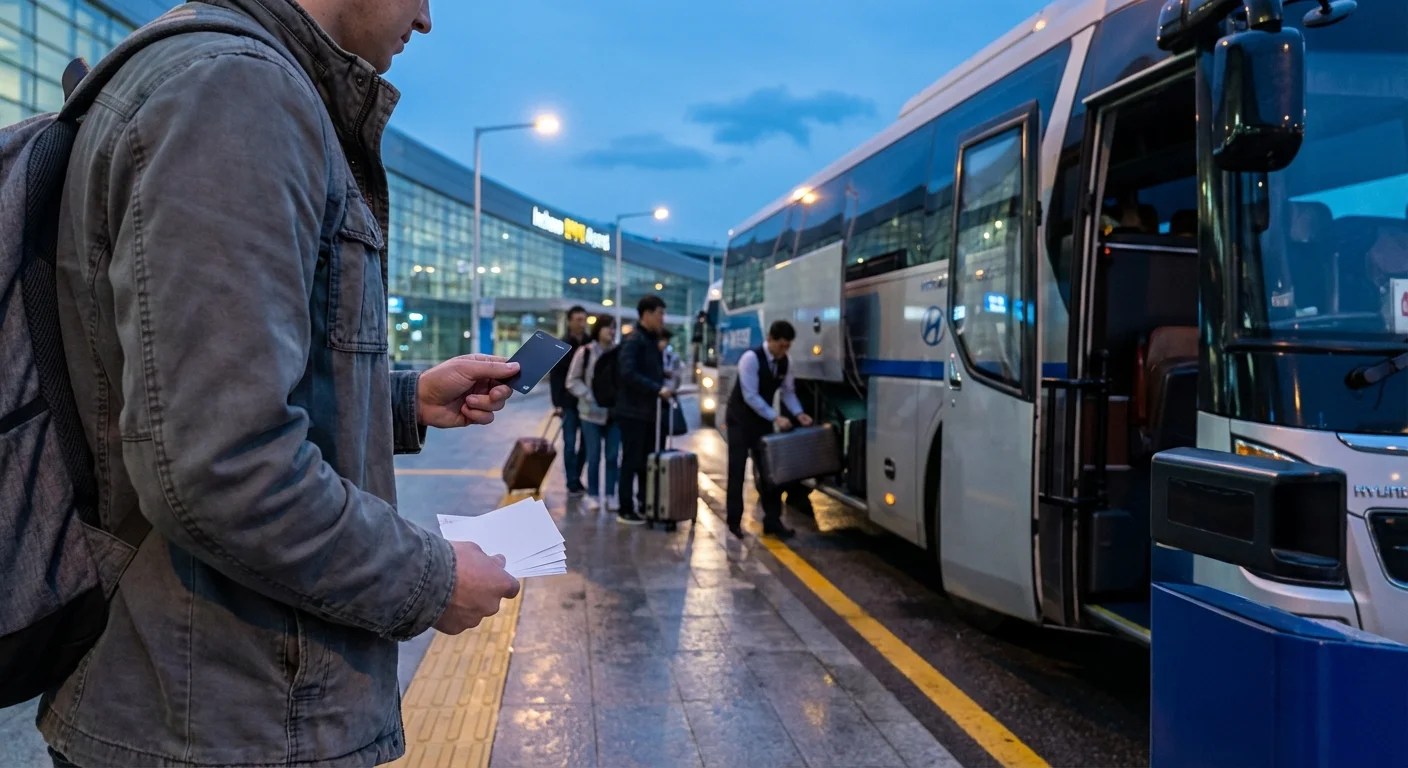
If any part of this guide feels useful, take 10 seconds to bookmark it.
Landing at Incheon International Airport (ICN) is exciting—until you’re standing in arrivals with a suitcase, low phone battery, and one big question: Should you take an Incheon Airport limousine bus (with a ticket) or use a T-money card and ride regular public transit (subway + city bus)?
Both choices are valid. The “best” option depends on where you’re staying, how much luggage you have, what time you arrive, and how much friction you can tolerate after a flight. This guide compares the two in a practical, decision-first way—so you can choose confidently and avoid the most common “I wish I’d done the other one” regrets.
Complete Guide to 인천공항 리무진버스 티켓 구매 vs T-money 비교
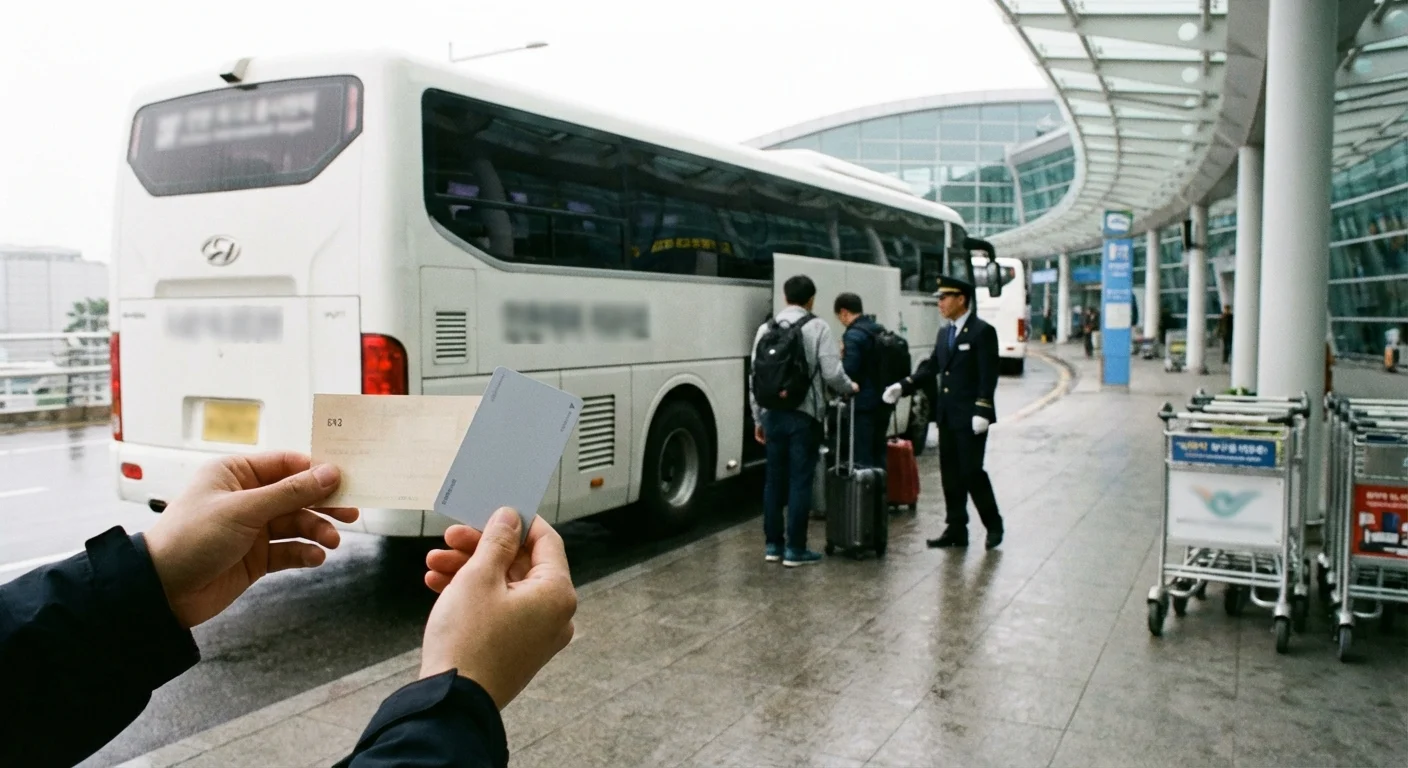
Let’s define the two options in plain terms:
Option A: Incheon Airport Limousine Bus (ticketed airport bus)
The airport limousine bus is a direct (or mostly direct) coach-style bus that connects Incheon Airport to major neighborhoods and hubs across Seoul and the greater metro area. Many routes offer reserved seating and have under-bus luggage storage, which can be a huge quality-of-life upgrade after a long-haul flight.
What you’re “buying” with the ticket: fewer transfers, a seat, and simpler luggage handling.
Option B: T-money + regular public transit (subway/bus)
T-money is Korea’s rechargeable transit card used on subways, city buses, and more across Seoul and the 수도권 (greater metro area). Using T-money from the airport usually means some combination of airport rail/subway + transfers + walking, depending on your final destination.
What you’re “buying” with T-money: lower cost, flexibility, and frequent service—but you may pay with more complexity and more walking.
Quick decision snapshot (for most travelers)
- Choose limousine bus if you value: ease, luggage comfort, fewer transfers, guaranteed seat (when available).
- Choose T-money transit if you value: saving money, flexibility, frequent departures, and you’re okay with navigating stations and transfers.
Cost Comparison: Limousine Bus Fares vs T-money Transit (Realistic Budget Examples)
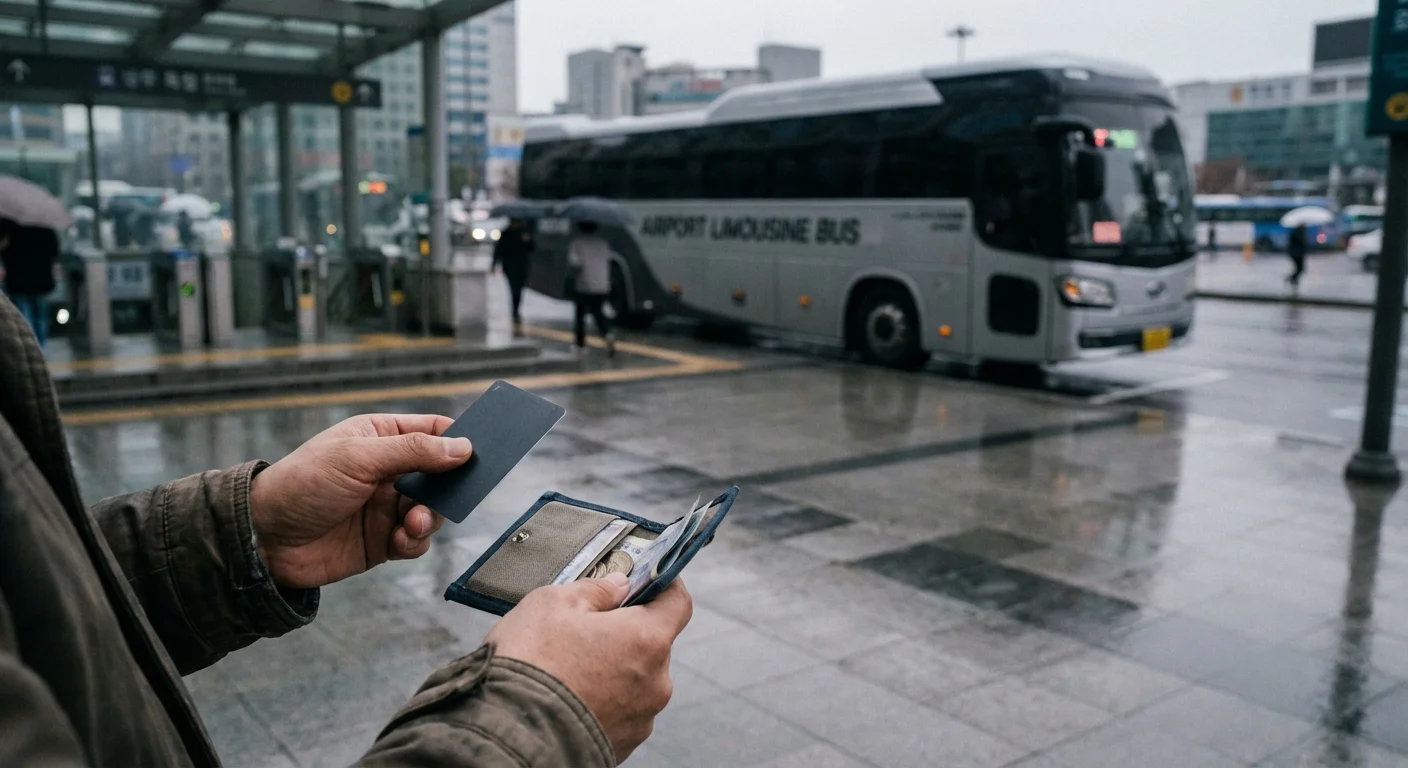
Cost is the biggest reason travelers consider skipping the limousine bus. The price gap can be significant—especially for solo travelers or budget trips.
Limousine bus fares (ticket purchase)
Based on commonly cited examples in the research summary, Seoul-bound limousine buses often fall in a “mid-to-high” fare band compared to city transit.
- Typical range (as of 2026/2027, check current prices): around ₩15,000–₩20,000 for many popular Seoul routes
- Supported examples from the summary (reference points):
- Gangnam route: about ₩17,000 (varies by line)
- Samseong Station route: about ₩18,000 (varies by line)
Some routes may offer small discounts if you book in advance via mobile apps (the summary notes roughly ₩500–₩1,000 off on some lines). Treat those as possible savings, not guaranteed—always check current prices when you’re planning.
Bottom line: limousine bus costs more, but you’re paying for convenience and comfort.
T-money transit fares (subway/bus)
T-money is typically the cheapest way to reach central Seoul.
From the research summary:
- Subway base fare is about ₩1,400, with distance-based add-ons.
- From the airport to central Seoul, total cost is often around ~₩4,000 (depending on route and transfers).
To keep this guide anti-hallucination-compliant, think of it as:
- Typical range (as of 2026/2027, check current prices): ~₩3,000–₩6,000 for many airport-to-Seoul public transit journeys using T-money
(Your exact total depends on distance, line choices, and transfers.)
Don’t forget the card itself:
- T-money card purchase price is typically around ₩2,500–₩4,000 (as noted in the summary), and then you load your transit balance on top.
Realistic budget examples (as of 2026/2027, check current prices)
Below are practical “what you might spend” scenarios. These ranges assume one person, one-way, and can vary by destination and route.
1) Budget traveler (solo, light luggage, flexible schedule)
- T-money transit: ₩3,000–₩6,000 (plus ₩2,500–₩4,000 if you need to buy the card)
- Limousine bus: ₩15,000–₩20,000
- Best pick: T-money if you don’t mind transfers and walking.
2) Mid-range traveler (solo or pair, one suitcase each)
- T-money transit: ₩3,000–₩6,000 per person
- Limousine bus: ₩15,000–₩20,000 per person (sometimes small app discount available)
- Best pick: depends—if you’re arriving tired or late, the bus can “feel worth it.”
3) Family or group (2–4 people, multiple suitcases)
- T-money transit: still cheap per person, but the “hidden costs” are stress, transfers, and managing luggage.
- Limousine bus: higher total cost, but can reduce friction dramatically.
- Best pick: often limousine bus, especially with kids, strollers, or multiple large bags.
A useful way to think about it:
If the bus costs roughly 3–5x the transit fare, ask yourself if avoiding transfers, stairs, and crowding is worth that multiplier on that day.
Time & Convenience: Transfers, Waiting, and Door-to-Door Reality
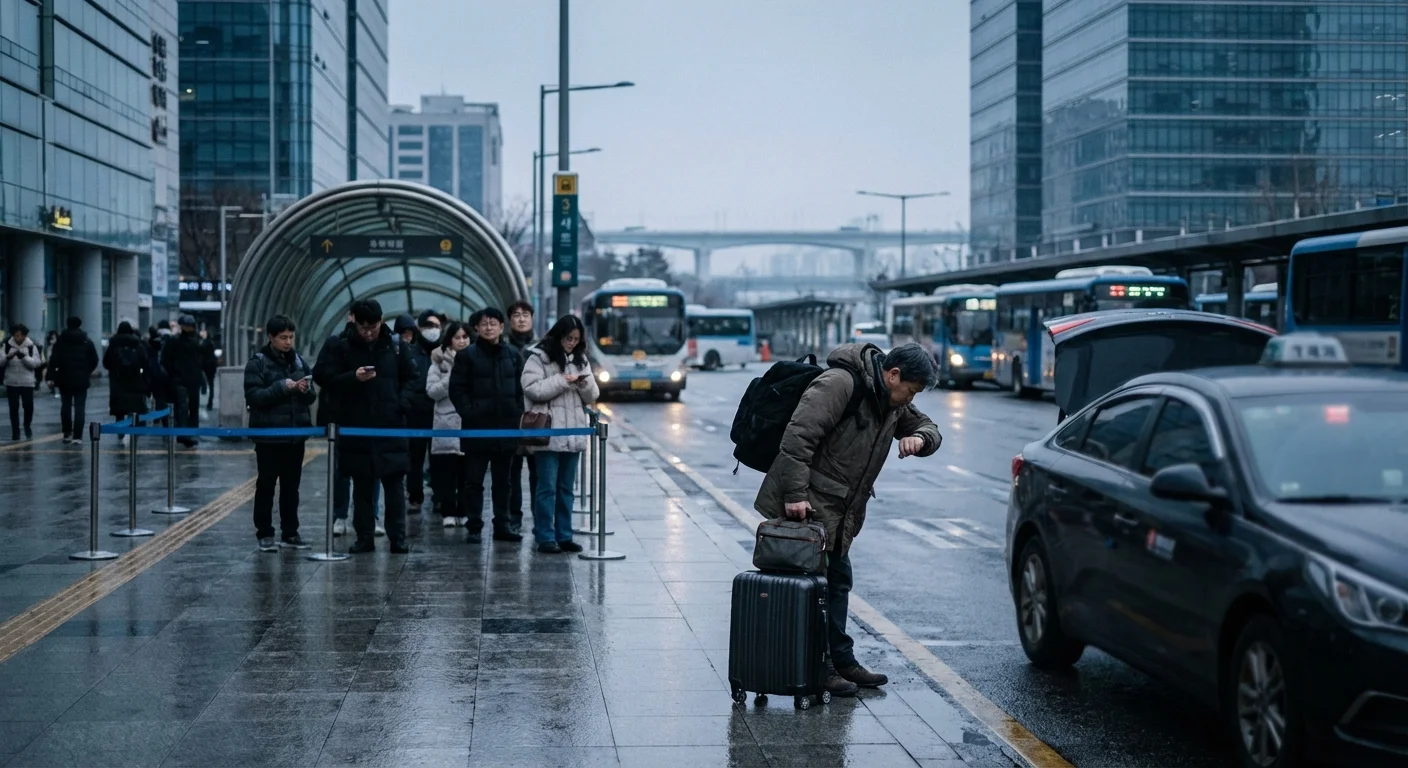
Travel time is not just “minutes on a vehicle.” It’s also the time spent navigating, waiting, transferring, and walking the last 700 meters with a suitcase.
Limousine bus: simpler, but subject to road traffic
Pros for time/convenience
- Often direct to major areas (or fewer stops than city buses)
- You avoid station navigation and transfer uncertainty
- You usually get a clear boarding process and luggage handling
Cons
- Traffic can be unpredictable, especially during rush hours, weekends, rain, or holiday travel periods.
- Even if your route is “direct,” your specific stop might not be right next to your hotel—so you may still walk or taxi a short distance.
Door-to-door reality:
If your destination is close to a limousine bus stop, it can be the most “brain-off” way to arrive—especially after a long flight.
T-money transit: usually predictable, but involves transfers and walking
Pros for time/convenience
- Subway schedules are generally consistent, and trains are frequent.
- If you’re staying near a station, transit can be efficient.
- Great when roads are congested.
Cons
- You may need one or more transfers, which adds:
- extra walking
- escalator/elevator hunting
- potential confusion with platforms and exits
- During peak commuting hours, trains can be crowded, making luggage management stressful.
Door-to-door reality:
Even if the train ride itself is fast, your “real” travel time can balloon if you:
- exit the wrong gate and have to re-route on foot
- struggle to find an elevator
- wait longer for a connecting bus
- arrive with heavy luggage and need multiple escalators
A practical rule for choosing
- If you’re arriving during rush hours, transit can be fast but crowded; the bus can be comfortable but slower in traffic.
- If you’re arriving late evening, the bus can be wonderful if your line is still running and seats are available; transit can still work but may require more planning.
If you’re unsure, do a quick reality check before you commit: compare the number of transfers and walking distance to your accommodation. Fewer transfers often beats theoretical speed.
Luggage, Seats, and Comfort: Who Should Choose Which?
This is where the decision becomes obvious for many travelers.
Limousine bus comfort (why people love it)
- Luggage storage: Large suitcases usually go in the undercarriage, so you’re not wrestling them onto crowded trains.
- Seating: Many routes offer more comfortable, coach-style seats, and some allow seat reservation, reducing uncertainty.
- Low mental load: You sit, you ride, you get off—especially helpful when jet-lagged.
Who should strongly consider the limousine bus
- Travelers with one or more large suitcases
- Families with kids, strollers, or multiple bags
- Elderly travelers or anyone who wants fewer stairs/escalators
- First-time visitors who want the simplest arrival experience
- Anyone arriving after a very long flight who just wants an easy win
T-money transit comfort (when it’s totally fine)
- If you’re traveling with a backpack or small rolling carry-on, public transit is usually manageable.
- If you’re confident navigating subways, transfers are not a big deal.
- If you’re staying near a station with elevator access, transit can be surprisingly painless.
Who should strongly consider T-money transit
- Budget travelers
- Solo travelers with light luggage
- People staying in areas not served well by limousine routes
- Travelers who prefer maximum flexibility (stop for food, detour, etc.)
A small but important note: “comfort” is also about timing. A subway ride at 11:00 a.m. can feel easy; the same ride at 6:30 p.m. with luggage can feel like a challenge.
Tips for First-Time Visitors
If you’ve never used Korea’s transit system before, here’s how to make either option smoother.
If you choose the limousine bus
-
Know your terminal and stop name Incheon has multiple terminals, and routes may depart from different areas. Confirm your terminal (T1 vs T2) and the exact route/stop closest to your accommodation.
-
Consider booking ahead for peace of mind During busy seasons, buses can sell out. If you want the comfort of knowing you have a seat, book early when possible and check current prices.
-
Screenshot your booking details After a flight, data can be spotty. Having route info and times saved offline helps.
-
Plan the “last mile” Even if the bus gets you near your hotel, you might still need a short walk or taxi ride. Check how far your stop is from your accommodation.
If you choose T-money transit
-
Buy a T-money card early You can typically purchase T-money at airport convenience stores (CU/GS25/7-Eleven) or at station vending machines. The card cost is typically around ₩2,500–₩4,000 (as of 2026/2027, check current prices).
-
Keep enough balance to avoid gate problems If your balance is too low, you may not pass the gate. As a simple habit, keep at least one base fare worth of balance above what you think you’ll need.
-
Choose routes that minimize transfers The cheapest route isn’t always the easiest. For first-timers, fewer transfers usually means fewer mistakes.
-
Give yourself extra buffer time Add buffer for:
- finding the right platform
- figuring out station exits
- elevator hunts (important with luggage)
-
Avoid “single-use” tickets if you’ll transfer The summary notes that one-time tickets may not give you transfer discounts. If you’ll be in Korea more than a day, a T-money card is usually the smoother move.
What to Know Before You Go (Where to Buy, Boarding Locations, Peak-Season Warnings)
This section is the “save this for arrival day” checklist.
Where to buy limousine bus tickets
- At the airport: ticket counters or kiosks are commonly available in arrival areas.
- Mobile apps: sometimes offer small discounts on select routes (the summary mentions roughly ₩500–₩1,000 on some lines). Discounts vary—compare deals and check current prices before assuming savings.
If you’re landing during a high-demand period, buying on arrival can be risky if you need a specific departure time. Consider pre-booking when available.
Where to board the limousine bus (Incheon Airport)
Boarding locations depend on terminal.
From the research summary:
- Incheon Airport Terminal 2 (T2): limousine bus boarding is located on B1 (basement level 1).
Because airport layouts can change and routes can be moved, treat signage as your final authority on the day. If you’re unsure, ask an information desk and show them your route name.
Where to buy and top up T-money
From the research summary:
- Buy: airport convenience stores (CU, GS25, 7-Eleven, etc.) or subway station machines
- Top up: convenience stores or subway station recharge machines
If you’re arriving late at night, convenience stores are often the simplest option. Also, keep in mind that some recharge machines may have language options, but not all are equally intuitive—budget a few extra minutes.
Peak season warnings (this matters more than people think)
The summary highlights a common reality:
- During holiday periods and peak travel seasons, limousine bus seats can sell out quickly.
- A smart planning rule: consider booking 1–2 weeks ahead in busy seasons if you have fixed plans.
Even if you don’t pre-book, have a backup plan ready (alternate bus line, subway route, or taxi plan) in case your preferred bus departure is full.
Common Mistakes & How to Avoid Regrets
These are the “classic” arrival-day errors that cause stress—and how to prevent them.
Mistake 1: Assuming you can always buy a limousine bus ticket on the spot
What happens: You land, you’re tired, you go to the counter… and the next few buses are sold out. Now you’re waiting a long time or scrambling for alternatives.
Avoid it:
- If you’re arriving during busy travel windows, pre-book when possible
- If you don’t pre-book, identify two acceptable routes (Plan A and Plan B)
- Check current prices and schedules close to departure because seasonal changes happen
Mistake 2: Choosing T-money transit with heavy luggage and multiple transfers
What happens: What looked cheap and straightforward becomes a maze of stairs, escalators, crowded cars, and long walks to the right exit.
Avoid it:
- If you have big luggage, prioritize routes with fewer transfers
- Pick stations known for easier elevator access when possible
- If you’re exhausted, consider paying more for the bus as a “landing-day upgrade”
Mistake 3: Not keeping enough T-money balance
What happens: You get blocked at a gate or can’t tap on a bus, and now you’re hunting for a top-up machine while juggling bags.
Avoid it:
- Keep a buffer balance (at least one base fare or more)
- Top up when you see a convenient opportunity, not only when you’re nearly empty
Mistake 4: Forgetting the “last mile” from bus stop or station to hotel
What happens: You arrive “near” your destination, but it’s still a long walk with luggage—especially unpleasant in rain, heat, or winter cold.
Avoid it:
- Check walking distance from stop/station to your accommodation
- In bad weather, plan a short taxi ride from the final stop if needed (and budget for it)
Mistake 5: Optimizing for the cheapest option instead of the easiest one (on arrival day)
What happens: You save money but start your trip stressed and tired.
Avoid it:
- Consider your arrival day as a special case
- Many travelers do: limousine bus on arrival (comfort), T-money transit during the trip (savings)
Choosing between an Incheon Airport limousine bus ticket and T-money transit is really choosing between simplicity and savings—and once you match the option to your luggage, schedule, and destination, your first hour in Korea becomes much easier and more enjoyable.
FAQ
Q: Which is cheaper from Incheon Airport to Seoul: limousine bus ticket or T-money transit?
T-money public transit is usually much cheaper (often around ₩4,000 to central Seoul), while limousine buses commonly cost ~₩17,000–₩18,000+ depending on the route.
Q: Do I need to reserve an Incheon Airport limousine bus ticket in advance?
It’s not always required, but during peak seasons (holidays, summer vacation) seats can sell out. Booking 1–2 weeks ahead is recommended for popular routes.
Q: Where do I buy and top up a T-money card at the airport?
You can buy and recharge T-money at airport convenience stores (CU/GS25/7-Eleven) and at subway station machines. Card cost is typically ₩2,500–₩4,000 plus top-up.
Q: What’s the most convenient option if I have large luggage?
The limousine bus is usually easiest because it has dedicated luggage storage and fewer transfers. T-money transit can be tiring with stairs, crowded trains, and multiple transfers.
Q: What’s a common mistake travelers make with T-money on arrival?
Not keeping enough balance: if your balance is too low, you may not pass gates or complete trips smoothly. Keep at least the base fare available (around ₩1,400+).
What you can do next
Pick just one action from this guide and do it today—small steps add up.