Quick Info
- 📍 Area: Jeju Island (Jungmun Saekdal Beach, Hamdeok Beach)
- 🕒 Best time: Sep–Nov for fewer crowds; Jun–Aug requires early booking
- 💰 Budget: KRW 40,000–120,000 per person depending on group/private & inclusions
- 🚇 Getting there: Rental car easiest; buses/taxis work but allow extra time for gear
- 👥 Best for: Beginners booking first-time lessons, couples, small groups, solo travelers
- ✅ TL;DR: Jungmun is the most structured/official surf spot; Hamdeok is convenient in the north. Compare inclusions (board/wetsuit), class size, and cancellation rules before booking.
Before you dive in
If any part of this guide feels useful, take 10 seconds to bookmark it.
Quick Info
- 📍 Area: Jeju Island (Jungmun Saekdal Beach, Hamdeok Beach)
- 🕒 Best time: Sep–Nov for fewer crowds; Jun–Aug requires early booking
- 💰 Budget: KRW 40,000–120,000 per person depending on group/private & inclusions
- 🚇 Getting there: Rental car easiest; buses/taxis work but allow extra time for gear
- 👥 Best for: Beginners booking first-time lessons, couples, small groups, solo travelers
- ✅ TL;DR: Jungmun is the most structured/official surf spot; Hamdeok is convenient in the north. Compare inclusions (board/wetsuit), class size, and cancellation rules before booking.
Before you dive in
If any part of this guide feels useful, take 10 seconds to bookmark it.
Jeju is one of those destinations where “beach day” can turn into a full-on lifestyle moment—salt on your skin, board under your arm, and the satisfaction of catching your first real wave. Surfing has become one of the most popular activities on the island, and two beaches show up again and again in trip plans: Jungmun Saekdal Beach (중문색달해수욕장) on the south coast and Hamdeok Beach (함덕해수욕장) on the north-east.
If you’re trying to choose between them for your first surf lesson (or your first in Jeju), this guide focuses on what actually helps you decide: how booking works, typical price ranges, what’s included, when to reserve, and what mistakes to avoid—so you can spend less time guessing and more time in the water.
Why Book Surf Lessons in Jeju (Jungmun vs Hamdeok)
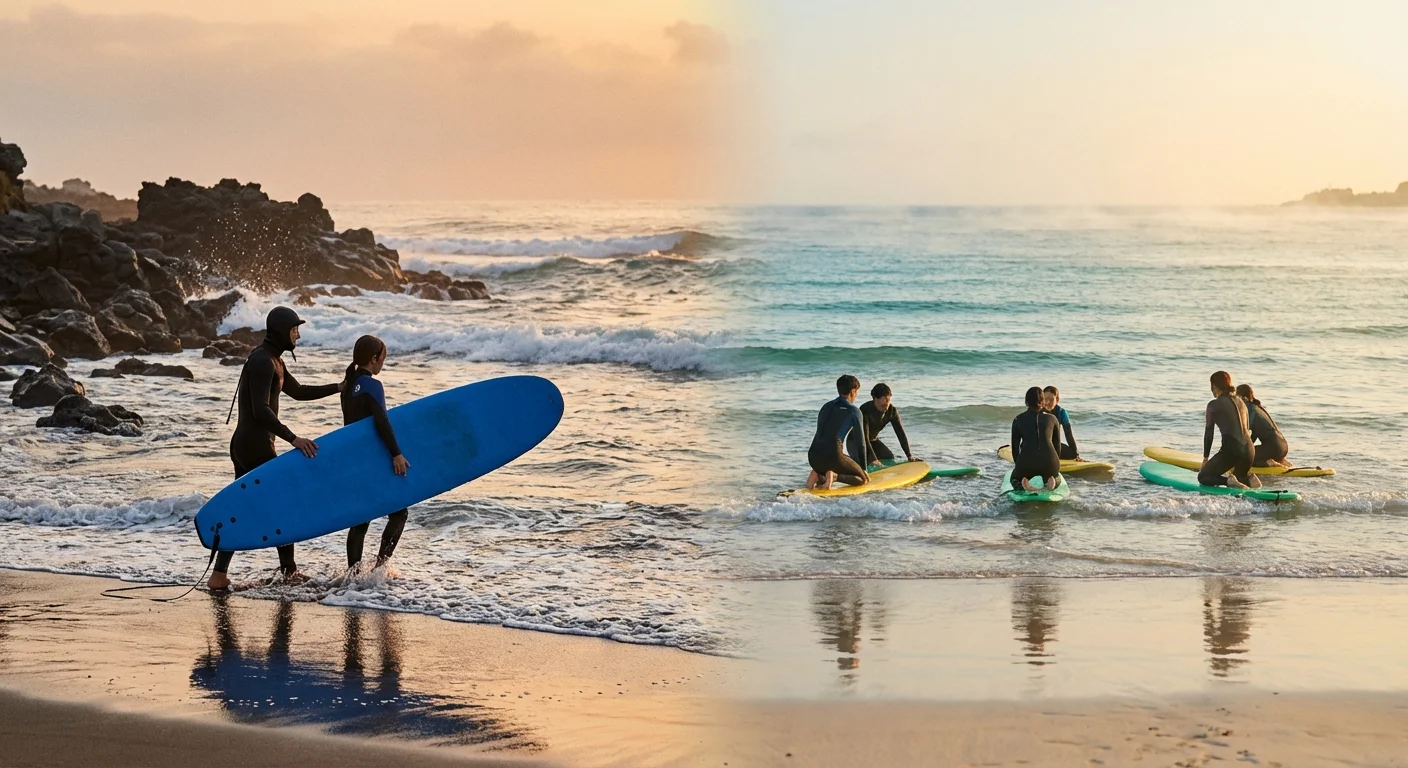
A surf lesson in Jeju isn’t just “an activity ticket.” It’s a structured way to get you safely from zero to standing—under the eye of a professional instructor who understands local conditions, currents, and etiquette. That matters even more on an island where weather and wave conditions can change quickly.
The core difference: vibe + conditions + convenience
Both beaches are popular, but they often feel like two different trips:
Jungmun (중문색달해수욕장)
- Known for dramatic scenery: cliffs, a wide sandy stretch, and a more “resort coast” atmosphere around the Jungmun Tourist Complex.
- A key point for decision-making: it’s widely recognized as the only beach in Jeju where surfing is officially allowed—a detail that makes many travelers feel more confident when choosing a lesson there.
- Often appealing if you’re staying in Seogwipo or want a “classic Jeju scenic coastline” day.
Hamdeok (함덕해수욕장)
- Famous for clear water, a broad beach, and a lively coastal neighborhood feel.
- Tends to be convenient for travelers based in Jeju City or those doing north/east sightseeing routes.
- Great if you want to pair your surf lesson with a full “beach hang” day—cafés, walking paths, and a generally energetic atmosphere.
Which should you choose?
Use this simple decision filter:
- Choose Jungmun if you want a well-known surf setting with that “officially allowed” reassurance, you’re based in Seogwipo, or you’re prioritizing dramatic scenery.
- Choose Hamdeok if you’re staying near Jeju City, want a more casual beach-day flow, or prefer having lots of nearby non-surf options for friends/family.
And if price is your main factor: don’t assume one is always cheaper. Individual surf schools and what’s included (wetsuit thickness, photos, shower access) often matter more than the beach name.
Where to Book 제주 서핑 강습 예약(중문/함덕) Tours and Tickets
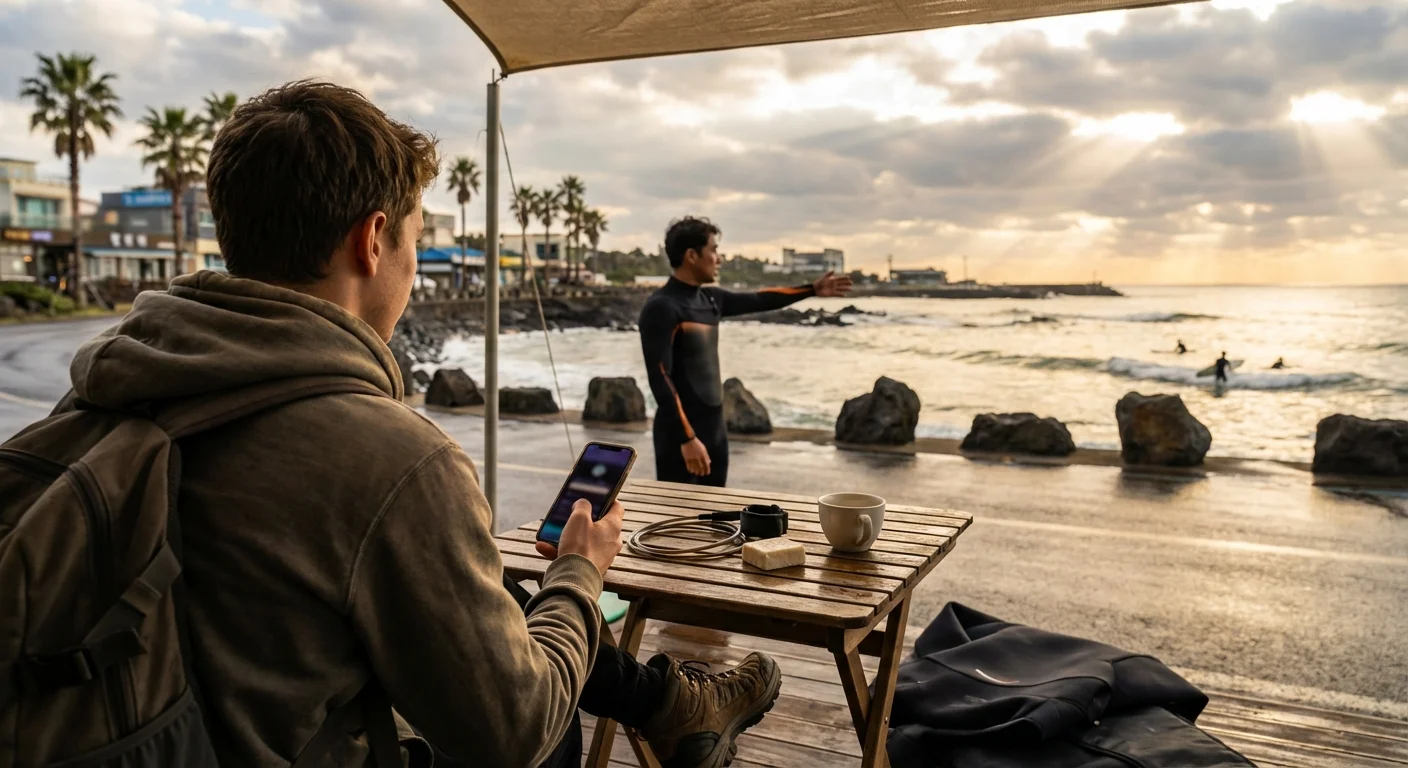
Most travelers book Jeju surf lessons in one of three ways. Each has pros and cons, and your “best” option depends on how last-minute your trip is and how much you care about inclusions like photos and showers.
1) Book directly with a local surf school
This is often the most straightforward if you already know your beach and time slot.
Why it works
- You can ask detailed questions: lesson length, group size, language support, what gear is included, and what happens if the waves are poor.
- It’s easier to coordinate special needs (kids, private lessons, beginner-only groups).
What to check before you pay
- Whether the lesson is designed for absolute beginners (many are, but don’t assume).
- Cancellation/reschedule policy due to weather (critical in Jeju).
- What exactly is included (board/wetsuit/showers/insurance/photos).
Soft CTA: Before confirming, check current prices and ask for a written list of inclusions so you can compare fairly.
2) Book through an “experiences” platform or travel marketplace
This can be useful if you want to compare options quickly.
Why it works
- You can scan multiple schools and time slots at once.
- Reviews can help you gauge vibe and communication style.
- Sometimes easier for foreign cards and multilingual support.
Watch-outs
- The “starting from” price might not include gear, peak-season premiums, or photo add-ons.
- Rescheduling policies can be stricter when a platform sits between you and the operator.
Soft CTA: Use platforms to compare deals, then verify inclusions directly with the provider if anything is unclear.
3) Walk-in booking on the day (least recommended in peak season)
Jeju is seasonal, and surf lessons can sell out during busy periods—especially in summer.
When it can work
- Shoulder seasons (spring/fall) on weekdays.
- You have flexible timing and can wait for a slot.
When it’s risky
- June–August: high demand; popular lesson times can fill quickly.
- If your itinerary is tight and you can’t swap beaches or times.
Decision tip: If surfing is a “must-do” highlight, reserve in advance, especially for morning slots and weekends.
Typical Prices & Budget Examples
Because lesson formats differ by school (group size, duration, inclusions), you’ll see a spread even at the same beach. Use ranges, not a single number, and compare what you’re actually getting.
Typical lesson price ranges (as of 2026/2027)
These are typical ranges you’ll commonly encounter; check current prices with the specific school:
- Group beginner lesson (most common): ₩50,000–₩100,000 (as of 2026/2027, typical range; check current prices)
- Semi-private or small group upgrades: ₩80,000–₩150,000 (as of 2026/2027, typical range; check current prices)
- Private lesson: ₩120,000–₩250,000+ (as of 2026/2027, typical range; check current prices)
You may see different names—“experience class,” “one-day class,” “intro lesson”—but the key is whether it’s structured for beginners and how long the water time is.
Is Jungmun or Hamdeok cheaper?
There isn’t a guaranteed winner. Instead, pricing usually shifts based on:
- Peak season vs off season
- Group size and instructor ratio
- Whether wetsuit + board are included
- Photo/video add-ons
- Weekend/holiday premiums
A fair comparison is: total cost for the same inclusions at the same lesson type (e.g., beginner group lesson with wetsuit + board + showers).
Budget examples for planning (as of 2026/2027)
These examples assume you’re doing one beginner lesson, plus small extras. Treat them as planning ranges and confirm locally.
- Budget traveler (basic group lesson + minimal add-ons): ₩60,000–₩120,000
- Mid-range (group lesson + photos or better facilities/add-ons): ₩100,000–₩180,000
- Comfort-focused (private lesson or premium small group + photos): ₩160,000–₩300,000+
If you’re traveling as a couple or group, sometimes a small-group upgrade offers better value than two separate “private” bookings—ask what the instructor-to-student ratio will be.
What’s Included: Board, Wetsuit, Photos, Showers, Insurance
Two lessons can look identical on a booking page and feel totally different on the day—usually because of what’s included (or not). Before you reserve, confirm each of these items.
Surfboard rental
Most beginner lessons include a soft-top board appropriate for learning. Confirm:
- Included in the lesson price or charged separately
- Board type/size suited for beginners (bigger boards = easier standing)
Wetsuit rental
Jeju water temperature varies by season, and wetsuit thickness matters for comfort and safety.
Confirm:
- Included vs add-on fee
- Thickness (especially outside summer)
- Whether rash guards/booties are provided when needed
This is a common hidden-cost area, so don’t skip it—ask directly before paying.
Photos and videos
Some schools offer action photos as an add-on; others include a few shots if conditions allow.
What to clarify:
- Are photos included, optional, or not offered?
- How are files delivered (same day vs later)?
- Is it group photos only, or individual action shots?
If photos matter to you, prioritize schools that clearly state their photo policy and set expectations about wave/lighting conditions.
Showers, changing rooms, lockers
Facilities can make or break the experience—especially if you’re heading to dinner afterward.
Confirm:
- Indoor vs outdoor showers
- Warm water availability (important in cooler months)
- Secure storage for valuables (locker or supervised area)
Insurance and safety coverage
Surfing is a sport, and safety policies differ.
Ask:
- Whether any insurance or accident coverage is included
- What the school requires (some may ask for a waiver)
- Instructor certification or safety protocols
Even if coverage isn’t included, a professional school should clearly explain their safety procedures and what happens in bad weather.
Best Seasons, Wave Conditions, and Time Slots to Reserve
Jeju surfing is possible throughout the year, but your comfort and the “ease” of learning depend heavily on season, crowd levels, and timing.
Summer (June–August)
- Pros: Warm air, beach-day energy, lots of operating schools and time slots.
- Cons: Crowds; popular lesson times can sell out early; beaches are busy during official opening periods.
Booking tip: Reserve earlier than you think you need—especially for weekends and morning sessions.
Fall (September–November)
- Pros: Fewer tourists, comfortable water for many travelers, and often a calmer overall vibe.
- Cons: Conditions can change; daylight shortens later in the season.
This is a great time for travelers who want a less hectic lesson and more space on the beach.
Winter (December–February)
- Pros: You can still surf with a thicker wetsuit; fewer crowds.
- Cons: Cold air/water, stronger wind days, and quick weather shifts.
Booking tip: Choose schools with solid facilities (warm showers, proper wetsuits) and be ready for rescheduling.
Spring (March–May)
- Pros: Warming weather, good “restart the season” energy, and often better availability than summer.
- Cons: Some days can still feel chilly; wind can be a factor.
Best time slots (practical planning)
Because surf is condition-dependent, there’s no single “always best” time. For beginners, the best slot is usually the one where:
- The school confirms beginner-friendly conditions
- You’re not exhausted (avoid scheduling right after a long hike)
- You have buffer time in case the session shifts
Many travelers like morning sessions for calmer logistics (parking, crowds, post-lesson plans), but the right choice is the one the instructor recommends for that day’s conditions.
Soft CTA: When you book, ask the school which time slot is typically best for beginners on your travel date, and compare availability before committing.
Money-Saving Tips
You don’t need to cut corners on safety to keep costs reasonable. Here’s where savings are usually real.
Compare “total cost,” not headline price
A cheaper base price can become more expensive once you add:
- Wetsuit rental
- Shower/locker fees
- Photo add-ons
Ask for the all-in price for your exact lesson type.
Book weekdays or shoulder seasons when possible
If your schedule is flexible, weekday lessons outside peak summer can offer:
- Better availability
- Potentially fewer premiums (varies by operator—check current prices)
Share private instruction (if allowed)
Some schools allow a “private” lesson for two people (or a small group). It can be a better value than two separate private bookings—confirm instructor attention and structure.
Don’t overpay for photos you won’t use
If your priority is learning (not content), skip premium photo packages. If content is important, choose a school that is transparent about photo delivery and expectations.
Stay near your chosen beach
Transportation costs add up. If your itinerary allows it:
- Stay in Seogwipo area if you’ll surf at Jungmun
- Stay in Jeju City / 조천 area if you’ll surf at Hamdeok
Even a modest taxi or rental-car fuel cost can exceed the difference between two lesson prices.
Common Booking Mistakes (and How to Avoid Them)
Most surf-lesson regrets come from booking assumptions. Here are the most common mistakes travelers make in Jungmun and Hamdeok—and simple fixes.
Mistake 1: Booking too late in summer
During June–August, high demand can mean limited slots.
Fix: Reserve in advance and keep a second-choice time slot in mind.
Mistake 2: Not confirming what the price includes
Board and wetsuit are often included, but not always—and facilities vary.
Fix: Ask for a checklist: board, wetsuit, shower, locker, photos, insurance/coverage, and any extra fees.
Mistake 3: Choosing based on the beach name, not your itinerary
A “great” surf spot is frustrating if it’s far from where you’re staying.
Fix: Choose the beach that fits your route. Jungmun pairs naturally with Seogwipo days; Hamdeok pairs naturally with Jeju City/east coast days.
Mistake 4: Ignoring weather and wave dependency
Surfing is not like a museum ticket. Conditions may change and lessons may be adjusted.
Fix: Ask about the bad-weather policy: reschedule, alternate location, or refund—get it clear before paying.
Mistake 5: Overestimating your fitness (or underestimating the ocean)
Beginner surfing uses muscles you don’t expect, and the ocean demands respect.
Fix: Start with a beginner group lesson, listen closely, and avoid scheduling intense activities right before/after.
Safety Notes and What to Bring for Your Lesson Day
A well-run lesson makes surfing feel approachable—but you still want to show up prepared. This section is especially important in Jeju, where weather can shift fast.
Safety basics to take seriously
- Follow your instructor’s directions exactly, especially on where to enter/exit and how to fall safely.
- Respect your limits: fatigue leads to poor decisions in water.
- Check conditions the day before and the morning of your lesson. If the school suggests rescheduling, it’s usually for a good reason.
What to bring (simple checklist)
- Swimsuit (to wear under the wetsuit)
- Towel and a change of clothes
- Water and a light snack (surfing is more tiring than it looks)
- Sunscreen (water + reflection = stronger exposure, even on hazy days)
- Hair ties / waterproof pouch if you need it
- Cash or card for small facility fees or add-ons (varies by school—confirm)
Comfort tips (especially outside summer)
- Ask the school what wetsuit thickness they provide.
- Prioritize places with warm showers if you’re surfing in spring/fall/winter.
- Plan a warm drink or meal afterward—your body will thank you.
Final decision snapshot: Jungmun vs Hamdeok
If you want the simplest decision:
- Pick Jungmun for a highly recognized surf setting (notably known for being officially allowed), dramatic scenery, and Seogwipo convenience.
- Pick Hamdeok for Jeju City access, a lively beach day, and easy pairing with north/east coast plans.
Whichever you choose, the best move is to compare what’s included, check current prices, and reserve a slot that fits your energy and itinerary so your first Jeju wave feels like a win.
FAQ
Q: How far in advance should I book surf lessons in Jungmun or Hamdeok?
In peak summer (Jun–Aug), book 1–2 weeks ahead (earlier on weekends). In spring/fall, 1–3 days ahead is often enough, but check wave/forecast-dependent policies.
Q: What’s typically included in the surf lesson price?
Most packages include instructor coaching plus surfboard and wetsuit rental. Always confirm whether rashguard/boots, shower fees, and insurance are included or extra.
Q: What are typical price ranges for group vs private lessons?
Group lessons commonly run about KRW 40,000–80,000 per person. Semi-private/private lessons often range KRW 90,000–200,000+ depending on duration and instructor ratio.
Q: Do I pay a deposit, and what are the usual cancellation/refund rules?
Many schools take a deposit or full prepayment. Refunds depend on lead time and weather policy; look for free rescheduling, partial refunds, or credit vouchers for unsafe conditions.
Q: Is Jungmun or Hamdeok better for beginners when booking a first lesson?
Both can work, but many beginners prefer schools that clearly state beginner-friendly boards, safety briefing, and small class sizes. Choose based on your hotel location (south for Jungmun, north/east for Hamdeok) and forecasted conditions.
What you can do next
Pick just one action from this guide and do it today—small steps add up.