
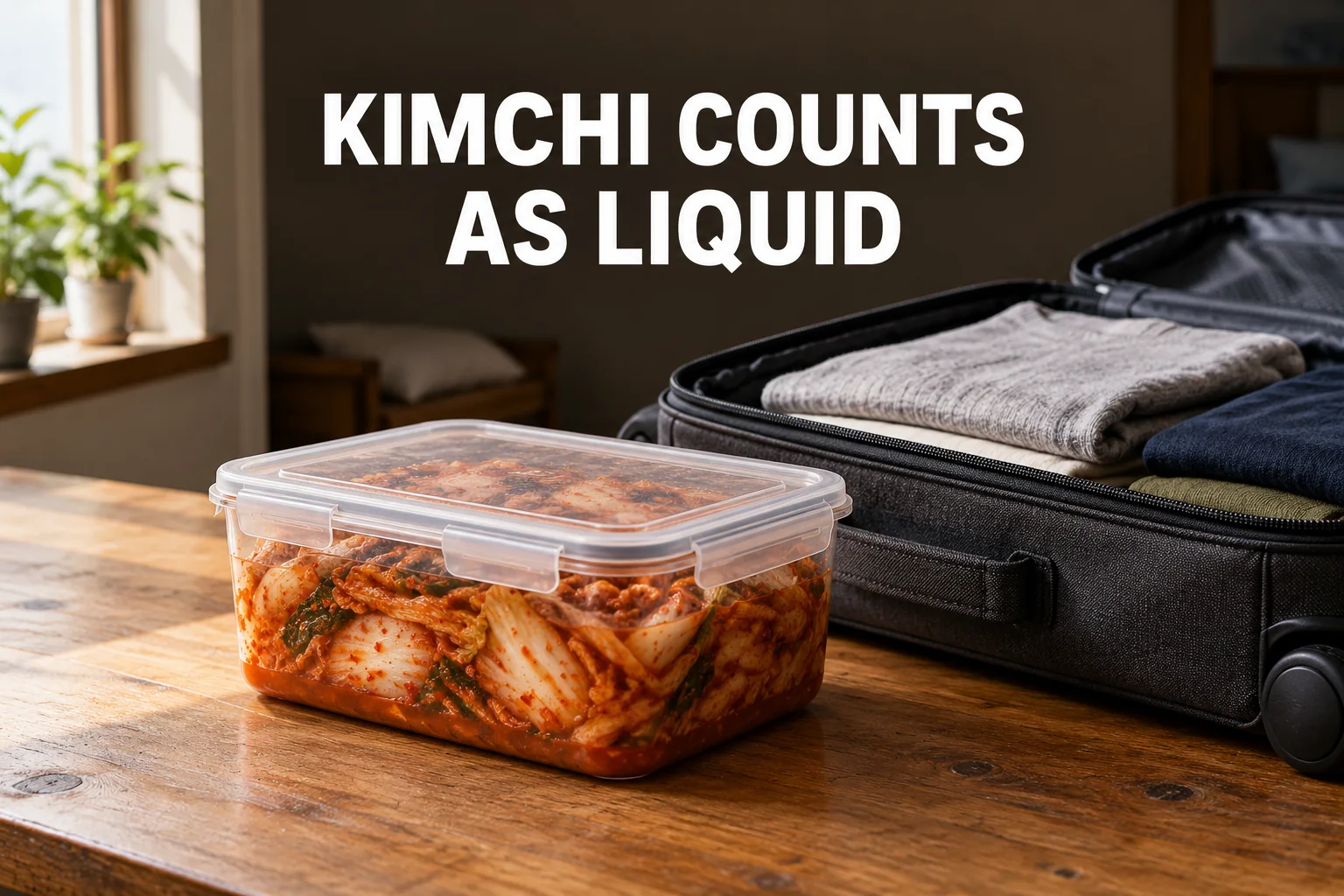
A sealed pack of kimchi still counts as a liquid at Incheon Airport’s international departure screening. The airport’s restricted-items FAQ names kimchi explicitly. A supermarket seal or vacuum pack does not give a large portion a carry-on exemption: plan the bag and destination checks before buying your souvenir.
Official guidance checked October 25, 2026. This guide focuses on international departures from Incheon. For a domestic flight before your trip home, see the Jeju domestic versus international liquids guide.
Decide before you buy the kimchi
Use this shopping checklist to avoid discovering a packing problem after your suitcase has been checked in.
| Your situation | Check before paying | Practical choice |
|---|---|---|
| Carry-on only | Container capacity and space in your liquids bag | Buy only a compliant portion, or plan to buy kimchi at home |
| A larger supermarket pack | Checked-bag allowance, airline food acceptance and destination rules | Pack it in an accepted checked bag before bag drop |
| Restaurant takeaway in a thin-lidded box | Travel packaging, ingredients and storage instructions | Ask for suitable packaging and written product details; choose another souvenir if these cannot be established |
| Duty-free purchase | The required security bag and any connecting-airport rules | Confirm the itinerary with the retailer before purchase |
Compare the whole cost before adding luggage just for food: the kimchi, protective packaging and any extra bag charge. A cheap large tub can become an expensive souvenir if your fare includes only cabin baggage.
The limit is container capacity, not the weight on the label
For ordinary international carry-on liquids, Incheon’s FAQ requires containers of 100 ml or less, all fitting in one 1 L transparent resealable bag per person. The container’s capacity counts even when partly empty. A 100 g food label gives a weight, so it does not establish compliance with a 100 ml container limit.
The same FAQ lists gochujang and doenjang as gels. Changing from kimchi to a paste souvenir therefore still requires a liquids check.
Incheon’s restricted-items guide allows kimchi and similar liquid-containing foods in checked baggage without that security volume cap. Your airline’s baggage allowance, packaging conditions and your destination’s entry rules still apply.
A vacuum pack and a duty-free security bag do different jobs
Korean Air’s restricted-items guidance recommends vacuum-packing small quantities of side dishes such as kimchi and checking destination quarantine and customs rules. Ask the seller what packaging is suitable for your journey. A tight seal does not establish permission to carry it in the cabin or to import it.
Incheon’s duty-free exception uses a special Duty Free Liquid Item Bag, which must stay sealed until boarding the flight to the final destination. An ordinary grocery pouch is not that bag. If you connect through another airport, confirm its screening requirements before relying on a duty-free purchase.
For packing, keep the product’s own instructions and add secondary containment to protect nearby clothes. Follow its storage requirements throughout the journey, rather than judging storage needs from how tightly it is sealed. If the seller cannot explain suitable travel storage, choose something you can transport confidently.
Check the destination, then keep the label
Before purchasing, check your destination’s official food-import rules for the actual ingredients and country of origin. Kimchi recipes vary; our kimchi types and shopping guide explains why a vegetable-looking product may contain seafood seasonings. Keep the ingredient label, origin information and receipt accessible for inspection.
For the United States, USDA APHIS’s traveler guidance requires declaration of agricultural products and says inspectors make the final entry decision. Its advice to keep original packaging and receipts is useful here. This is not confirmation that every kimchi recipe is admissible. For the arrival process, see our Korean food souvenirs and U.S. declaration guide.
Finish the packing decision before bag drop. If you change a cabin bag into checked luggage to carry food, remove items that must stay in the cabin; the Korean Air power-bank guide covers that airline’s battery rules.
A useful question for the seller is: “What are the ingredients and storage instructions, and can you package this for my flight to [country]?” Then verify the airline and destination requirements yourself. The answer determines whether this particular kimchi is a workable souvenir.