Quick Info
- 📍 Area: South Korea nationwide (KORAIL-operated lines: Seoul, Busan, Gyeongju, Jeonju and more)
- 🕒 Best time: Spring (Mar–May) and Autumn (Sep–Nov); book earlier for holidays and weekends
- 💰 Budget: From ~96,000 KRW (youth 2-day) to ~210,000 KRW (adult 5-day), plus optional fees not covered
- 🚇 Getting there: KTX/ITX/Mugunghwa on KORAIL routes (seat reservations still required for many trains)
- 👥 Best for: Foreign tourists visiting 2+ cities, rail-heavy itineraries, peak-season travelers who can reserve early
- ✅ TL;DR: Buy the KORAIL Pass online, activate for your travel dates, then reserve seats ASAP—especially KTX—because the pass doesn’t guarantee a seat.
Before you dive in
If any part of this guide feels useful, take 10 seconds to bookmark it.
Quick Info
- 📍 Area: South Korea nationwide (KORAIL-operated lines: Seoul, Busan, Gyeongju, Jeonju and more)
- 🕒 Best time: Spring (Mar–May) and Autumn (Sep–Nov); book earlier for holidays and weekends
- 💰 Budget: From ~96,000 KRW (youth 2-day) to ~210,000 KRW (adult 5-day), plus optional fees not covered
- 🚇 Getting there: KTX/ITX/Mugunghwa on KORAIL routes (seat reservations still required for many trains)
- 👥 Best for: Foreign tourists visiting 2+ cities, rail-heavy itineraries, peak-season travelers who can reserve early
- ✅ TL;DR: Buy the KORAIL Pass online, activate for your travel dates, then reserve seats ASAP—especially KTX—because the pass doesn’t guarantee a seat.
Before you dive in

If any part of this guide feels useful, take 10 seconds to bookmark it.
If you’re planning to see more than just Seoul on your Korea trip, the KORAIL Pass (코레일 패스) is one of the most searched rail products for a reason: it can turn Korea’s fast, reliable train network into a simple “one pass, many rides” setup—especially when you’re hopping between major cities like Seoul, Busan, Gyeongju, and Jeonju.
That said, it’s not automatically the cheapest option for everyone. The KORAIL Pass works best for a specific kind of itinerary (multiple intercity rides in a short window), and it has a few gotchas—like seat reservations and coverage limits—that can surprise first-timers.
This guide breaks down who should buy it, where to book, typical price ranges (as of 2026), how seat reservations work on KTX/ITX/Mugunghwa, and sample itineraries for 2–5 days by season—so you can decide confidently and avoid the common mistakes.
What Is the KORAIL Pass and Who It’s For

The KORAIL Pass is a special rail pass offered by Korea Railroad Corporation (KORAIL) that allows unlimited travel on KORAIL-operated trains during a chosen validity period. It’s primarily designed for foreign tourists who want to explore multiple regions without buying separate point-to-point tickets each time.
Who it’s ideal for
You’ll usually get the most value if you match one (or more) of these profiles:
- Multi-city travelers: You’re doing an itinerary like Seoul → Gyeongju → Busan → Seoul within a few days.
- You want flexibility: You like the idea of riding multiple trains in a day without worrying about stacking ticket costs.
- You’re traveling during busy seasons: Cherry blossom weeks, peak summer weekends, fall foliage season—when popular routes can sell out and you want to plan reservations early.
- Young travelers (13–25): If you qualify for a youth pass, the pass can be noticeably cheaper than the adult version in many cases.
Who should think twice
The pass may be less cost-effective if:
- You’re staying mostly in one city (e.g., Seoul-only, Busan-only), using subways/buses.
- You only need one or two intercity rides total.
- Your must-do routes aren’t KORAIL-operated (some tourist services and private rail lines won’t be covered).
- You dislike planning: Unlimited travel still comes with practical constraints—especially seat reservation rules during peak times.
Decision tip: If you expect two or more long-distance rides (especially on KTX) in a short span (2–5 days), it’s worth comparing pass cost vs. individual tickets. If you’re only doing a single day trip, individual tickets may win.
Where to Book 코레일 패스(KORAIL Pass) Tours and Tickets
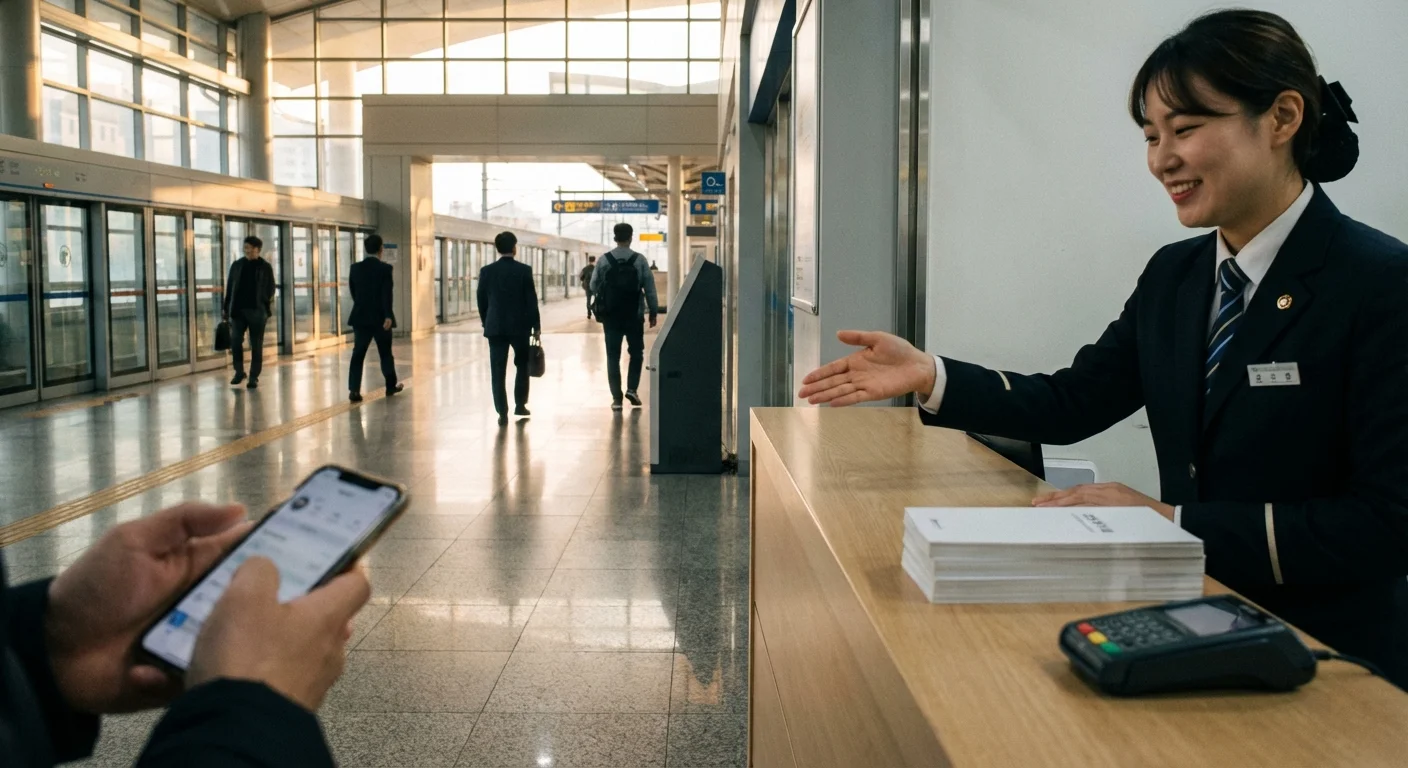
For travelers, “booking the KORAIL Pass” usually means one of two things:
- Buying the pass itself
- Reserving seats for the trains you plan to take during the pass period
Common places to purchase the pass (and what to consider)
You’ll typically see KORAIL Pass sales through:
- Official KORAIL channels (best for clarity and official policies)
- Authorized travel platforms (often easier in English and may bundle instructions or customer support)
- Travel agencies or ticket desks catering to international visitors (sometimes convenient if you prefer in-person help)
Because prices and rules can change, the smartest approach is to check current prices in at least two places (official vs. an authorized seller) and compare:
- Total cost in KRW
- Any included support (language instructions, rebooking help)
- Redemption method (digital vs. physical steps, if applicable)
- Refund/change rules before activation
Should you book “tours” with it?
Some travelers search for “KORAIL Pass tours” meaning packaged rail-based itineraries (e.g., day trips or multi-day routes). These can be convenient if you:
- want guided experiences and fixed schedules, or
- are traveling during peak season and don’t want to manage logistics
But if you’re comfortable with basic planning, the KORAIL Pass is usually most powerful when you build your own route and reserve only the trains you need.
Soft CTA: Before you commit, compare deals across official and authorized sellers and re-check conditions for seat reservations and changes.
Typical Prices & Budget Examples
Because pricing updates over time, it’s best to think in typical ranges rather than a single “exact” number. Based on commonly cited pricing patterns from recent years, here are the typical ranges as of 2026/2027 (check current prices at time of purchase).
Typical KORAIL Pass price ranges (as of 2026/2027)
Adult (typical range, check current prices):
- 2-day pass: ~₩110,000–₩140,000
- 3-day pass: ~₩160,000–₩190,000
- 4-day pass: ~₩185,000–₩210,000
- 5-day pass: ~₩200,000–₩230,000
Youth (ages 13–25) (typical range, check current prices):
- 2-day pass: ~₩85,000–₩110,000
- 3-day pass: ~₩125,000–₩150,000
- 4-day pass: ~₩145,000–₩170,000
- 5-day pass: ~₩155,000–₩180,000
These ranges align with historically common price points and are meant for planning only. Always confirm the current price and the pass type you’re buying before final checkout.
How to tell if the pass is cheaper than individual tickets
A simple rule of thumb:
- If you’ll take multiple KTX rides (or long intercity routes) within the pass window, the pass often pays off.
- If your trip is mostly short hops or you’re riding slower trains only, individual tickets can be cheaper.
The “break-even” point depends on your exact route and train types, so a quick comparison works best:
- List your cities and the days you’ll move
- Estimate how many long-distance rides you’ll take
- Compare the pass range vs. typical ticket totals (and remember reservations)
Budget examples (ranges, as of 2026/2027)
These are general planning ranges for rail + local transit (not including hotels/food). Actual spend varies by route density and how many paid local rides you add.
- Budget travelers: ~₩20,000–₩60,000 on top of the pass
(mostly walking + subway/bus, minimal taxis, fewer paid attractions) - Mid-range travelers: ~₩60,000–₩150,000 on top of the pass
(more local transit, occasional taxis, a few paid attractions, luggage storage) - Comfort travelers: ~₩150,000–₩300,000+ on top of the pass
(more taxis, more day tours, extra convenience costs)
Planning tip: The pass covers trains, but not the “last mile.” In Korea, that last mile can be cheap (subway/bus) or surprisingly pricey (taxis during late hours, luggage forwarding, peak-day tour buses).
How to Reserve Seats (KTX/ITX/Mugunghwa) Step by Step
One of the most common misunderstandings is thinking “unlimited travel” means you can just show up and board any train. In practice, seat reservations are still important, and during peak seasons they can be the difference between a smooth day and a stressful platform wait.
Step-by-step reservation workflow (practical version)
The exact screens vary by booking channel, but the process usually looks like this:
-
Decide your key travel legs first
- Lock in the long rides: Seoul ↔ Busan, Seoul ↔ other regions, etc.
- Put these on your calendar early, especially in spring blossoms and autumn foliage season.
-
Choose your train type
- KTX: fastest, most in-demand, sells out quickest on popular routes.
- ITX: comfortable and scenic on certain corridors, often a good alternative.
- Mugunghwa: slower, usually cheaper as a standalone ticket, can be useful for short hops.
-
Select date/time and confirm pass eligibility
- Make sure your travel day falls within your pass validity period.
- Double-check that the train is KORAIL-operated (important for coverage).
-
Reserve your seat
- If your route/time is busy, prioritize earlier reservations.
- If your preferred departure is sold out, try:
- one train earlier or later
- a different train type (KTX vs. ITX vs. Mugunghwa)
- a different station in the same city (when applicable)
-
Save your reservation details
- Keep a screenshot or confirmation accessible offline.
- Ensure the name on your pass matches your ID, and carry identification.
-
On travel day: arrive early
- Busy stations like Seoul Station can take time to navigate.
- Give yourself buffer for finding the platform and car number.
Peak-season reality check: “No reservation” can mean standing
Even with a pass, if you don’t reserve (or if the train type requires it and you miss out), you may end up:
- standing for the journey, or
- having to take a much later departure, or
- switching to slower trains
If your itinerary is tight (connecting to a museum booking, hotel check-in, or a festival), treat seat reservations as essential.
What’s Included vs Not Covered (Common Route Pitfalls)
The KORAIL Pass covers KORAIL-operated trains, but travelers often assume it includes “all rail in Korea,” which it doesn’t. Avoiding coverage surprises is one of the biggest ways to keep your budget predictable.
Typically included (conceptually)
- Major intercity routes operated by KORAIL
- Popular corridors connecting major hubs such as Seoul, Busan, Gyeongju, and Jeonju
- A range of train classes (often including KTX/ITX/Mugunghwa options where KORAIL operates them)
Because train operations and product conditions can change, treat this as a planning overview and verify coverage for your exact route before building your itinerary around it.
Commonly not covered (plan for extra cost)
- Subways and city buses (Seoul/Busan/etc. local transit is separate)
- Certain tourist trains (some special scenic products may have different rules)
- Private rail lines or non-KORAIL services (not all rail operators are included)
- “Last-mile” transport to scenic areas (national parks, beach spots, ski resorts often require buses/taxis)
Common route pitfalls
- Assuming Gyeongju sights are walkable from the station
- You’ll likely need buses/taxis to reach key historical sites efficiently.
- Jeonju Hanok Village access
- The intercity rail gets you close, but you still need local transit to the Hanok area.
- Trying to do too many cities in too few days
- Unlimited rides can tempt you into “collecting cities,” but the time lost to transfers and station navigation can eat your trip.
Practical check: Before buying, map each city day as: Station → hotel → sights → station and budget local transit accordingly.
Money-Saving Tips
A rail pass is already a cost-control tool, but you can stretch it much further with a few planning habits.
1) Use the pass for your longest rides (that’s where value concentrates)
If your itinerary includes one very long intercity leg (e.g., Seoul ↔ Busan) plus a couple of medium legs, the pass tends to shine. If you only do short legs, you may be paying “pass prices” for “local distances.”
2) Travel earlier in the day to reduce risk (and sometimes stress costs)
Early trains are:
- more likely to have availability
- easier to rebook if plans change
- less likely to force a taxi sprint across town
3) Consider mixing train types when it makes sense
You don’t have to ride KTX every time.
- Use KTX for long-distance efficiency when time matters.
- Use ITX or Mugunghwa for shorter segments or when KTX is sold out.
This isn’t just a budget tactic—it’s a reliability tactic during peak travel weeks.
4) Don’t activate too early (avoid wasting validity days)
A very common mistake is activating the pass on a day when you’re mostly doing local sightseeing. If your pass counts calendar days, you want those days packed with rail value. Keep your “big moves” inside the validity window.
5) Pair with a transit card for cities
Since subways/buses aren’t covered, a local transit card helps you:
- avoid buying single tickets repeatedly
- transfer more smoothly
- track spending more easily
6) Build in a “Plan B route” before you arrive
For each major transfer day, pre-select:
- a second-choice departure time
- an alternate train type
- an alternate station option (if applicable)
This saves money by reducing last-minute taxis, missed hotel check-in windows, or rebooking fees (if any apply under current rules).
Soft CTA: If you’re unsure, check current prices and run a quick “pass vs. point-to-point” comparison on your top 2–3 routes.
Best Sample Itineraries by Season (2–5 Days)
Below are sample routes that are popular with first-timers and repeat visitors. The point is not to copy them perfectly, but to see how the KORAIL Pass can make sense when you’re stacking multiple intercity legs within a short period.
Spring (March–May): Cherry blossoms + classic cities
Spring is one of the busiest rail seasons thanks to mild weather and blossoms.
2 days (fast highlights)
- Day 1: Seoul → Busan (evening seafood market / beach walk)
- Day 2: Busan → Seoul (morning café streets, return)
Who it fits: Travelers who want one major city swap and don’t mind a tight schedule.
3 days (history + coast)
- Day 1: Seoul → Gyeongju (historical district)
- Day 2: Gyeongju → Busan (coast + markets)
- Day 3: Busan → Seoul
Why it works: Two long-ish moves plus a medium move often creates strong “pass value,” especially if you ride faster trains.
4–5 days (add a blossom side trip)
- Day 1: Seoul → (blossom area day trip concept; check seasonal rail feasibility)
- Day 2: Seoul → Jeonju (Hanok Village)
- Day 3: Jeonju → Gyeongju
- Day 4: Gyeongju → Busan
- Day 5: Busan → Seoul
Tip: Blossom hotspots can get crowded; reserve your longest legs early and leave wiggle room for local buses/taxis.
Summer (June–August): Heat-proof coastal pacing
Summer can be hot and humid, so many travelers build in coastal time.
2 days (beach reset)
- Day 1: Seoul → Busan (afternoon beach + evening seafood)
- Day 2: Busan → Seoul
3–4 days (coast + culture)
- Day 1: Seoul → Jeonju (evening food crawl)
- Day 2: Jeonju → Busan
- Day 3: Busan (rest day; local transit)
- Day 4: Busan → Seoul
Why this is pass-friendly: You concentrate the rail rides into fewer days, then spend a day locally (which doesn’t use rail value but improves trip comfort).
Summer pitfall: Don’t underestimate travel fatigue in the heat. Over-scheduling rail transfers can feel harder in July/August.
Autumn (September–November): Fall foliage + “best weather” rail days
Autumn is arguably the most comfortable time for rapid multi-city rail travel.
2 days (quick culture loop)
- Day 1: Seoul → Jeonju
- Day 2: Jeonju → Seoul
3 days (heritage route)
- Day 1: Seoul → Gyeongju
- Day 2: Gyeongju → Busan
- Day 3: Busan → Seoul
5 days (balanced grand loop)
- Day 1: Seoul → Jeonju
- Day 2: Jeonju → Gyeongju
- Day 3: Gyeongju (full day)
- Day 4: Gyeongju → Busan
- Day 5: Busan → Seoul
Autumn tip: Foliage season can be busy on weekends. If you can, place your longest rides on weekdays and reserve earlier.
Winter (December–February): Cities + ski season planning
Winter travel is great for city-hopping, and it’s popular for ski trips (with extra “last mile” planning).
2–3 days (city comfort)
- Day 1: Seoul → Busan
- Day 2: Busan (warm food + cafés + markets)
- Day 3: Busan → Seoul
4–5 days (winter variety)
- Day 1: Seoul → Jeonju (warm, cozy food-focused day)
- Day 2: Jeonju → Seoul (or onward to another city)
- Day 3: Seoul → Gyeongju
- Day 4: Gyeongju → Busan
- Day 5: Busan → Seoul
Winter pitfall: Ski resorts often require buses/taxis from stations, so budget extra time and money for transfers even if the rail portion is covered.
When used for the right itinerary, the KORAIL Pass is one of the simplest ways to see multiple Korean regions efficiently—just remember to check current prices (as of 2026/2027), reserve seats early for peak days, and plan for what isn’t covered so your “unlimited travel” days stay smooth from start to finish.
FAQ
Q: How much is the KORAIL Pass?
Typical prices (Oct 2023 reference) are about 121,000–210,000 KRW for adults (2–5 days) and 96,000–168,000 KRW for youth (13–25). Always confirm on KORAIL for current pricing.
Q: How do I book the KORAIL Pass and use it for trains?
Purchase the pass (official KORAIL site or authorized sellers), set/activate your usage dates, then make separate seat reservations for each train you plan to take (especially KTX).
Q: Do I still need seat reservations with a KORAIL Pass?
Yes. The pass provides travel eligibility, but many trains require (or strongly benefit from) seat reservations. Without a reservation, you may have to stand or miss a fully booked train.
Q: What trains and routes are covered—and what’s not included?
It covers KORAIL-operated trains on major intercity routes. It generally does not cover subways/metro, some tourist trains, and private rail lines—check your exact route before relying on the pass.
Q: Can I refund or change the KORAIL Pass after activation?
Typically, once activated/used, it’s non-refundable. Confirm refund/change rules at purchase and activate only when your itinerary is firm.
Q: Do I need ID to use the pass?
Yes. The pass is personal and name-matched—carry your passport (or the ID required by the seller) to avoid issues during checks.
What you can do next
Pick just one action from this guide and do it today—small steps add up.