
Quick Info
- 📍 Area: Jjimjilbangs and Korean sauna complexes across Seoul, Busan, Incheon, Gyeonggi, and other cities
- 🕒 Best time: Weekday morning or early afternoon; allow 2–4 hours for a first visit
- 💰 Budget: ₩15,000–₩40,000 adult admission at the official examples checked on August 27, 2026, plus food or services
- 🚇 Getting there: Subway or bus for city facilities; confirm the branch and last admission before leaving
- 👥 Best for: First-time visitors, couples, friends, families, solo travelers, and rainy-day itineraries
- ✅ TL;DR: Remove shoes, secure valuables, wash before entering a bath, wear the issued uniform in shared areas, start with cooler rooms, and settle wristband charges before exit.
How a Korean Jjimjilbang Works
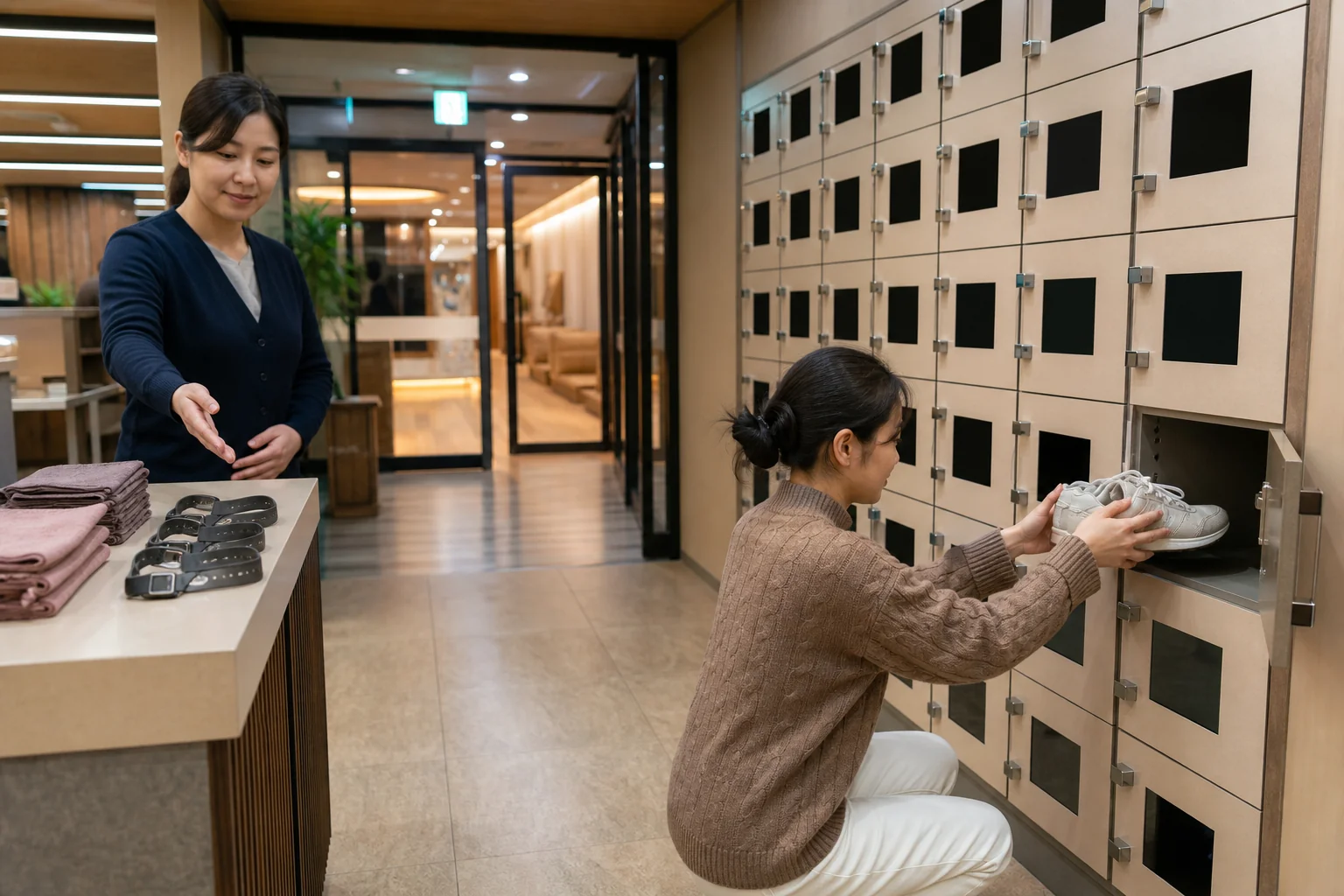
A Korean jjimjilbang is not simply a hot room. Most larger facilities combine a gender-separated bath and shower area with a clothed, mixed-gender relaxation area containing heated rooms, cool rooms, floor lounges, snack counters, and sometimes restaurants or massage chairs. Smaller neighborhood bathhouses may offer fewer communal facilities, while destination spas can resemble all-day wellness complexes.
The exact sequence varies, but a first visit usually follows this pattern:
- Pay admission or scan a prepaid ticket at reception.
- Remove your shoes and place them in the assigned shoe locker.
- Take the locker key or electronic wristband and receive a jjimjilbang uniform and towels if included.
- Enter the gender-separated changing room and lock away your clothes, phone, passport, and valuables.
- Shower before using the baths or wet sauna.
- Change into the issued shirt and shorts before entering the mixed communal jjimjil area.
- Use heated rooms gradually, rest between sessions, drink water, and buy snacks if you wish.
- Return to the changing room, wash or shower, get dressed, and bring the key to the settlement counter.
- Pay any wristband purchases or overtime charge, return rentals, retrieve shoes, and exit.
That flow explains two details that surprise many visitors. First, the bathing zone and the communal lounge are different spaces with different clothing rules. Second, the locker key may also function as a payment method. Korea Tourism Organization guidance tells visitors to keep the key secure because it can open lockers and record purchases at participating facilities. Aquafield calls its version a postpaid “One-Key” system and requires guests to confirm charges before the shoe locker will reopen.
Do not assume every venue includes every step. Some admission products cover only the jjimjil area, some combine sauna and water park access, and some restrict admission by age. Check the facility’s own ticket description instead of relying on an old social post or a third-party listing.
Bath Area, Uniform, and Heated Rooms
The gender-separated bath area is normally nude. Store your clothing and phone in the changing-room locker, take only the permitted towel or toiletries, and wash thoroughly at a shower station before entering any communal bath. If you are uncomfortable with public nudity, you can choose a jjimjil-only product where available, but read the ticket carefully: the sauna, bath, pool, and shared heat zones may be sold separately.
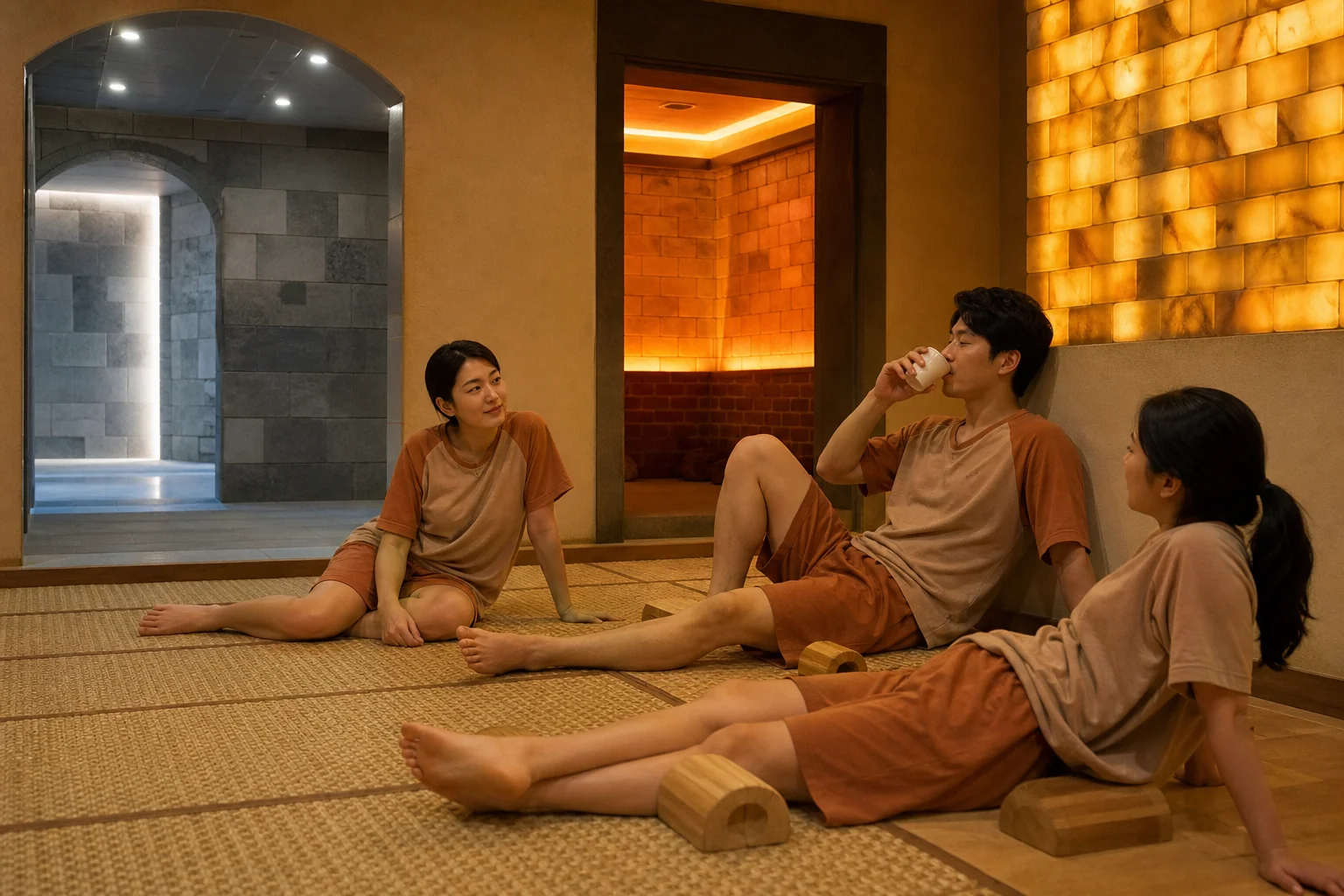
The mixed communal area is clothed. Wear the facility-issued shirt and shorts unless staff gives different instructions. Friends, partners, and families can meet there after using separate changing and bathing areas. Heated spaces may include red-clay rooms, salt rooms, charcoal kilns, stone rooms, steam rooms, or Finnish-style saunas; facilities also provide cool rooms and ordinary-temperature rest areas.
For a first visit, begin in a lower-temperature room and notice how you feel before trying a hotter one. The Korea Tourism Organization recommends starting around 30–40°C and treating rooms above 60°C cautiously. You do not have to complete every room, stay as long as another guest, or alternate extreme heat and cold. Leave immediately if you feel dizzy, nauseated, faint, confused, unusually short of breath, or otherwise unwell.
A sensible rhythm is simple:
- Drink water before you feel very thirsty.
- Try one moderate room briefly.
- Rest at normal temperature.
- Decide whether another room sounds comfortable.
- Skip the hottest room if you are unsure.
- Follow every posted time, footwear, and age rule.
Heat is not a contest or a medical treatment. Anyone who is pregnant, has a heart or blood-pressure condition, takes medication that affects heat tolerance or hydration, or has another health concern should ask a qualified clinician whether sauna use is appropriate. Never enter after drinking alcohol; Aquafield’s current policy explicitly refuses admission to intoxicated guests.
What to Bring—and What to Leave Behind
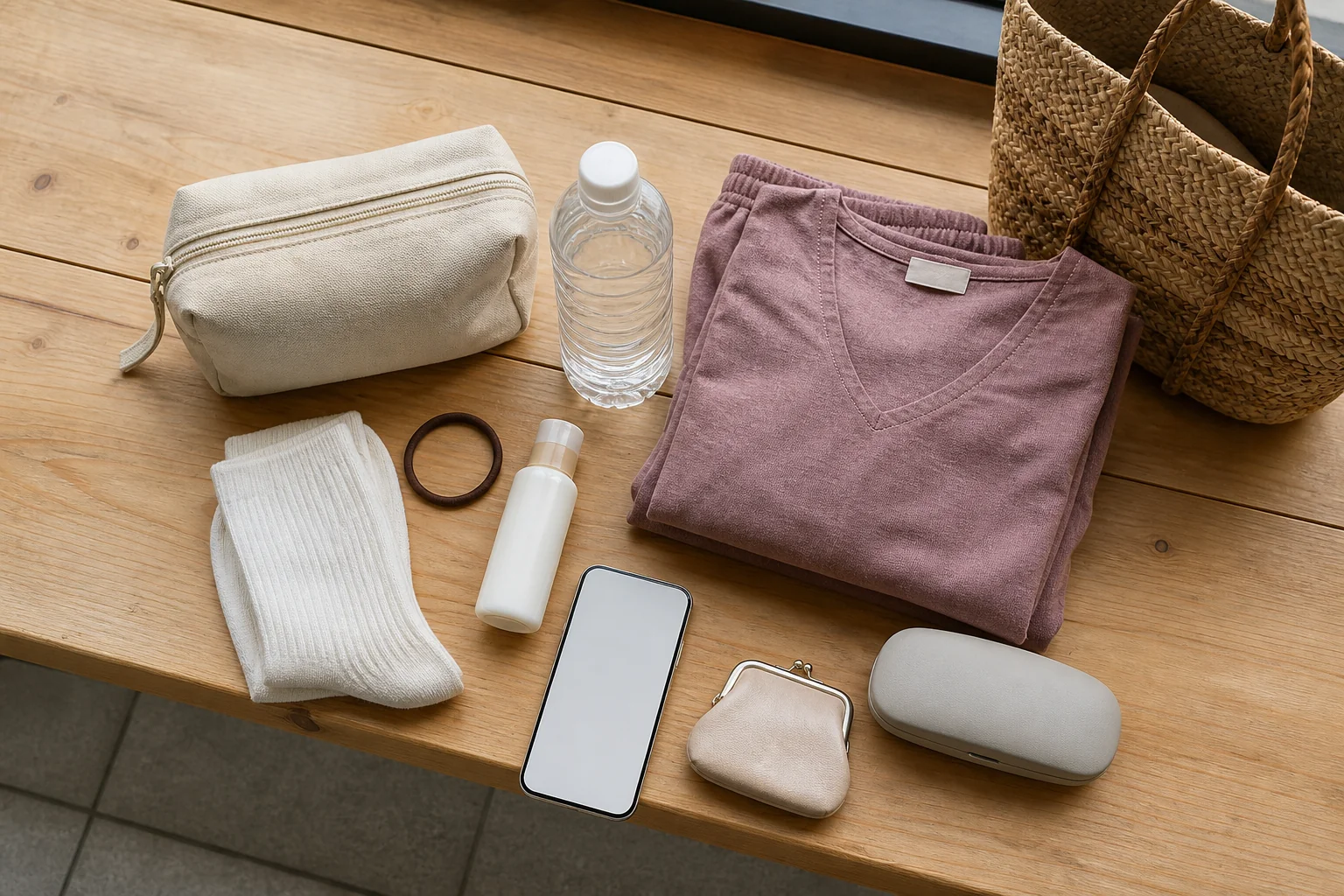
Most visitors need less than they expect. A facility may issue a uniform, one or two small towels, and locker access, but inclusions are not standardized. Aquafield, for example, says it does not provide a shared shower scrub towel for hygiene reasons. Confirm what your ticket includes before packing.
Useful items to bring:
- A payment card plus a small amount of backup cash
- A refillable plastic water bottle if outside drinks are permitted
- Travel-size shampoo, conditioner, facial cleanser, and moisturizer
- A hair tie, brush, and any essential personal-care items
- Clean underwear and socks for afterward
- Glasses case or contact-lens supplies
- A waterproof pouch for damp toiletries
- Identification when an age, resident, child, or discount rate requires proof
- A written Korean allergy card if you plan to order food and have a serious allergy
Soap and shampoo may be available, sold, or absent. Large destination spas often have more amenities than local bathhouses, but bringing a compact toiletry pouch avoids guesswork. If you use contact lenses, remember that heat and dry air may be uncomfortable; keep your case accessible in the locker.
Usually unnecessary or restricted:
- Your own spa outfit when a uniform is issued
- Large bath sheets unless the venue specifically allows them
- Glass bottles or containers
- Outside meals, alcohol, burners, coolers, or picnic equipment
- Professional cameras, tripods, or filming gear
- Expensive jewelry and irreplaceable valuables
Policies differ. Aquafield currently prohibits outside food, burners, and glass bottles, while allowing water and drinks in PET bottles plus limited exceptions for baby food and medically necessary food. It also prohibits mats, portable chairs, coolers, and pets. Use those rules as a concrete example, not a nationwide rule: always check the venue you will actually visit.
Keep your phone in the locker in the changing and bathing zones. Even where phones are permitted in a public lounge, frame photos carefully and never include strangers without consent. If you want a rainy-day activity to pair with a spa visit, our Korea summer rain travel guide has practical indoor planning and packing ideas.
2026 Prices and Wristband Payment
There is no single Korean jjimjilbang price. Admission changes by facility, product, age, season, day, and promotion. The comparison below is an August 27, 2026 operator/KTO snapshot. Aquafield’s three listed branches and ₩26,000 jjimjil-spa rate were rechecked on October 4; reconfirm the other dated examples before booking. Treat it as a planning snapshot and recheck the linked page on the day you go.
| Facility and area | Adult admission shown | Included time | Current practical note |
|---|---|---|---|
| Supsok Hanbang Land, Seoul | ₩15,000 | Check directly | KTO lists 08:00–21:00 and an ₩8,000 child rate |
| Aquafield Hanam, Goyang and Anseong | ₩26,000 jjimjil spa | Up to 6 hours | Child rate ₩21,000; published overtime is ₩5,000 per hour |
| Spa Land Centum City, Busan | ₩26,000 | Up to 4 hours | Student rate ₩21,000; spending at least ₩10,000 inside can extend use to 6 hours under the posted rule |
| CIMER, Incheon | ₩40,000 jjimjil spa | 4 hours | Child rate ₩30,000; this ticket covers the jjimjil spa zones, not the full Aqua Spa product |
These examples are not a “best spa” ranking. They show why checking the product name matters. A lower-priced local facility can be perfect for a straightforward bath and kiln-room visit. A larger complex may charge more for themed rooms, longer opening hours, mall access, pools, or resort-style amenities that you may not need.
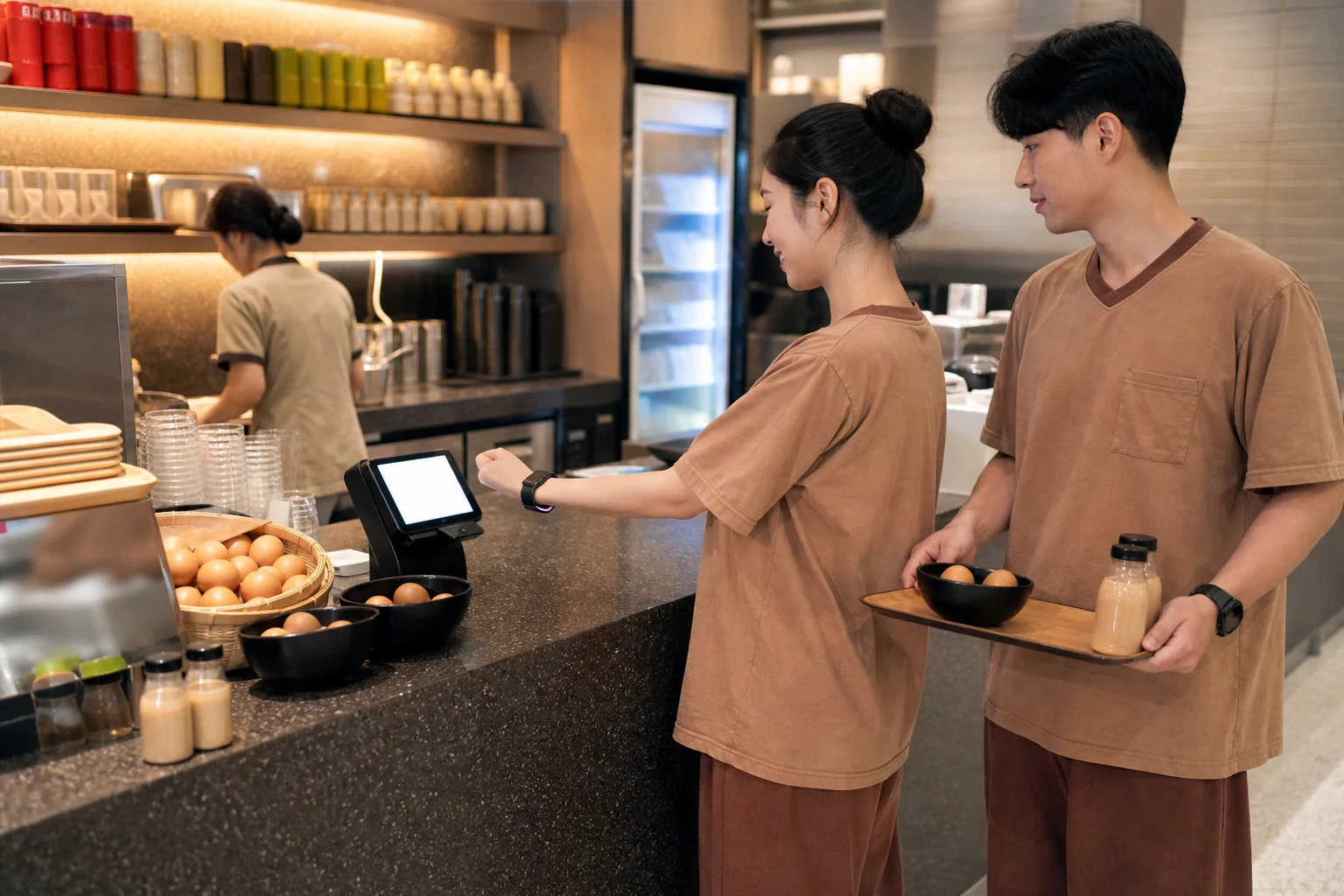
Budget beyond admission for eggs, sikhye (sweet rice punch), a meal, massage chairs, exfoliation, rental items, or overtime. The common wristband system can make spending feel invisible because you pay at exit. Ask whether a purchase is being charged to your key, keep a rough total, and never lend the key to someone else.
At Aquafield, even guests with no extra purchases must visit settlement so the system can verify time. A lost locker key can also trigger a fee. Before leaving, return all rented items, review the screen, pay the balance, and keep the receipt until the shoe locker opens.
For transport to a city facility, save the Korean address and branch name; similar English names can produce the wrong map result. Our Korean subway and bus phrase guide includes short questions for stops, transfers, and asking for help.
Jjimjilbang Etiquette That Matters
Good etiquette is mostly about hygiene, privacy, and noticing the facility’s own system.
Wash before entering a bath. Sit or stand at a shower station and clean yourself first. Do not treat the shared pool as the place to rinse off.
Keep towels and hair out of the water. Place your small towel beside the bath or wear it on your head only if the venue’s setup makes that appropriate. Tie back long hair.
Respect the clothing boundary. Nudity belongs only in the gender-separated wet area. The communal jjimjil lounge requires the issued clothing.
Never photograph in lockers, showers, or baths. Aquafield’s policy bans photo and video recording inside locker rooms and saunas. Treat that as the safest default everywhere, even if you do not see an English sign.
Speak softly in rest zones. Snack halls can be social; sleeping rooms and relaxation lounges are different. Silence your phone, use headphones, and take calls elsewhere.
Do not reserve a large space with belongings. Keep bags in the locker and leave floor mats or loungers available when you are moving between rooms.
Follow food boundaries. Eat in designated areas, clear the tray as directed, and do not carry snacks into heated rooms unless staff explicitly permits it.
Keep your wristband with you. It may control your clothing locker, shoe locker, and purchases. Report it immediately if lost.
Parents should verify child rules. Gender-separation ages and guardian requirements are based on law and facility policy. Aquafield states that children aged four (48 months) and older cannot enter opposite-gender sauna, shower, or changing areas; other venues may impose additional admission limits. Bring proof of age when requested.
The towel “sheep head” seen in Korean entertainment is optional, not a requirement. Eggs and sikhye are popular, not mandatory. Enjoy the cultural details without turning other customers into a photo backdrop.
A Simple First-Visit Plan
Allow about three hours and avoid stacking the visit immediately before a timed train or flight. Last admission can be earlier than closing time, and settlement or changing may take longer when the facility is busy.
First 20 minutes: Check in, learn what the key opens, store shoes, find your clothing locker, and read the English or pictogram rules. Photographing the locker number is not appropriate in a changing area, so memorize it or note it before putting your phone away if the venue permits.
Next 30–45 minutes: Shower and use the baths only if you are comfortable. There is no need to copy another guest’s temperature sequence. Wash first and move calmly around wet floors.
Next hour, mainly for rest—not an hour of continuous heat: Put on the uniform, meet companions in an agreed public spot, try one cooler or moderate room, rest, hydrate, and consider one additional room. Leave plenty of recovery time.
Next 30 minutes: Have a drink or simple snack in the designated food area. Confirm prices before tapping the wristband, especially if ordering several items for a group.
Final 30–45 minutes: Return to the changing area, shower if desired, dry completely, dress, check the locker twice, return rentals, settle charges, and retrieve shoes.
If the facility feels crowded, skip rooms rather than rushing. Capacity controls can create entry waits at large complexes, especially on weekends and holidays. A weekday visit is usually easier for learning the flow.
Choosing the Right Type of Jjimjilbang
Choose by experience, not by the longest amenity list.
Neighborhood bathhouse: Best when you want a local, straightforward sauna visit and do not need extensive English support or themed rooms. Confirm whether a true communal jjimjil area is included; some places are primarily baths.
Traditional kiln-style facility: Good if charcoal or clay heat rooms are the main attraction. KTO’s listing for Supsok Hanbang Land warns that its hottest kiln requires extra care, including socks and cotton gloves. Never enter a specialty room without reading its instructions.
Mall-based destination spa: Convenient for groups with different interests and for combining the visit with shopping or dining. Aquafield and Spa Land publish detailed product, time, and child policies, which can make planning easier.
Resort or pool-spa complex: Useful when your group also wants pools, but check whether swimwear, a separate pass, or a higher seasonal price applies. A “spa” ticket and a “jjimjil spa” ticket may cover different floors.
Overnight-style facility: Do not assume a jjimjilbang is a substitute for a hotel. Many well-known 24-hour facilities have closed or changed hours, and a current venue may prohibit overnight sleeping. Verify operating hours, overnight access, luggage size, shower availability, and re-entry directly. If dependable sleep matters, book accommodation.
For a broader culture itinerary, combine this guide with our Korean traditional experiences guide. If you want a calm stop afterward, the Korean cafe etiquette guide explains ordering, seats, and tray return.
Official Sources Checked
The time-sensitive details in this guide were checked on August 27, 2026 against the Korea Tourism Organization jjimjilbang guide, KTO’s Supsok Hanbang Land listing, Aquafield admission information, Aquafield operating policy, Aquafield settlement guide, Spa Land Centum City, and CIMER admission information. Prices, hours, promotions, and age rules can change; confirm directly before travel.
Make Your First Visit Easy
Choose one facility, open its official ticket page, and save four details: the exact product name, last admission, included hours, and child or tattoo policy if relevant. Then pack a small toiletry pouch and plan a relaxed three-hour window. That preparation matters far more than memorizing every sauna type—and it leaves you free to enjoy the warm rooms, a cold sikhye, and a genuinely local part of Korean leisure culture.