
Quick Info
- 📍 Area: Korean restaurants, traditional markets, supermarkets, and Korean grocery stores worldwide
- 🕒 Best time: Year-round; cucumber and young-radish kimchi are especially refreshing in warm weather, while dongchimi suits winter meals
- 💰 Budget: Restaurant kimchi is usually served as banchan; packaged prices vary by vegetable, weight, brand, origin, and retailer
- 🚇 Getting there: Start at a Korean restaurant or the refrigerated kimchi section of a Korean supermarket
- 👥 Best for: First-time Korean-food diners, travelers, home cooks, vegetarians checking ingredients, and anyone who thinks all kimchi is the same
- ✅ TL;DR: Begin with baechu kimchi for the classic taste, kkakdugi for crunch, and baek kimchi or dongchimi for a milder introduction
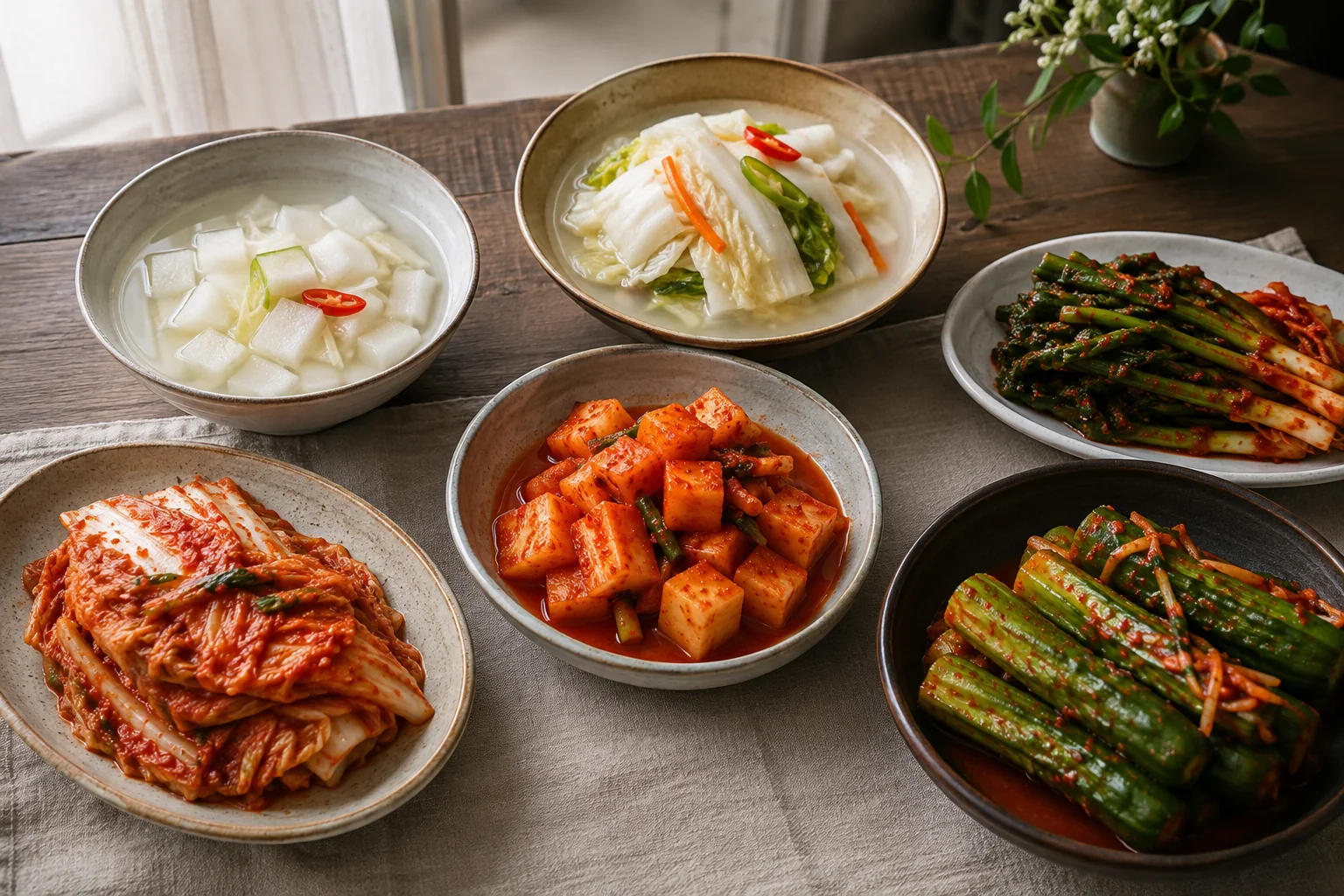
Kimchi is a category, not one recipe. The red napa cabbage served beside barbecue may be the best-known version, but Korean tables also feature crisp radish cubes, stuffed cucumbers, mustard greens, young radish leaves, scallions, and vegetables in clear brine. Some versions are fiery and assertive; others are pale, cool, and gently sour.
Official Korean sources describe hundreds of variations shaped by region, season, ingredients, and household technique. The current Korea.net kimchi overview identifies cabbage, diced radish, whole young radish, cucumber, mustard leaf, green onion, radish water, and white kimchi among the representative families. The Korea Tourism Organization’s kimchi guide also highlights baechu kimchi, kkakdugi, nabak kimchi, oi sobagi, and yeolmu kimchi.
This guide was checked on September 7, 2026. It focuses on how ten common types differ at the table: their main vegetable, likely texture, relative heat, season, and useful pairings. Recipes vary widely, so treat the descriptions as orientation rather than a promise that every restaurant or family version will taste identical.
Korean Kimchi Types at a Glance
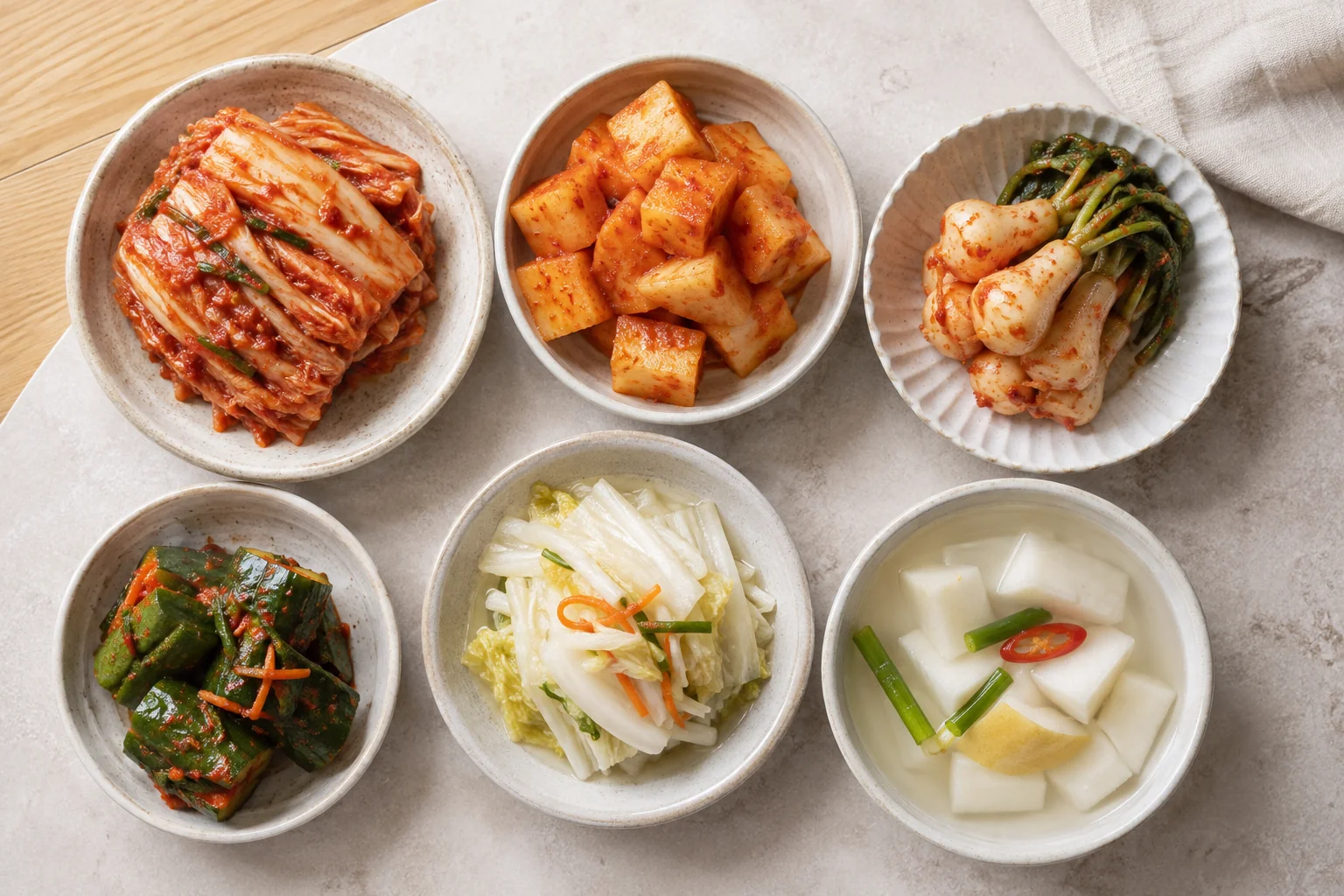
Use this table as a first tasting map. “Mild” does not mean sodium-free or allergen-free, and “red” does not guarantee the same spice level. Fermentation time and the cook’s seasoning matter as much as the vegetable.
| Kimchi type | Main vegetable | Typical character | Relative heat | Easy pairing |
|---|---|---|---|---|
| Baechu kimchi | Napa cabbage | Layered, savory, tangy as it ripens | Medium, varies | Rice, barbecue, stew |
| Kkakdugi | Korean radish cubes | Juicy, firm, crunchy | Mild to medium | Seolleongtang, gomtang |
| Chonggak kimchi | Whole young radish with greens | Dense crunch, earthy, lively | Medium | Rice, soups, grilled dishes |
| Oi sobagi | Stuffed cucumber | Fresh, juicy, aromatic | Mild to medium | Summer meals, noodles |
| Yeolmu kimchi | Young summer radish and leaves | Green, light, refreshing | Mild to medium | Bibimbap, cold noodles |
| Pa kimchi | Green onions | Pungent, savory, slightly sweet | Medium | Grilled meat, rice |
| Gat kimchi | Mustard greens | Peppery, deep, assertive | Medium to hot | Rice, grilled fish or meat |
| Baek kimchi | Napa cabbage without red pepper powder | Mild, crisp, gently sweet-tart | Low | Delicate dishes, spice-sensitive meals |
| Dongchimi | Radish in clear brine | Cool, clean, lightly sour | Low | Naengmyeon, rich winter food |
| Nabak kimchi | Thin radish and cabbage pieces in brine | Light, colorful, refreshing | Low to mild | Holiday tables, rice dishes |
These are families rather than fixed formulas. A baechu kimchi can be fresh and crisp, fully ripened and sharp, seafood-rich, vegetarian, lightly seasoned, or deeply red. A restaurant’s kkakdugi may be sweet and juicy, while another kitchen makes it firmer and more savory. The table helps you ask the right question: Which vegetable, texture, and fermentation stage do I want today?
Red, White, and Water Kimchi: What Changes?
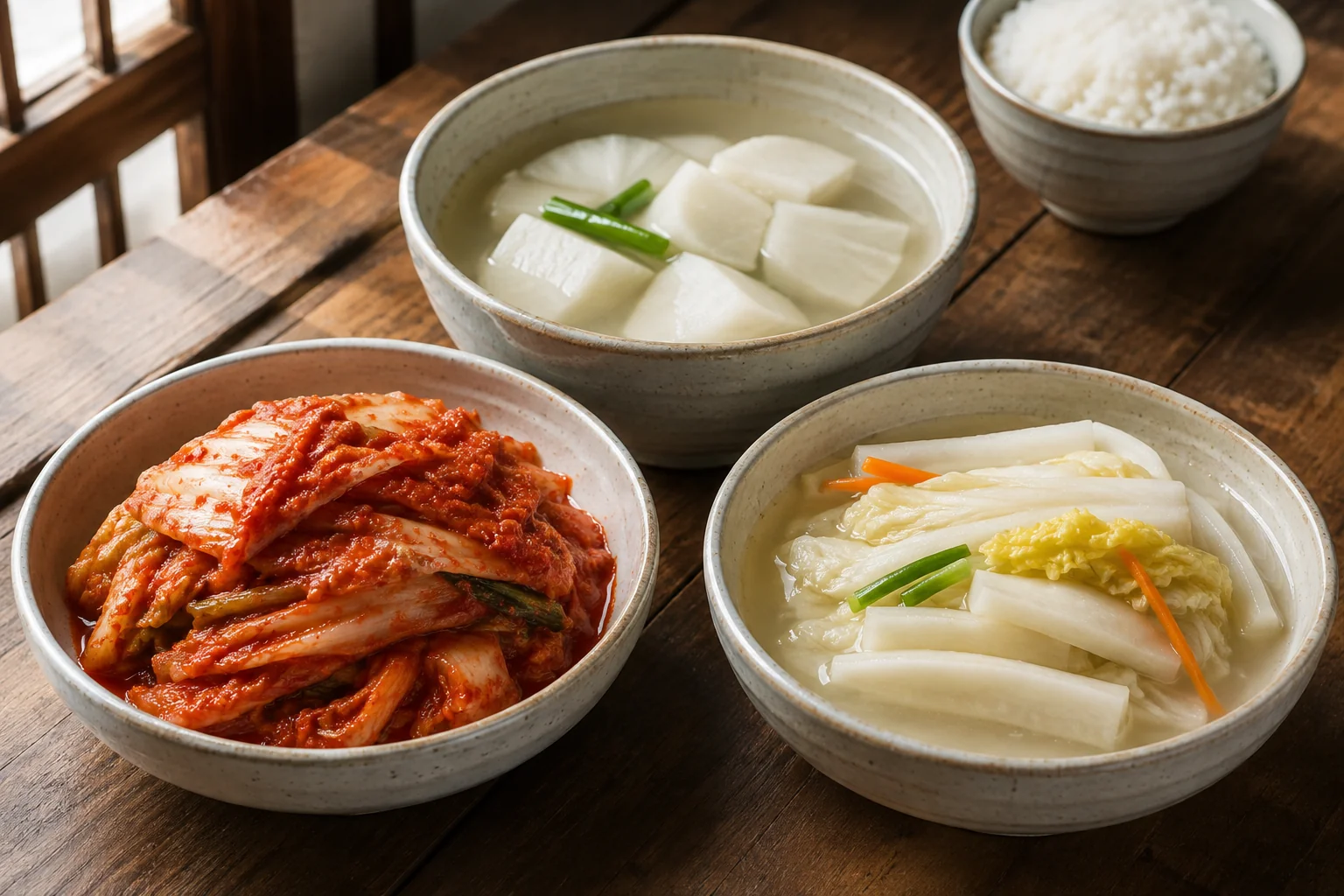
Color is a useful clue, but it is not a complete spice meter. Red kimchi usually contains gochugaru, the Korean red pepper flakes that contribute color, warmth, and fruity pepper flavor. The final heat still depends on how much is used, the pepper itself, other seasonings, and how the kimchi has matured.
Baek kimchi, or white kimchi, is made without red pepper powder. It usually centers the sweetness and crunch of napa cabbage, radish, aromatics, and a light brine. It is a sensible first choice for someone who wants fermented flavor without a red chili paste coating. “White” does not automatically mean plain: garlic, ginger, fruit, salted seafood, or other seasonings may still create a complex taste.
Dongchimi is a radish water kimchi with a clear, generous brine. Korea.net’s official dongchimi introduction describes it as a winter variety built around salted white radish, fragrant ingredients, and a clear savory liquid. That brine can be served as part of a meal or used in cold-noodle broth. It feels especially refreshing beside rich, oily, or spicy dishes.
Nabak kimchi is another water-kimchi style, but the vegetables are typically cut into thin rectangular pieces. The KTO guide explains that the name refers to that cutting shape. Compared with whole-radish dongchimi, nabak kimchi often reads as a lighter mixed-vegetable side dish and may show a pale pink or lightly seasoned broth.
If heat is your main concern, ask whether a kimchi contains gochugaru rather than judging only by the English name. If dietary ingredients matter, color tells you even less: pale and red versions can both contain fish sauce or salted seafood.
How to Choose Packaged Kimchi

A supermarket refrigerator can hold many containers that appear almost identical. Choose by the information on the package, not by the deepest red color.
First, identify the vegetable and cut. Look for baechu or napa cabbage when you want the familiar layered side dish. Choose kkakdugi for firm cubes, chonggak for small whole radishes and greens, or oi sobagi when cucumber is the point. This decision changes texture more reliably than a marketing phrase does.
Second, check the pack date, use-by guidance, and storage instructions. Kimchi is alive with fermentation, so flavor and pressure can continue to change. Follow the manufacturer’s instructions, keep the product refrigerated when directed, close it securely, and use a clean utensil. A swollen or vented package can reflect fermentation, but damage, leakage, an unsafe seal, or a seriously mishandled product is not something to guess about; follow retailer and manufacturer guidance.
Third, read the full ingredient and allergen information. Traditional kimchi commonly uses fish sauce, salted shrimp, or other seafood seasonings. A vegetable-based appearance therefore does not prove that a product is vegetarian, vegan, or suitable for a seafood allergy. Look for a clear vegan claim if that is your need, then verify the ingredient list and allergen statement for that exact package. Recipes can change between brands and markets.
Fourth, choose a container size you can finish comfortably. A very large tub can look economical, but it occupies refrigerator space and keeps changing after opening. First-time buyers often learn more from two small, contrasting packages—perhaps baechu kimchi and dongchimi—than from one family-size container.
Finally, inspect origin wording carefully if origin matters to you. “Korean style,” a Korean brand name, and manufacture in Korea are different claims. Use the country-of-origin statement and the legally required package information in your market rather than inferring origin from design.
Best Food Pairings for Each Kimchi Style
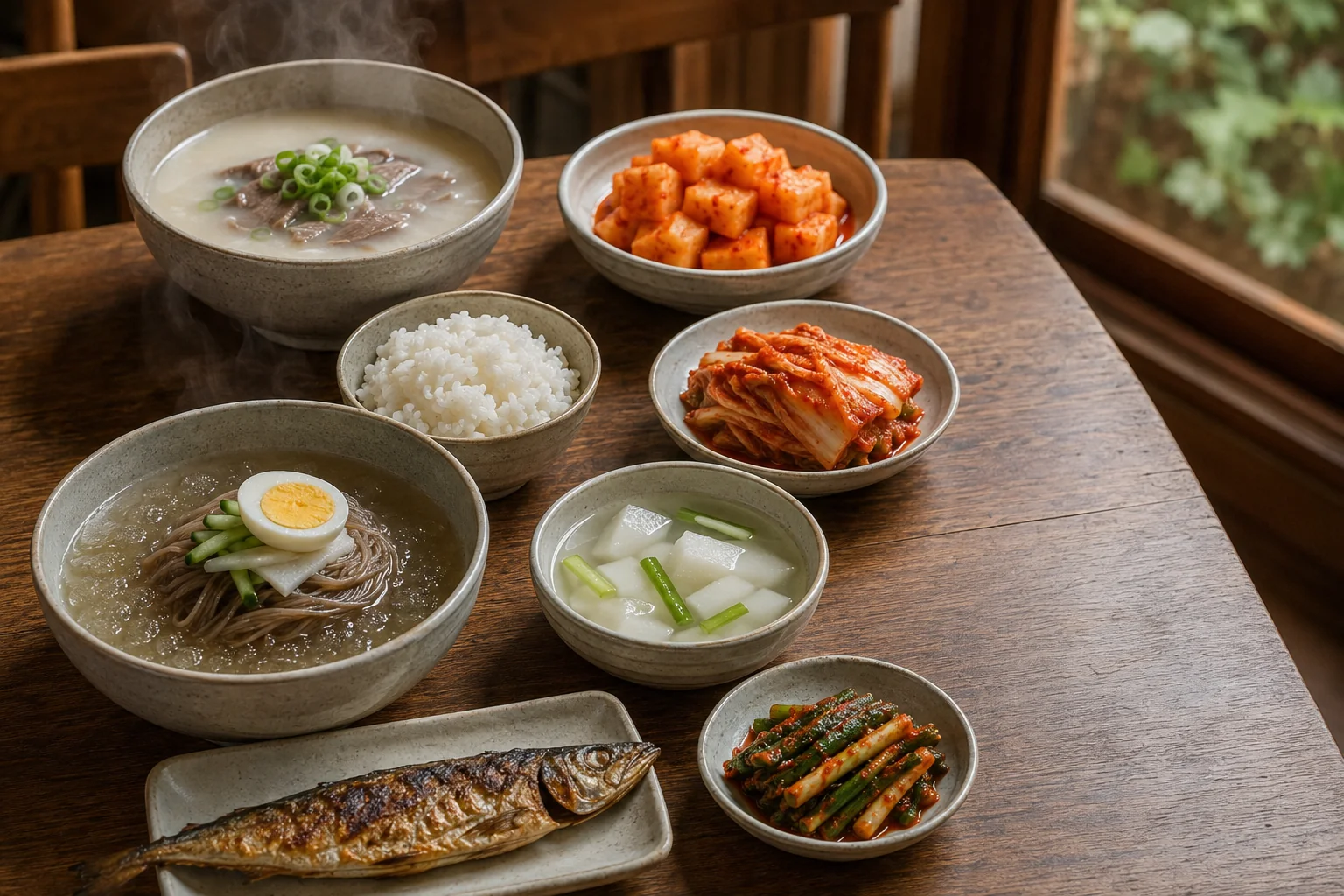
Kimchi pairing is mostly about contrast. A crisp, sharp side wakes up a soft or fatty dish. A mild water kimchi cools a strongly seasoned meal. A pungent leaf kimchi can stand beside grilled food without disappearing.
- Milky beef soups + kkakdugi: Seolleongtang and gomtang are gentle and rich. Crunchy radish cubes bring acidity, salt, and texture between spoonfuls.
- Plain rice + baechu kimchi: This is the baseline pairing because rice softens the seasoning while the cabbage provides crunch and savoriness.
- Grilled pork or beef + pa kimchi: The scallion’s pungency and fermented seasoning cut through fat. If you are planning barbecue, the Korean restaurant phrases guide can help with ordering, spice questions, refills, and payment.
- Cold noodles + yeolmu kimchi or dongchimi: Young radish greens feel lively with bibim-guksu, while dongchimi brine belongs naturally with several cold-noodle traditions.
- Grilled fish + gat kimchi: Peppery mustard greens have enough personality for a strongly flavored main dish.
- Delicate dishes + baek kimchi: White kimchi provides fermentation and crunch without adding a red chili coating to every bite.
- Kimchi fried rice or stew + ripe baechu kimchi: Older, sourer cabbage kimchi is often more useful for cooking than a very fresh batch. See the beginner kimchi fried rice guide for a simple way to manage moisture, sourness, and seasoning.
Pairings are conventions, not rules. The useful habit is to taste the kimchi first, then decide what the main dish needs. If both are extremely salty, hot, or sour, add plain rice, a mild soup, or another neutral element instead of forcing a famous combination.
The 10 Types in More Detail
1. Baechu kimchi: the classic starting point
Baechu kimchi uses napa cabbage that has been salted and seasoned between its leaves. The result can move from fresh, crisp, and vegetable-forward to tangy, soft, and deeply fermented. It is the most versatile first purchase because it works as banchan and later becomes an ingredient for fried rice, pancakes, noodles, dumpling filling, or kimchi jjigae.
When a restaurant server simply says “kimchi,” this is often what arrives, but do not assume one universal flavor. Regional seafood seasonings, household ratios, salting, temperature, and age all change the result.
2. Kkakdugi: radish cubes with serious crunch
Kkakdugi is made from diced Korean radish. The KTO describes its crisp texture and affinity with soups and stews, while Korea.net identifies it as one of the representative varieties. Good cubes feel juicy and structured rather than limp. The radish’s gentle sweetness can balance chili, garlic, and fermentation.
Try it beside seolleongtang or another mild broth. Bite the cube after a spoonful of soup rather than dropping the entire side dish into the bowl; you will notice the temperature and texture contrast more clearly.
3. Chonggak kimchi: whole young radish and greens
Chonggak kimchi uses small young radishes, commonly with their leafy tops attached. It has a denser, more sustained crunch than kkakdugi because you bite through a larger piece. The leaves add a green, earthy dimension.
This is a good second-step kimchi for someone who already enjoys kkakdugi but wants more chew and stronger vegetable character. Cut or bite it carefully at the table; the long radish and greens can be less tidy than cubes.
4. Oi sobagi: stuffed cucumber kimchi
Oi sobagi is cucumber split and filled with seasoning. Its appeal is immediate freshness: cool cucumber, fragrant aromatics, juice, and a crisp bite. It is commonly associated with spring and summer and is best approached as a fresh vegetable side rather than a substitute for deeply aged cabbage kimchi.
Because cucumbers soften with time, texture varies sharply by batch and age. Choose it when you want something bright beside noodles, rice, or a warm-weather meal.
5. Yeolmu kimchi: young summer radish
Yeolmu kimchi uses young radish, especially its tender leafy greens. The KTO calls it a summer delicacy with a cool, appetite-opening quality. It may be served as a regular side, mixed into bibimbap, or paired with noodles.
Expect a looser, greener texture than cabbage kimchi. If you like leafy vegetables and lightly sour flavors, yeolmu can be more refreshing than a dense winter-style kimchi.
6. Pa kimchi: green onion with a long finish
Pa kimchi seasons whole or long-cut green onions. The vegetable brings sweetness, sharp allium aroma, and a fibrous bite that changes as it ferments. It can taste bold next to mild rice and especially effective beside grilled meat.
Take a small portion first. Long scallions can be intense, and both aroma and texture are more assertive than ordinary chopped scallion garnish.
7. Gat kimchi: peppery mustard greens
Gat kimchi is made with leaf mustard. The greens contribute their own peppery character before chili seasoning is considered, which makes this one of the most distinctive varieties in the group. It is strongly associated with southern regional food, particularly the Yeosu area.
Choose it when you want a kimchi that can stand up to grilled fish, grilled meat, or plain rice. Someone looking only for low heat should begin with baek kimchi or dongchimi instead.
8. Baek kimchi: mild in color, not empty in flavor
Baek kimchi is napa cabbage kimchi made without red pepper powder. Its pale appearance reveals cabbage, radish strips, and other ingredients in a light brine. Depending on the recipe, fruit, nuts, aromatics, or seafood seasoning may add fragrance and depth.
It is one of the best entry points for a spice-sensitive diner, but check ingredients for allergies and dietary preferences. “No red pepper” and “vegan” are not synonyms.
9. Dongchimi: radish and a drinkable clear brine
Dongchimi centers radish in clear brine and is traditionally linked with winter. Its cool liquid is as important as the vegetable. The clean, lightly sour profile makes a useful counterweight to rich food, and the brine can contribute to cold noodle dishes.
Serve it cold and include some liquid in the bowl. Judging only the radish pieces misses half the experience.
10. Nabak kimchi: thin vegetables in a light broth
Nabak kimchi combines thin pieces of radish and often napa cabbage in a generous, lightly colored broth. It is typically gentler than dense red cabbage kimchi and easy to place beside rice or a holiday meal.
People sometimes group all clear or pale brined kimchi together. Look at the cut: thin rectangular vegetables suggest nabak kimchi, while larger radish pieces in a clearer winter brine point toward dongchimi.
Season, Region, and Fermentation Matter
The same name does not erase season or place. Warm-weather vegetables encourage cucumber and young-radish kimchi; winter preservation traditions favor large batches of cabbage and radish. The Academy of Korean Studies’ kimchi encyclopedia entry describes regional variation in pepper use, salted seafood, seasoning, and local vegetables. Northern styles are often associated with paler or broth-based kimchi, while southern traditions may use stronger seafood seasoning and bolder salting, although modern migration and commercial production blur simple boundaries.
Kimjang adds a social dimension. UNESCO inscribed kimjang, the making and sharing of kimchi on the Representative List of the Intangible Cultural Heritage of Humanity in 2013. Its description emphasizes a yearly cycle of preparing ingredients and the late-autumn practice of communities making and sharing large quantities for winter. Kimjang is not merely the name of one cabbage recipe; it is shared knowledge, labor, timing, and family variation.
Fermentation also changes your bowl. Fresh kimchi can be crisp, bright, and seasoning-forward. Ripened kimchi becomes tangier and more integrated. Very sour kimchi may be excellent for cooking even if it is not your favorite raw side. Instead of asking whether old or fresh kimchi is “better,” ask what you plan to eat or cook.
A First-Timer’s Kimchi Tasting Plan
You do not need to order ten dishes. Build contrast in three rounds.
- Start with baechu kimchi. Taste one bite with no sauce added. Notice cabbage texture, salt, chili warmth, garlic, and acidity.
- Add kkakdugi. Compare a juicy radish cube with the flexible cabbage leaves. The seasoning may be similar, but the vegetable changes the entire bite.
- Finish with baek kimchi or dongchimi. A pale version shows that fermentation does not depend on visible red chili.
On a later meal, try one green variety: oi sobagi for cucumber freshness, yeolmu for tender radish greens, pa kimchi for allium punch, or gat kimchi for mustardy intensity. This approach creates a memory for each style instead of turning the table into an anonymous red pile.
At a restaurant, take a small serving and ask before assuming refills are unlimited. Banchan service varies by restaurant, meal, and location. If you are invited to a Korean home, compliment what you genuinely enjoy and follow the host’s serving cues; the Korean gift etiquette guide also covers practical home-visit preparation.
Common Kimchi Mistakes to Avoid
Assuming every kimchi is very spicy. Baek kimchi, dongchimi, and many nabak kimchi versions are useful counterexamples. Ask about pepper and taste a small bite.
Assuming pale kimchi is vegan. Fish sauce or salted seafood can appear in red or pale recipes. Verify the exact ingredient list or ask the cook.
Calling any fermented vegetable “kimchi” without context. Kimchi includes remarkable variation, but Korean names describe vegetables, cuts, seasonings, and traditions. Learn the specific name when you can.
Expecting one restaurant to represent Korea. A restaurant, household, and packaged brand can each make baechu kimchi differently. Variation is part of the food, not evidence that one bowl is automatically wrong.
Throwing away sour kimchi too quickly. If it has been stored according to its instructions and is otherwise suitable to eat, sour kimchi can be ideal for cooked dishes. The gochujang, doenjang, and ssamjang guide can help you distinguish the fermented sauces that may appear elsewhere in the same kitchen.
Buying the largest tub first. Begin with a small amount, learn the flavor and fermentation stage you prefer, and then buy more deliberately.
FAQ
Q: What is the most common type of Korean kimchi?
Baechu kimchi, made with napa cabbage, is the standard starting point and the type many people mean when they say “kimchi.” It is not one fixed recipe; seasoning, seafood ingredients, salt, region, and fermentation stage differ.
Q: Which Korean kimchi is least spicy?
Baek kimchi and dongchimi are usually the easiest low-heat choices because they are made without the red chili coating associated with classic baechu kimchi. Nabak kimchi can also be mild. Ask about the specific batch, since recipes vary.
Q: Is all kimchi vegetarian or vegan?
No. Many recipes use fish sauce, salted shrimp, or other seafood products. Choose a product or restaurant preparation clearly identified as vegan, then check the exact ingredient and allergen information rather than relying on color or vegetable type.
Q: What kimchi goes best with Korean soup?
Kkakdugi is a classic match for mild beef soups such as seolleongtang and gomtang because the radish supplies crunch and acidity. Baechu kimchi also works, especially if you prefer cabbage texture.
Q: What is the difference between dongchimi and nabak kimchi?
Both are brined water-kimchi styles. Dongchimi generally centers larger radish pieces and a clear winter brine. Nabak kimchi typically uses thin rectangular pieces of radish and cabbage in a lighter, sometimes faintly colored broth.
Q: Can I cook with any kind of kimchi?
You can experiment, but ripe baechu kimchi is the most adaptable for fried rice, stew, pancakes, and braises. Water kimchi is valued for its brine, while cucumber and leafy kimchi often make more sense as fresh sides. Match the recipe to the kimchi’s moisture, sourness, and texture.
Choose Your First Three
For a practical introduction, choose baechu kimchi, kkakdugi, and baek kimchi or dongchimi. That trio gives you cabbage versus radish, flexible leaves versus firm cubes, and chili-seasoned versus mild brined styles. Add oi sobagi in summer or gat kimchi when you are ready for a more forceful green flavor.
Bookmark this guide before your next Korean restaurant or supermarket visit, then compare three small portions side by side. Once you can name the vegetable, texture, and fermentation style you enjoy, the kimchi section stops looking like one red category and starts becoming a useful map of Korean food.
Images are original AI-generated editorial illustrations of typical kimchi varieties, shopping, and serving situations. They do not depict a named restaurant, manufacturer, or documented transaction.