
Quick Info
- 📍 Area: Korean supermarkets, Asian grocery stores, international aisles, and reputable online Korean grocers
- 🕒 Best time: Buy year-round; choose a small fresh bottle if you cook Korean food only occasionally
- 💰 Budget: In one current U.S. H Mart comparison checked August 31, 2026, 320ml sesame oil was $6.99 and same-brand 320ml perilla oil was $9.99; location, brand, and promotions vary
- 🚇 Getting there: Look in the cooking-oil and seasoning aisle, usually near soy sauce, vinegar, and Korean pastes
- 👥 Best for: Korean-food beginners, home cooks, pantry shoppers, and anyone deciding whether they need both oils
- ✅ TL;DR: Buy toasted sesame oil first for familiar, bold nuttiness. Add perilla oil when you want an earthier finish for noodles, namul, tofu, mushrooms, or seaweed.
Sesame Oil vs Perilla Oil at a Glance
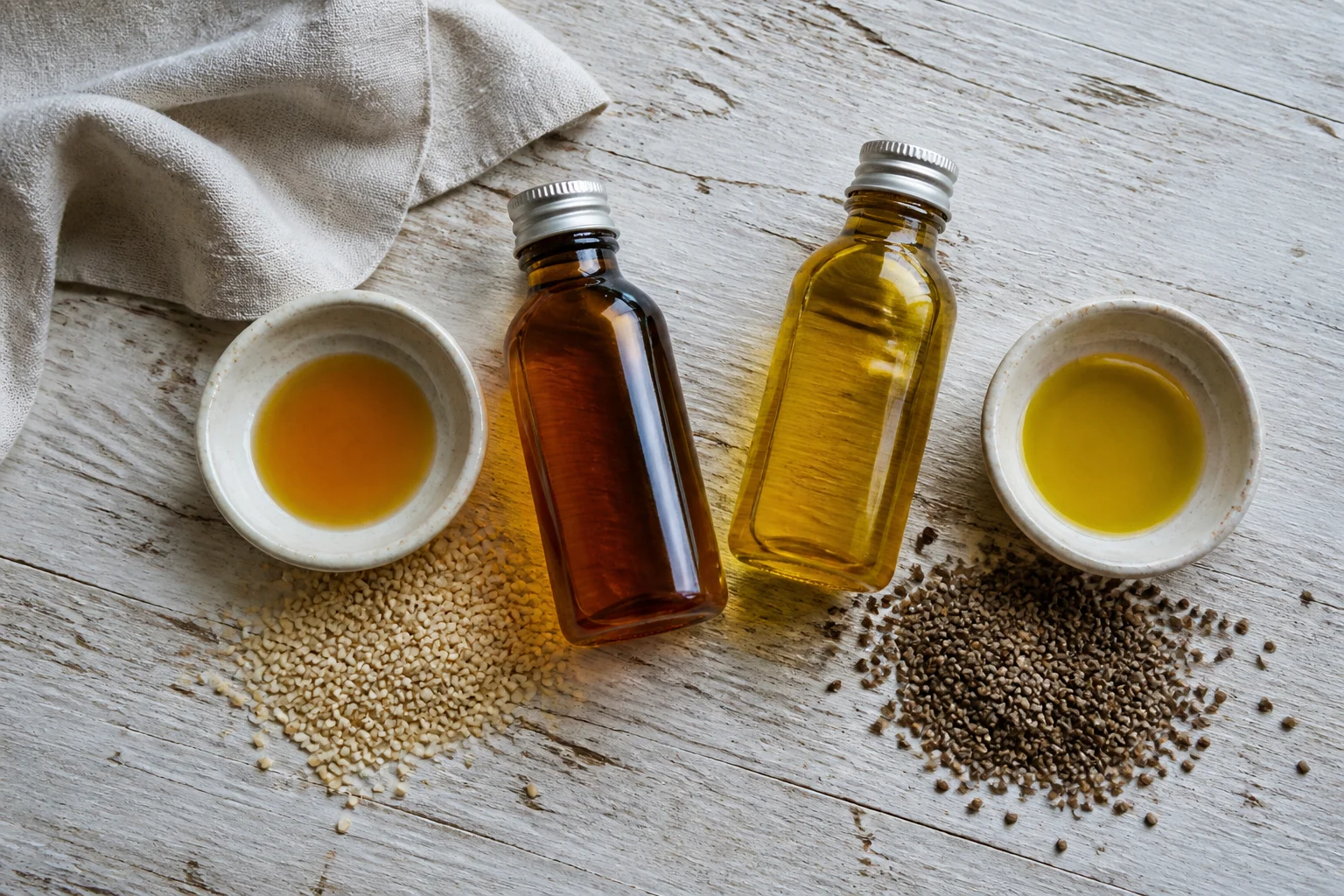
Korean sesame oil and perilla oil share one important job: a small amount can finish a dish with a roasted, nutty aroma. They are not the same oil, however, and their flavors are easier to distinguish than their similar-looking amber bottles suggest.
Sesame oil, or chamgireum (참기름), is pressed from sesame seeds. Korean bottles are commonly made from roasted sesame, producing the deep, warm aroma many shoppers already associate with bibimbap, bulgogi marinade, japchae, and seasoned vegetables.
Perilla oil, or deulgireum (들기름), is pressed from perilla seeds. Perilla belongs to the mint family, but the oil does not taste like peppermint. A roasted version is earthy, green, round, and nutty, with a character that can seem more rustic than sesame oil. Unroasted or raw-pressed perilla oil is usually paler and gentler.
The Korea Tourism Organization’s overview of Korean seasonings lists sesame and perilla among Korea’s characteristic edible oils and describes both as aroma-building seasonings. The Korea Agro-Fisheries & Food Trade Corporation also distinguishes oil from sesame seeds and oil from perilla seeds, including roasted and unroasted styles, in its Korean vegetable-oil guide.
| Question | Korean sesame oil | Korean perilla oil |
|---|---|---|
| Korean name | 참기름 (chamgireum) | 들기름 (deulgireum) |
| Seed | Sesame | Perilla |
| Typical roasted flavor | Toasty, warm, bold, familiar | Earthy, green, nutty, rounded |
| Easiest first use | Bibimbap, japchae, marinades, namul | Buckwheat noodles, tofu, mushrooms, seaweed, namul |
| Availability in the U.S. | Widely available | More likely at Korean markets or online grocers |
| Beginner choice | Best first bottle for broad use | Best second bottle for a distinct Korean flavor |
| Can one replace the other? | Sometimes, but the dish will taste different | Sometimes, but start with less and taste |
If you can buy only one bottle, toasted sesame oil is the safer all-purpose starting point. It appears in more English-language Korean recipes and is easier to find. Perilla oil earns its pantry space when you enjoy simple foods where the oil itself remains noticeable.
How Sesame Oil and Perilla Oil Taste
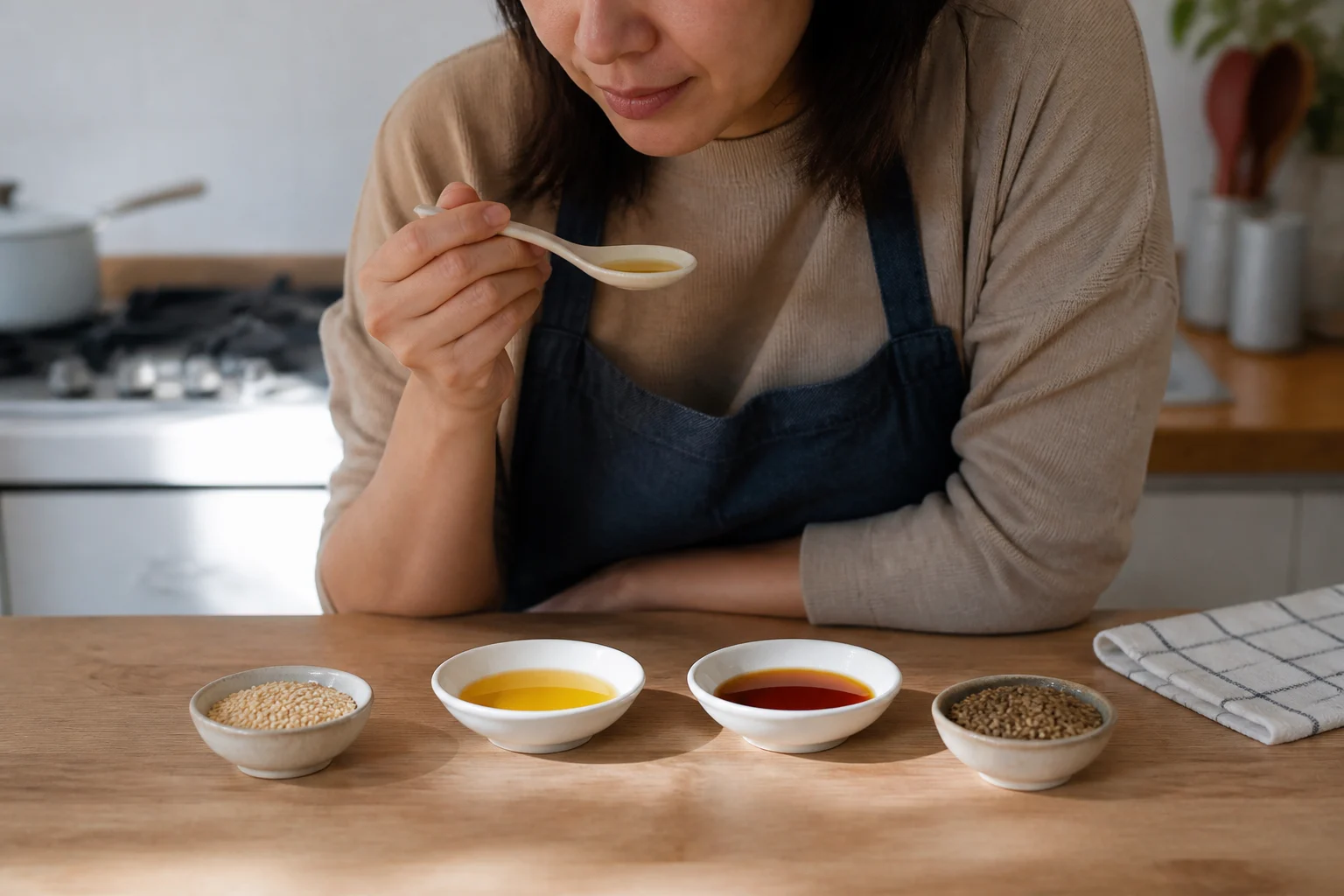
The quickest way to understand the difference is to smell each oil before tasting it. Pour a few drops into separate spoons, warm them briefly between your fingers, and notice the aroma. Then taste each with plain rice, cucumber, or unsalted tofu rather than drinking a spoonful of oil by itself.
Toasted sesame oil
Toasted sesame oil leads with an immediate roasted aroma. It can suggest toasted nuts, warm grain, and browned edges. The finish is assertive, which is why a teaspoon can season an entire bowl of rice or vegetables. Very dark oil is not automatically better: color changes with seed origin, roasting level, pressing, filtration, and blending.
Use sesame oil when a dish needs a recognizable toasted top note. It works especially well with soy sauce, garlic, scallion, black pepper, vinegar, gochujang, and toasted sesame seeds. If you are building a Korean pantry around fermented seasonings, our gochujang, doenjang, and ssamjang comparison explains which paste does which job.
Roasted perilla oil
Roasted perilla oil is also nutty, but it tends to feel earthier and more vegetal. Some people notice a grassy or seed-like note; others describe it as rounder and softer than dark sesame oil. Because flavor varies with roast and producer, do not assume every bottle will taste identical.
Perilla oil pairs naturally with buckwheat noodles, mushrooms, tofu, leafy vegetables, seaweed, and mild soups. It can make a very simple noodle bowl taste complete without the chili sweetness that gochujang would add.
Unroasted or raw-pressed perilla oil
An unroasted bottle is a separate style, not a premium synonym for roasted oil. It is often lighter in color and more delicate in aroma. The aT guide notes that some Korean producers press perilla seeds without roasting specifically to preserve a soft, clear seed flavor.
Choose roasted oil when you want the traditional aromatic impact most Korean recipes imply. Choose unroasted oil for gentler dressings or cold dishes—but only after checking the product description, because English labels may use “pure,” “cold-pressed,” “raw,” and “unroasted” inconsistently.
Best Korean Dishes for Each Oil
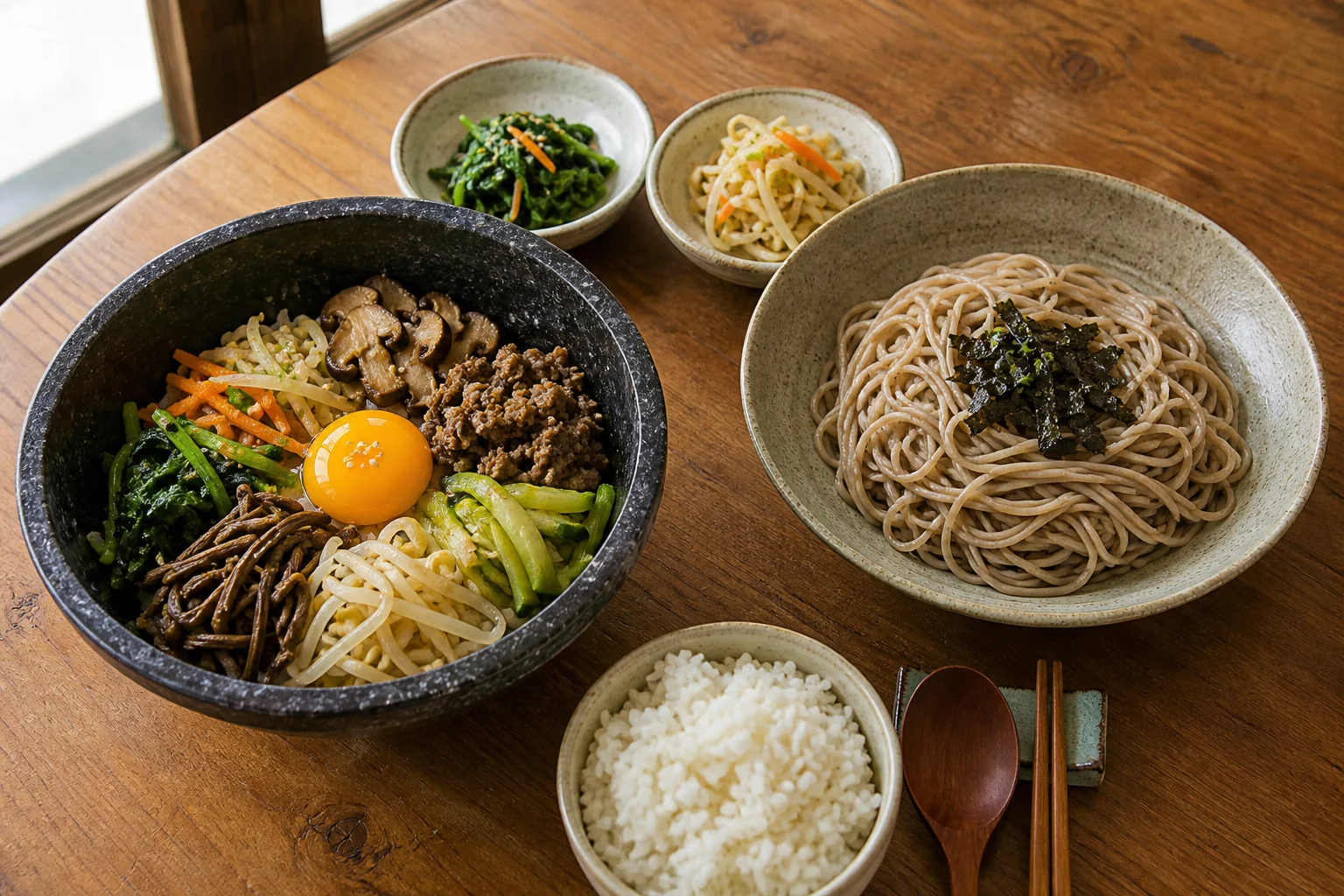
Both oils are most useful as seasonings, finishing oils, or components of marinades and dressings. They can be heated in some Korean cooking, but a generous pour into a very hot pan wastes aroma and may not match the instructions on your bottle. For high-heat frying, use an oil labeled for that purpose and add sesame or perilla oil later for flavor.
Reach for sesame oil when making
- Bibimbap: drizzle a small amount over the rice and vegetables before mixing.
- Japchae: add it near the end so the roasted aroma stays clear.
- Bulgogi or galbi marinade: combine it with soy sauce, garlic, fruit, or sweetener; do not let it replace the main cooking fat unless the recipe says so.
- Namul: use a few drops with salt, garlic, scallion, or soy sauce.
- Gimbap: season rice lightly or brush a small amount over the finished roll.
- Dipping salt for grilled meat: stir a few drops into salt and pepper for a simple gireumjang.
- Kimchi fried rice: add it after cooking for aroma. The step-by-step beginner kimchi fried rice guide shows how to keep the rice dry rather than oily.
Reach for perilla oil when making
- Deulgireum makguksu: coat buckwheat noodles with perilla oil, soy sauce, seaweed, and ground seeds for a simple, savory bowl.
- Pan-fried tofu: use a modest amount during cooking if the label permits, or spoon it over tofu after browning.
- Mushroom dishes: finish sautéed mushrooms with a small drizzle to reinforce their earthy flavor.
- Seaweed soup or seasoned laver: add it cautiously; the aroma becomes prominent quickly.
- Leafy namul: pair it with spinach, radish greens, fernbrake, or other vegetables when you want a deeper, more rustic finish.
- Simple rice bowls: combine with soy sauce, scallion, seaweed, and a fried egg.
A practical substitution rule
For flavor substitutions only, start with a one-for-one substitution when the oil is a minor seasoning. This is not an allergy-safe substitution rule; check the exact product and cross-contact information first. Use a small amount, then taste before adding more. In a noodle dish centered on perilla oil, sesame oil will create a distinctly different result. In a marinade that uses one teaspoon among many ingredients, the swap is less dramatic.
Do not substitute perilla leaf, sometimes confusingly sold as “sesame leaf,” for either oil. The leaf, seed, and pressed oil are different ingredients. Likewise, toasted sesame seeds add texture but cannot fully replace the aroma and coating power of sesame oil.
Prices and How to Buy in 2026

For a controlled current comparison, we checked two same-brand, same-size U.S. H Mart listings on August 31, 2026. The retailer listed Hansang sesame oil, 320ml, at $6.99 and Hansang perilla seed oil, 320ml, at $9.99. That example makes perilla oil about $3 more for the same nominal volume.
Those numbers are a snapshot, not a nationwide price promise. H Mart states that offers and delivery options vary by region, and prices can change with promotions, seller, bottle size, origin, and shipping. A specialty cold-pressed bottle can cost much more than a mainstream roasted oil.
Use this buying checklist instead of chasing one “correct” price:
- Compare the same volume. A 160ml bottle should not be judged against a 320ml bottle by shelf price alone.
- Calculate price per 100ml or fluid ounce. The larger bottle is not automatically the better value if it turns stale before you finish it.
- Confirm the seed. Sesame oil should name sesame; perilla oil should name perilla seed. Do not rely on the color of the cap.
- Check roasted versus unroasted. The choice changes flavor more than a premium-looking box does.
- Look for 100% oil if that is what you want. Some products are blended seasoning oils. Blends are not inherently bad, but they are a different purchase.
- Read the country of origin and importer details. “Korean-style” on a marketplace title does not prove that the oil was made in Korea.
- Check the best-before date and bottle condition. Avoid leaking caps, damaged seals, or bottles stored in bright sun.
- Add shipping before comparing online prices. A cheaper bottle can become the expensive option after delivery fees.
Korean supermarkets usually offer the best side-by-side selection. Asian grocers and reputable online Korean retailers are strong alternatives. Mainstream U.S. supermarkets may stock sesame oil but rarely offer several perilla oils. If you are shopping during a trip, pair this list with our Korea shopping guide for tax, packing, and store-planning basics.
How to Read Korean Oil Labels
The two names to recognize are:
- 참기름 (chamgireum): sesame oil
- 들기름 (deulgireum): perilla oil
The ingredient panel matters more than the front illustration. A bottle may show leaves, seeds, a stone mill, or a gold medal without explaining the exact oil inside. Read the English import sticker and original package together when possible.
Check these label details
- Ingredient list: “sesame oil” or “perilla seed oil” should be clear. A 100% product generally has one ingredient.
- Roasting language: look for “roasted,” “toasted,” “unroasted,” “raw,” or “cold-pressed.” These terms describe process or style, not an automatic quality ranking.
- Net quantity: compare milliliters with milliliters.
- Nutrition panel: edible oils are calorie-dense fats. Compare like serving sizes rather than reading one number in isolation.
- Storage instructions: the package is authoritative for that formulation and container.
- Lot and best-before information: useful for freshness and for contacting the importer if there is a problem.
- Allergen and cross-contact statements: essential when cooking for someone with an allergy.
Korea’s Ministry of Food and Drug Safety includes edible oils among processed foods subject to nutrition labeling in its Food Labeling System. Imported products also have to follow the destination market’s rules, so the same oil can carry different supplementary stickers in Korea, the United States, or Europe.
Sesame allergy deserves special attention
In the United States, sesame has been one of the nine major food allergens since January 1, 2023. The FDA’s sesame-label guidance explains that packaged foods containing sesame must identify it by name, either in the ingredient list or a “Contains” statement. Formulas can change, so check every bottle rather than relying on a past purchase.
Perilla is not sesame. However, a perilla-oil facility may also process sesame, soy, nuts, or other ingredients. Anyone with a severe allergy should read cross-contact warnings and contact the manufacturer or importer when the label is unclear. Do not treat a front-panel “pure” claim as an allergy guarantee.
Storage and Freshness
Heat, light, air, and time gradually flatten an aromatic oil. The goal is not to collect several impressive bottles; it is to finish one while it still smells good.
Follow the bottle’s instructions first. As a general pantry routine:
- Keep the cap tightly closed.
- Store the bottle away from the stove, oven, sunny window, and hot appliance vents.
- Leave it in the original dark bottle or tin rather than transferring it to a clear decorative dispenser.
- Pour what you need, then close the cap promptly.
- Do not return used oil to the bottle.
- Write the opening date on removable tape if you rotate several oils.
- Refrigerate after opening when the label directs you to do so.
Perilla oil is often sold in smaller bottles because its flavor can deteriorate before an occasional cook finishes a large container. Refrigeration may slow quality loss for some products, but it can also make oil cloudy or thicker temporarily. Cloudiness alone is not proof of spoilage; let a small portion return to room temperature and follow the producer’s directions.
Trust your senses, but do not taste a visibly contaminated product. Fresh oil should smell like the style promised on the label: roasted and nutty, or mild and seed-like. A stale cardboard, paint, crayon, or putty odor is a practical sign that the oil has oxidized and should be replaced. Discard bottles with mold, leaking seals, swollen packaging, or an abnormal odor.
What to Do Next
Choose one dish before you shop. For bibimbap, japchae, bulgogi, or a broad first pantry, buy toasted sesame oil. For buckwheat noodles, tofu, mushrooms, seaweed, or earthy namul, try a small roasted perilla oil. Photograph the Korean names—참기름 and 들기름—save this comparison, and browse more practical K-food guides when you are ready to build the rest of your pantry.