

Quick Info
- 📍 Area: Clothing shops, beauty stores, department stores, markets, souvenir shops, and tax-refund counters across South Korea
- 🕒 Best time: Practice the core questions before your trip and save the phrase table offline before a shopping day
- 💰 Budget: Free to learn; prices and promotions vary, so confirm the amount shown at checkout before paying
- 🚇 Getting there: Shopping districts are easy to reach by subway; save the store name and address in Korean when visiting a specific branch
- 👥 Best for: First-time visitors, beginner Korean learners, fashion and beauty shoppers, gift buyers, and tax-refund users
- ✅ TL;DR: Point to the exact item, ask one short question, listen for the number or yes/no answer, and confirm the receipt and refund method before leaving
Shopping in Korea does not require fluent Korean. In many Seoul department stores and tourist-oriented shops, staff may speak some English, and Seoul’s official currency and payment guide says credit cards can be used in most stores. A few short Korean phrases still solve the moments that translation apps handle poorly: asking for another size while your hands are full, confirming whether a discount applies, or making sure the cashier issues the correct tourist-refund document.
This guide gives you 30 practical Korean shopping phrases in Hangul, Revised Romanization-style pronunciation, and natural English. The vocabulary and sentence patterns were checked against the National Institute of Korean Language’s Korean Basic Dictionary and official teaching examples, including the permission pattern in 입어 봐도 돼요? (“May I try it on?”). The tax-refund notes were checked against current Korea Tourism Organization and Korea Customs Service information on September 6, 2026. Romanization is only a bridge; listen to native audio whenever possible.
30 Korean Shopping Phrases at a Glance
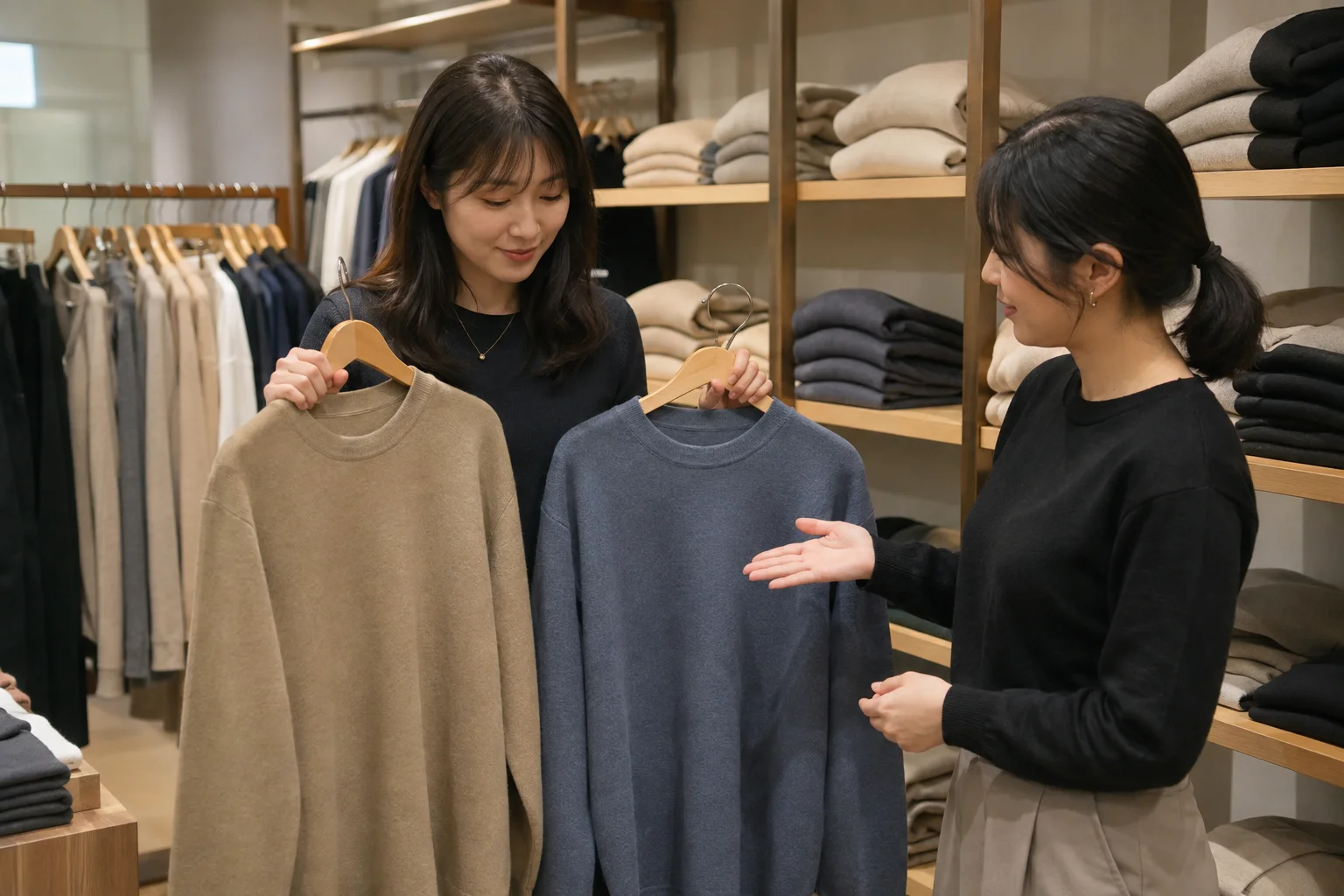
Use the shortest sentence that completes the task. Pointing is normal when the item is clear, and adding 주세요 (juseyo, “please give me”) makes a direct request polite. The word 좀 (jom) can soften a request; it does not always mean an exact quantity of “a little.”
| # | Korean | Romanization | Natural English |
|---|---|---|---|
| 1 | 이거 보여 주세요. | igeo boyeo juseyo | Please show me this. |
| 2 | 이거 얼마예요? | igeo eolmayeyo? | How much is this? |
| 3 | 다른 색 있어요? | dareun saek isseoyo? | Do you have another color? |
| 4 | 더 큰 사이즈 있어요? | deo keun saijeu isseoyo? | Do you have a larger size? |
| 5 | 더 작은 사이즈 있어요? | deo jageun saijeu isseoyo? | Do you have a smaller size? |
| 6 | 이거 입어 봐도 돼요? | igeo ibeo bwado dwaeyo? | May I try this on? |
| 7 | 이거 신어 봐도 돼요? | igeo sineo bwado dwaeyo? | May I try these on? |
| 8 | 탈의실 어디예요? | taruisil eodiyeyo? | Where is the fitting room? |
| 9 | 재고 있어요? | jaego isseoyo? | Is it in stock? |
| 10 | 이걸로 주세요. | igeollo juseyo | I’ll take this one. |
| 11 | 할인돼요? | harin dwaeyo? | Is it discounted? |
| 12 | 세일 상품이에요? | seil sangpumieyo? | Is this a sale item? |
| 13 | 조금만 깎아 주세요. | jogeumman kkakka juseyo | Please lower the price a little. |
| 14 | 두 개 사면 할인돼요? | du gae samyeon harin dwaeyo? | Is there a discount if I buy two? |
| 15 | 카드 돼요? | kadeu dwaeyo? | Do you take cards? |
| 16 | 현금만 돼요? | hyeongeumman dwaeyo? | Is it cash only? |
| 17 | 따로 계산해 주세요. | ttaro gyesanhae juseyo | Please ring these up separately. |
| 18 | 영수증 주세요. | yeongsujeung juseyo | Please give me the receipt. |
| 19 | 봉투 주세요. | bongtu juseyo | Please give me a bag. |
| 20 | 선물 포장해 주세요. | seonmul pojanghae juseyo | Please gift-wrap it. |
| 21 | 세금 환급 돼요? | segeum hwangeup dwaeyo? | Is a tax refund available? |
| 22 | 즉시 환급 돼요? | jeuksi hwangeup dwaeyo? | Is immediate refund available? |
| 23 | 여권 필요해요? | yeogwon piryohayo? | Do I need my passport? |
| 24 | 환급 전표 주세요. | hwangeup jeonpyo juseyo | Please give me the refund voucher. |
| 25 | 교환돼요? | gyohwan dwaeyo? | Can it be exchanged? |
| 26 | 환불돼요? | hwanbul dwaeyo? | Can it be refunded? |
| 27 | 교환 기간이 며칠이에요? | gyohwan gigani myeochirieyo? | How many days is the exchange period? |
| 28 | 이거 불량이에요. | igeo bullyangieyo | This item is defective. |
| 29 | 사용하지 않았어요. | sayonghaji anasseoyo | I did not use it. |
| 30 | 새것으로 바꿔 주세요. | sae geoseuro bakkwo juseyo | Please exchange it for a new one. |
You do not need to memorize all 30. Start with 이거 얼마예요?, 다른 색 있어요?, 카드 돼요?, 영수증 주세요, and 세금 환급 돼요? Those five cover price, choice, payment, proof of purchase, and the tourist-refund question.
Sizes, Colors, and Fitting Rooms
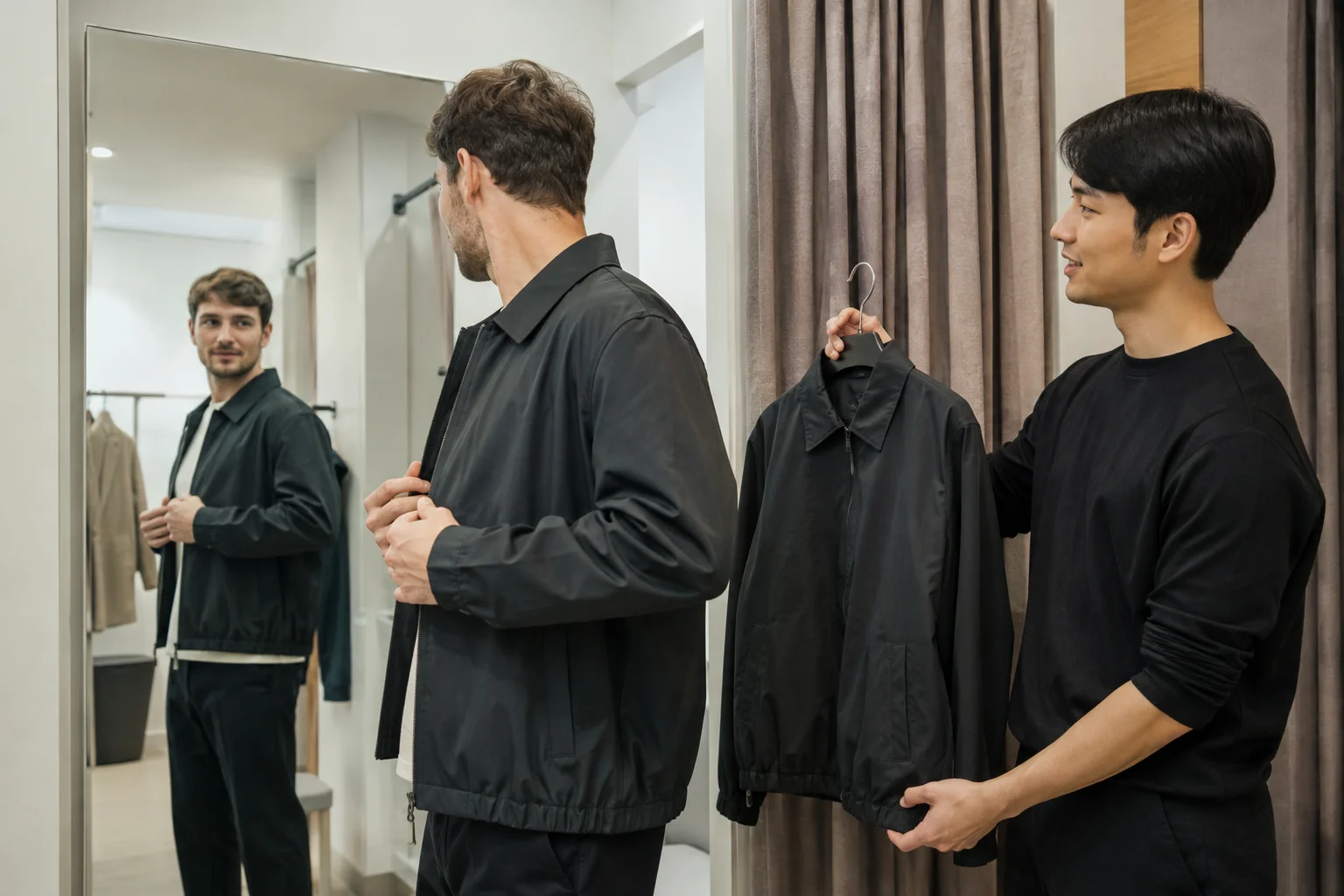
Korean clothing labels may use familiar letters, numbers, centimeters, or brand-specific systems. Do not assume that the same marked size will fit the same way across two stores. Ask for a larger or smaller option, try it on when allowed, and check the return or exchange conditions before removing tags.
The basic pattern is flexible:
- 더 큰 ___ 있어요? — Do you have a larger ___?
- 더 작은 ___ 있어요? — Do you have a smaller ___?
- 다른 ___ 있어요? — Do you have another ___?
For color, fill the blank with 색 (saek). For size, Korean shops commonly use the English loanword 사이즈 (saijeu). If you know a specific size, say it before 사이즈 있어요? For example, 라지 사이즈 있어요? (raji saijeu isseoyo?) asks whether a large size is available.
Use 입어 보다 for trying on clothing and 신어 보다 for footwear. The ending -아/어도 돼요? asks permission, so 이거 입어 봐도 돼요? is polite and complete. The National Institute of Korean Language uses this exact clothing example in its official grammar material. In a cosmetics shop, do not reuse it for opening a sealed product. Ask 테스터 있어요? (teseuteo isseoyo?, “Is there a tester?”) instead, and follow the store’s hygiene rules.
When staff bring an item, three replies are enough:
- 네, 입어 볼게요. (ne, ibeo bolgeyo) — Yes, I’ll try it on.
- 조금 커요. (jogeum keoyo) — It is a little big.
- 조금 작아요. (jogeum jagayo) — It is a little small.
If you decide to buy it, say 이걸로 주세요 while indicating the exact item. This avoids confusion when several colors or sizes are on the counter. For a beauty-shopping day, the Myeongdong, Hongdae, and Gangnam K-beauty comparison explains which district fits a fast haul, trend discovery, or a calmer consultation.
Prices, Discounts, and Market Etiquette
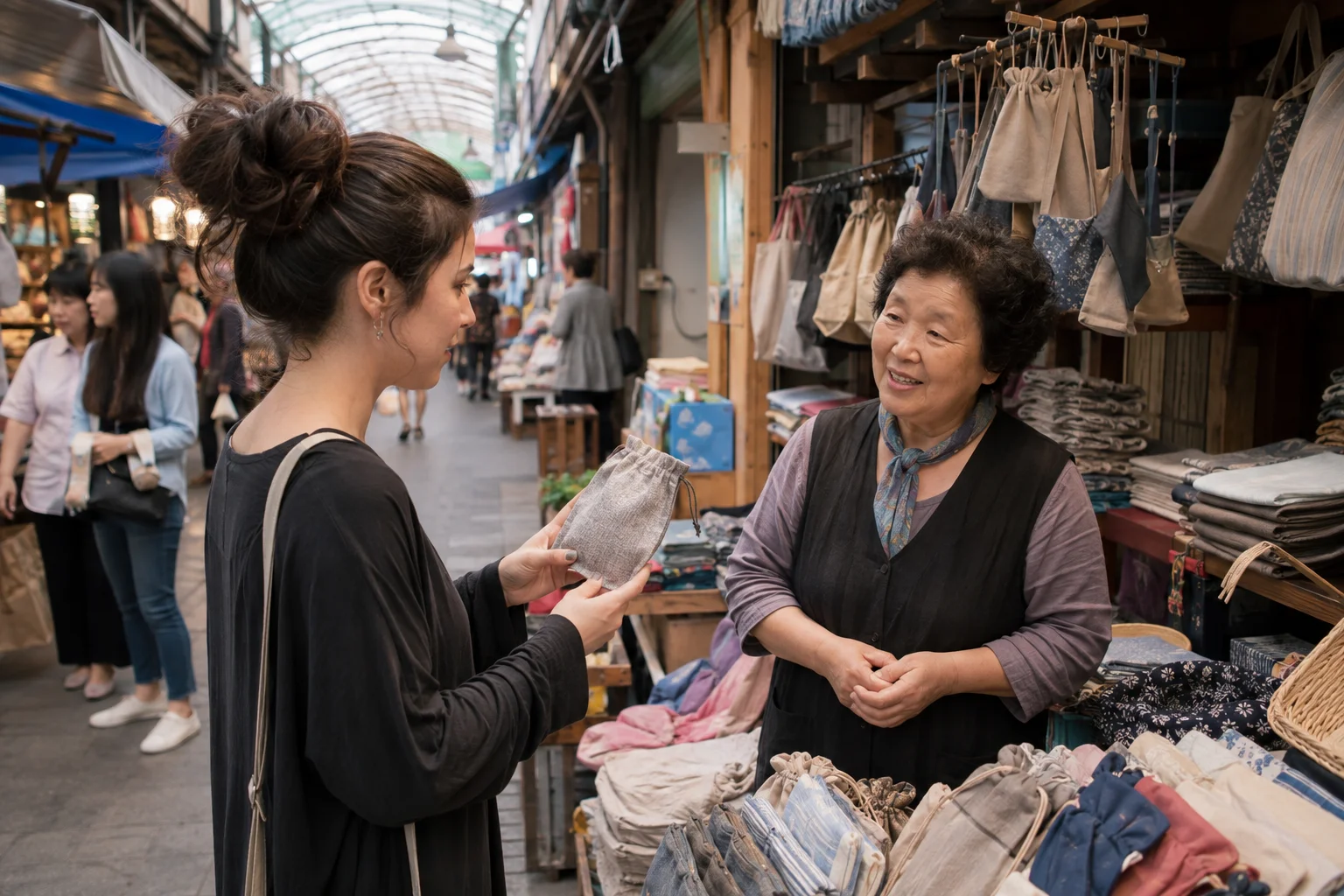
이거 얼마예요? is the safest price question. If you did not hear the answer, do not pretend you understood. Say 다시 말해 주세요 (dasi malhae juseyo, “Please say it again”) or show the calculator on your phone and ask 여기에 써 주세요 (yeogie sseo juseyo, “Please write it here”). Numbers are harder than nouns because the price can be spoken quickly and with Korean number units such as 만 (man, ten thousand).
At department stores, chain shops, convenience stores, and most modern retailers, the displayed price is usually treated as fixed. 할인돼요? asks whether a promotion already applies; it is not a demand to negotiate. 세일 상품이에요? helps when a rack or shelf appears promotional but the conditions are unclear. Confirm whether the price requires membership, a specific payment card, an app coupon, or a multi-buy.
Polite bargaining belongs only where the seller appears open to it, such as some independent market stalls. 조금만 깎아 주세요 is a gentle request, but it is not appropriate in every traditional market and should not be repeated after a clear no. A better value question is often 두 개 사면 할인돼요? because it gives the vendor a concrete choice. Never open with an extreme counteroffer, criticize the product, or address an unfamiliar vendor as 아줌마 or 이모. A neutral 사장님 (sajangnim, roughly “shop owner/manager”) can be respectful in a small business, and simply beginning with 저기요 (jeogiyo, “Excuse me”) also works.
For payment, 카드 돼요? is short, natural, and useful. Seoul’s official visitor guidance says credit cards can be used in most stores, restaurants, hotels, and tourist destinations, but an individual market stall or small shop may differ. Carry a backup payment method and ask before the seller has packed everything. Use our broader Korea shopping guide to choose districts and shopping channels before you build a route.
Mini dialogue: asking the total
Shopper: 이거 얼마예요? Igeo eolmayeyo? How much is this?
Clerk: 삼만 원이에요. Samman wonieyo. It is 30,000 won.
Shopper: 두 개 사면 할인돼요? Du gae samyeon harin dwaeyo? Is there a discount if I buy two?
The example teaches the sound of 삼만 원 (samman won, 30,000 won); it is not a claim about a current product price.
Tax Refund Korean at Checkout
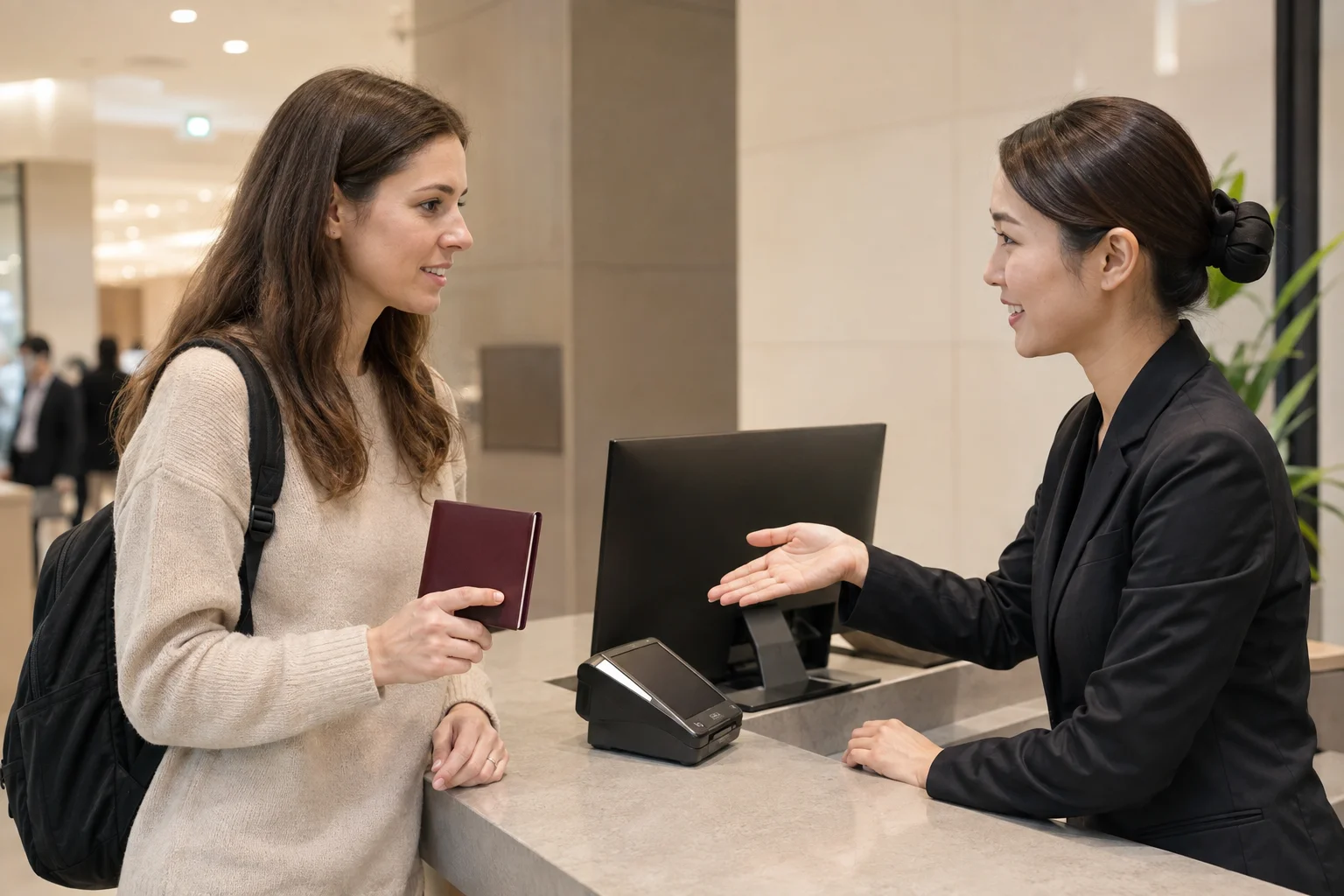
Ask about a tourist tax refund before payment, not after leaving the store. The most universally understandable Korean question is 세금 환급 돼요? Staff in tourist areas may also recognize 택스 리펀드 돼요? (taekseu ripeondeu dwaeyo?), which uses the English phrase “tax refund” in Korean pronunciation.
The Korea Tourism Organization distinguishes duty-free shopping, where qualifying taxes are excluded from the selling price, from tax-refund shopping, where a participating store handles an immediate refund or issues documents for a later claim. The shelf sign alone may not tell you which checkout result applies. Ask:
- 즉시 환급 돼요? — Can the refund be applied immediately?
- 여권 필요해요? — Do I need my passport?
- 환급 전표 주세요. — Please give me the refund voucher.
- 세금이 빠진 가격이에요? (segeumi ppajin gagyeogieyo?) — Is this the price after tax is deducted?
As checked on September 6, 2026, the official KTO guide says an eligible tax-refund purchase starts at KRW 15,000. For immediate refund, one transaction must be under KRW 1 million, and total qualifying purchases during the trip must be KRW 5 million or less. A downtown general-refund transaction may be up to KRW 6 million. Korea Customs Service’s April 2026 notice reports the same method-specific ceilings. Rules, retailer participation, and system availability can change, so reopen the KTO comprehensive tax refund guide before a high-value shopping day.
Eligibility is not only about price. Official guidance says the traveler must fit the visitor rules, buy from a participating shop, export the eligible goods within the required period, and keep them new and unused when export confirmation is required. The Korea Customs Service tax-refund page lists the passport, sales certificate, and purchased goods among the documents or items that may be needed. Our complete Korea tourist tax refund guide explains immediate, downtown, airport, mobile, and mailbox workflows without turning this language lesson into a customs manual.
Mini dialogue: immediate refund
Shopper: 세금 환급 돼요? Segeum hwangeup dwaeyo? Is a tax refund available?
Clerk: 네, 여권 있으세요? Ne, yeogwon isseuseyo? Yes. Do you have your passport?
Shopper: 네. 즉시 환급 돼요? Ne. Jeuksi hwangeup dwaeyo? Yes. Is immediate refund available?
Listen for 돼요 (“it works/is available”) and 안 돼요 (“it does not work/is not available”). If the explanation becomes complicated, ask staff to point to the relevant amount and refund method on the document before you approve payment.
Receipts, Bags, and Separate Payments
The Korean Basic Dictionary defines 영수증 as the record of a money or goods transaction. It is worth learning because the receipt supports a price check, exchange request, warranty question, and many tax-refund procedures.
At the register, combine one noun with 주세요:
- 영수증 주세요. — Receipt, please.
- 봉투 주세요. — A bag, please.
- 선물 포장해 주세요. — Please gift-wrap it.
A shopping bag may cost extra or may be omitted unless you request it, so listen for 봉투 필요하세요? (bongtu piryohaseyo?, “Do you need a bag?”). Reply 네, 주세요 (“Yes, please”) or 아니요, 괜찮아요 (aniyo, gwaenchanayo, “No, I’m okay”).
Use 따로 계산해 주세요 when two people want separate payments or when you need eligible and noneligible purchases handled separately. Do not split payments in an attempt to bypass a refund-method ceiling. The retailer’s system determines how the transaction is recorded, and official trip-level limits still apply.
Exchanges, Refunds, and Defective Items
The Korean words are easy to mix up:
- 교환 (gyohwan) means exchange.
- 환불 (hwanbul) means refund.
- 환급 (hwangeup) means reimbursement or refund and is the word normally used for tourist tax refunds.
Before buying a final-sale, hygiene-sensitive, customized, or size-dependent item, ask 교환돼요? and 환불돼요? If exchange is allowed, follow with 교환 기간이 며칠이에요? Take a photo of the conditions if the store permits it, keep the receipt, and leave tags and packaging intact until you have checked the item.
Do not assume that a casual change of mind, a defective item, an online order, and a custom-made purchase all follow one rule. The Korea Consumer Agency publishes consumer dispute standards and case guidance, but the applicable remedy depends on the product, sales channel, condition, defect, and facts. This article teaches communication, not a guaranteed legal outcome. For a problem, document the item promptly and use the official Korea Consumer Agency consultation resources rather than relying only on a social-media answer.
For a visible defect, say 이거 불량이에요 and point to the exact issue. 사용하지 않았어요 says you did not use the item. If you want a replacement rather than money back, add 새것으로 바꿔 주세요. Stay factual and calm; a photo, receipt, and clear request work better than a long translated argument.
Mini dialogue: exchange request
Shopper: 이거 불량이에요. Igeo bullyangieyo. This item is defective.
Shopper: 사용하지 않았어요. 새것으로 바꿔 주세요. Sayonghaji anasseoyo. Sae geoseuro bakkwo juseyo. I did not use it. Please exchange it for a new one.
How to Understand the Answer
The question is only half the conversation. Train yourself to catch a few likely replies:
| You may hear | Romanization | Meaning |
|---|---|---|
| 네, 있어요. | ne, isseoyo | Yes, we have it. |
| 없어요. | eopseoyo | We do not have it. |
| 품절이에요. | pumjeorieyo | It is sold out. |
| 안 돼요. | an dwaeyo | It is not possible / it does not work. |
| 가능해요. | ganeunghaeyo | It is possible. |
| 잠시만요. | jamsimanyo | One moment, please. |
| 저쪽에 있어요. | jeojjoge isseoyo | It is over there. |
| 영수증 있으세요? | yeongsujeung isseuseyo? | Do you have the receipt? |
When numbers are the problem, say 천천히 말해 주세요 (cheoncheonhi malhae juseyo, “Please speak slowly”) and confirm the payment terminal before tapping or inserting your card. You can also repeat the amount: 삼만 원 맞아요? (samman won majayo?, “Is 30,000 won correct?”).
For pronunciation, focus on rhythm rather than perfect English-style syllables. In 얼마예요, the sounds run together; in 몇 일이에요, everyday pronunciation is closer to myeochirieyo. A native-audio dictionary is more reliable than treating romanization as exact spelling.
Common Shopping Korean Mistakes
Using 반말 with staff. Ending every request with a bare noun or command can sound abrupt. Beginner-friendly -요 forms and 주세요 are safer.
Saying “discount” when you mean “cheaper option.” 할인돼요? asks whether a discount applies. To ask for a less expensive item, use 더 저렴한 거 있어요? (deo jeoryeomhan geo isseoyo?, “Do you have a cheaper one?”).
Bargaining everywhere. A polite phrase does not make negotiation appropriate. Treat listed prices as fixed unless the context clearly invites discussion.
Opening sealed merchandise. Ask for a tester or permission. A display sample and sale stock are not interchangeable.
Confusing 환불 and 환급. Use 환불 for returning a purchase and 세금 환급 for a tourist tax refund.
Leaving without the right document. A normal card receipt may not be the tax-refund voucher. Ask before payment and inspect what the store gives you.
Memorizing without pointing. Korean demonstratives make shopping easier: 이거 is “this,” 그거 is “that near you,” and 저거 is “that over there.” Point politely and keep the sentence short.
A 10-Minute Practice Plan
First, practice five survival questions aloud: price, another color, another size, card acceptance, and tax refund. Then choose one scenario that matches your trip. Fashion shoppers should add fitting-room and exchange phrases. Beauty shoppers should add 테스터 있어요? and receipt language. Market shoppers should practice prices and numbers. Gift buyers should add gift wrapping and separate payment.
Next, save the table as an offline note with Hangul at the top and English beneath it. Hangul helps the staff member even if your pronunciation is unclear. Do not make romanization the largest line; it is for you, while the Korean text is for the person helping you.
Finally, rehearse one complete exchange:
- Say 저기요 to get attention.
- Point and ask 이거 얼마예요?
- Confirm the option with 다른 색 있어요? or 더 큰 사이즈 있어요?
- Decide with 이걸로 주세요.
- Ask 카드 돼요? and check the terminal.
- Request 영수증 주세요.
- If eligible, ask 세금 환급 돼요? before payment is finalized.
If your shopping day includes long subway transfers, save the Korean subway and bus phrase guide too. For food stops between stores, the Korean restaurant phrase guide covers ordering, allergies, takeout, and payment.
FAQ
Q: What is the most useful Korean shopping phrase?
Start with 이거 얼마예요? (igeo eolmayeyo?), “How much is this?” Point to the exact item so the question stays clear. Add 이걸로 주세요 when you are ready to buy it.
Q: How do I ask for a different size in Korean?
Say 더 큰 사이즈 있어요? for a larger size or 더 작은 사이즈 있어요? for a smaller size. If you know the marked size, say it before 사이즈 있어요? and try the item on rather than assuming labels are consistent across brands.
Q: Is it polite to bargain in Korean markets?
Sometimes, but not everywhere. 조금만 깎아 주세요 is a gentle request at a stall that appears open to negotiation. Do not use it at fixed-price chains, and accept a clear no without repeating the request.
Q: How do I ask whether a Korean store takes credit cards?
Ask 카드 돼요? (kadeu dwaeyo?). Cards are widely accepted, but individual stalls can differ. Confirm before the purchase is packed and keep another payment method available.
Q: How do I ask for a tourist tax refund in Korean?
Say 세금 환급 돼요? (segeum hwangeup dwaeyo?). Ask before paying, present your passport if requested, and confirm whether the store applies an immediate refund or gives you a voucher for a later claim.
Q: What is the difference between 환불 and 환급?
환불 usually means returning a purchase for your money back. 환급 is the word used for reimbursing an amount, including 세금 환급, a tax refund. Use 교환 when you want to swap the item instead.
Save the five phrases you are most likely to use, say them once aloud, and keep the Hangul visible on your phone. That small preparation makes a real checkout conversation far easier than trying to translate a paragraph while a line forms behind you.