
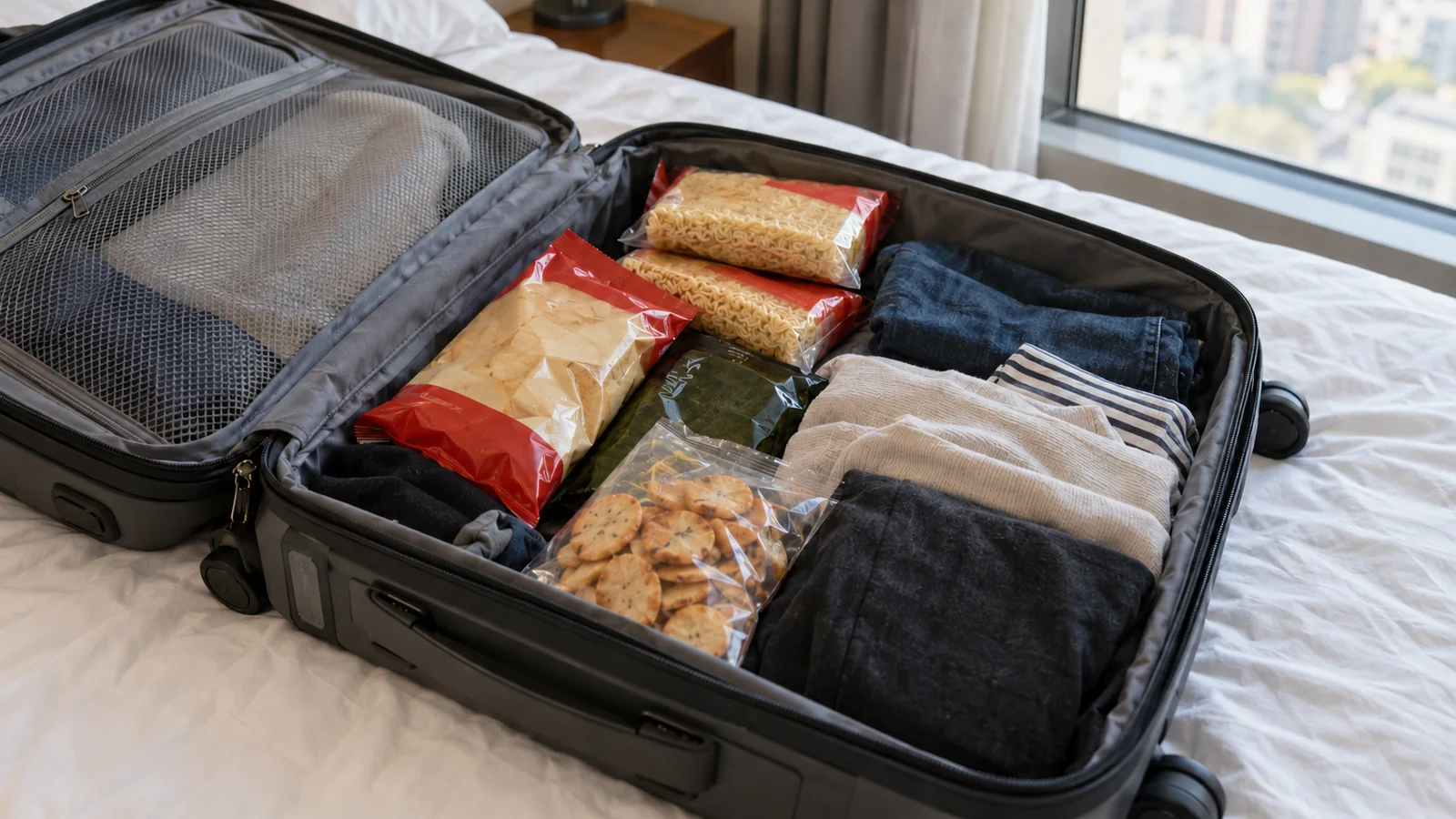
Yes, declare Korean food souvenirs when entering the United States—even unopened supermarket snacks. A sealed wrapper does not remove the declaration requirement, and declaring an item does not guarantee permission to keep it. U.S. inspectors decide whether it meets entry requirements. USDA APHIS explains the declaration and inspection process.
This guide covers food in your own travel baggage from Korea, with official guidance checked on October 23, 2026. Use it before filling a suitcase; exact ingredients, origin and processing can matter more than the snack’s familiar name.
Before buying: sort the basket by what needs checking
This is a shopping checklist, not an approved-product list.
| What you plan to bring | What to check before paying | Practical next step |
|---|---|---|
| Candy, chocolate or ordinary crackers | The actual product and any unusual filling | These broad categories are generally admissible under CBP guidance; still declare them |
| Instant ramyeon | Ingredients in the seasoning and toppings, as well as the noodle block | If animal ingredients appear, check the relevant APHIS category for that exact product |
| Jerky, meat gifts or meat-containing prepared food | Origin, processing and the applicable animal-product rules | Resolve the conditions before buying an expensive gift set |
| Fresh fruit or plant-based souvenirs | The specific fruit, plant or other material | Use the separate APHIS category; a snack-packet rule cannot answer this |
| Food with no usable ingredient or origin information | Whether the seller can supply reliable details | Choose an easier-to-identify alternative if you cannot establish what it contains |
Sources: CBP’s food guidance describes generally admissible baked goods, candy and chocolate; APHIS’s traveler category selector directs you to the applicable food and plant rules. “Generally admissible” is not a guarantee for every recipe or filling.
Can you bring Korean ramyeon to the U.S.?
Do not decide from the flavor name or the unopened wrapper alone. Read the complete ingredient panel, including the soup and garnish packets. A picture on the front is not enough to identify the contents.
APHIS’s meat and poultry guidance contains country- and disease-dependent restrictions and exceptions with specified commercial packaging, cooking and shelf-stability conditions. That does not support a blanket verdict that every meat-flavored noodle is banned—or that every dried noodle packet is allowed.
For a product containing animal ingredients, use the VS Permitting Assistant linked under “Need Help?” on that APHIS page. Have the ingredient list, country-of-origin information and processing details available. If you cannot establish whether your packet meets the conditions, choose another souvenir or ask APHIS before traveling.
For flavor and cooking choices while you are still in Korea, see the Korean ramyeon buying guide. If trying a serving before buying a multipack, check the shop’s available equipment using our convenience-store meal guide.
Pack so you can identify and show the food
APHIS recommends retaining original packaging and receipts as evidence of origin. Build your packing plan around that advice:
- Check which wrapper carries the information. If the outer multipack is the only place listing ingredients and origin, keep it with the individual servings.
- Group food where it is easy to retrieve. Avoid burying each packet in a different part of the suitcase.
- Make a short inventory. For example: “two bags of crackers, three noodle packets, one box of chocolates.” Match it to what you actually carry.
- Keep a readable label photo for your own reference. It is a backup, not a reason to throw away the original packaging.
The inventory and grouping are practical organizing suggestions, not a special customs form. Do not repackage unfamiliar food into anonymous bags just to save space.
At arrival: tell the officer about the food
Answer food and agricultural questions accurately and make the items available if requested. A useful plain-language starting point is: “I have packaged food from Korea: crackers, chocolates and instant noodles.” Adapt that list to your bag and explain any ingredients you are unsure about.
Global Entry does not remove this duty. CBP says some facial-recognition kiosks may not ask detailed declaration questions; tell the officer about the food before exiting. CBP’s Global Entry food FAQ explains the procedure.
A Korean shopping tax refund also does not establish U.S. food admissibility. Handle your Korean tax-refund paperwork as a separate departure task, and check U.S. food rules before choosing the souvenirs.
The useful packing rule: identify the food, check its category, keep its labels and declare it. Buying it sealed helps preserve information; it does not settle the border decision.