
Planning Seoul to Busan with an old bus-fare screenshot? Recheck it before choosing the cheaper ticket. Korea raised express- and intercity-bus fare ceilings by 9% from October 1, 2026, according to the Ministry of Land, Infrastructure and Transport. Your saving now depends on the actual bus departure and grade, plus the transfer from Nopo to your hotel.
Quick Info
- 📍 Area: Seoul Station or Suseo for high-speed rail; Seoul Express Bus Terminal for the main express-bus route; Busan Station or Busan Central Bus Terminal at Nopo on arrival
- 🕒 Best time: Reserve early for Friday evenings, Sundays, Korean public holidays, and the Chuseok or Lunar New Year travel periods
- 💰 Budget: KORAIL’s September 2026 regular Seoul–Busan standard-class fare is ₩54,400; get a fresh KOBUS quote after the October 1 bus-fare ceiling change
- 🚇 Getting there: KTX is usually faster and arrives centrally; the bus arrives at Nopo in northern Busan and can be delayed by road traffic
- 👥 Best for: KTX for tight itineraries; express bus when the live fare or overnight schedule makes the longer journey worthwhile
- ✅ TL;DR: Compare the exact bus grade against KTX, then add local transport at both ends. An old headline bus price is not a current booking quote.
KTX vs Express Bus at a Glance

KTX usually saves well over an hour onboard, avoids highway congestion, and delivers you to Busan Station near the center of the city. The express bus offers several seat grades and departures into the night. Its main tradeoffs are traffic risk and an arrival terminal at Nopo, well north of many popular Busan neighborhoods. Choose the bus only after comparing the fare for a departure you can actually take.
Updated October 2, 2026: the old bus-price comparison has been removed following the fare-ceiling change. We could not verify a current Seoul–Busan quote in KOBUS during this update. The rail fare and timetable below are dated September 2026 benchmarks; search both official booking systems for your travel date before paying.
| Question | KTX | Express bus |
|---|---|---|
| Adult one-way fare reference | ₩54,400 regular standard class, per KORAIL’s September 2026 announcement | Current route fare unconfirmed here; check KOBUS for your date and grade after October 1 |
| Scheduled travel time | Fastest listed direct Seoul–Busan service: about 2 hr 18 min; many take roughly 2 hr 30 min to 2 hr 50 min | About 4 hr in normal traffic; road conditions can extend the trip |
| Main Seoul departure | Seoul Station; the integrated rail search also includes Suseo departures | Seoul Express Bus Terminal, Gyeongbu side |
| Busan arrival | Busan Station | Busan Central Bus Terminal at Nopo Station |
| Seat | Reserved seat | Reserved seat; standard, excellent, premium, and late-night grades vary by departure |
| Restroom | Onboard | No onboard restroom; long routes use a highway rest stop |
| Best advantage | Speed, frequency, central arrival, predictable running time | Potential fare saving, late-night choices, roomy higher-grade seats |
| Biggest drawback | Popular trains can sell out; compare the actual fare against the bus | Traffic exposure and a longer local transfer from Nopo |
For most first-time visitors with only two or three days in Busan, KTX is the safer default. The bus becomes compelling when the fare difference is important, your Seoul accommodation is near Express Bus Terminal, your Busan destination is in the north, or a late-night departure saves a hotel night.
KTX Price, Time, and the September 2026 Change
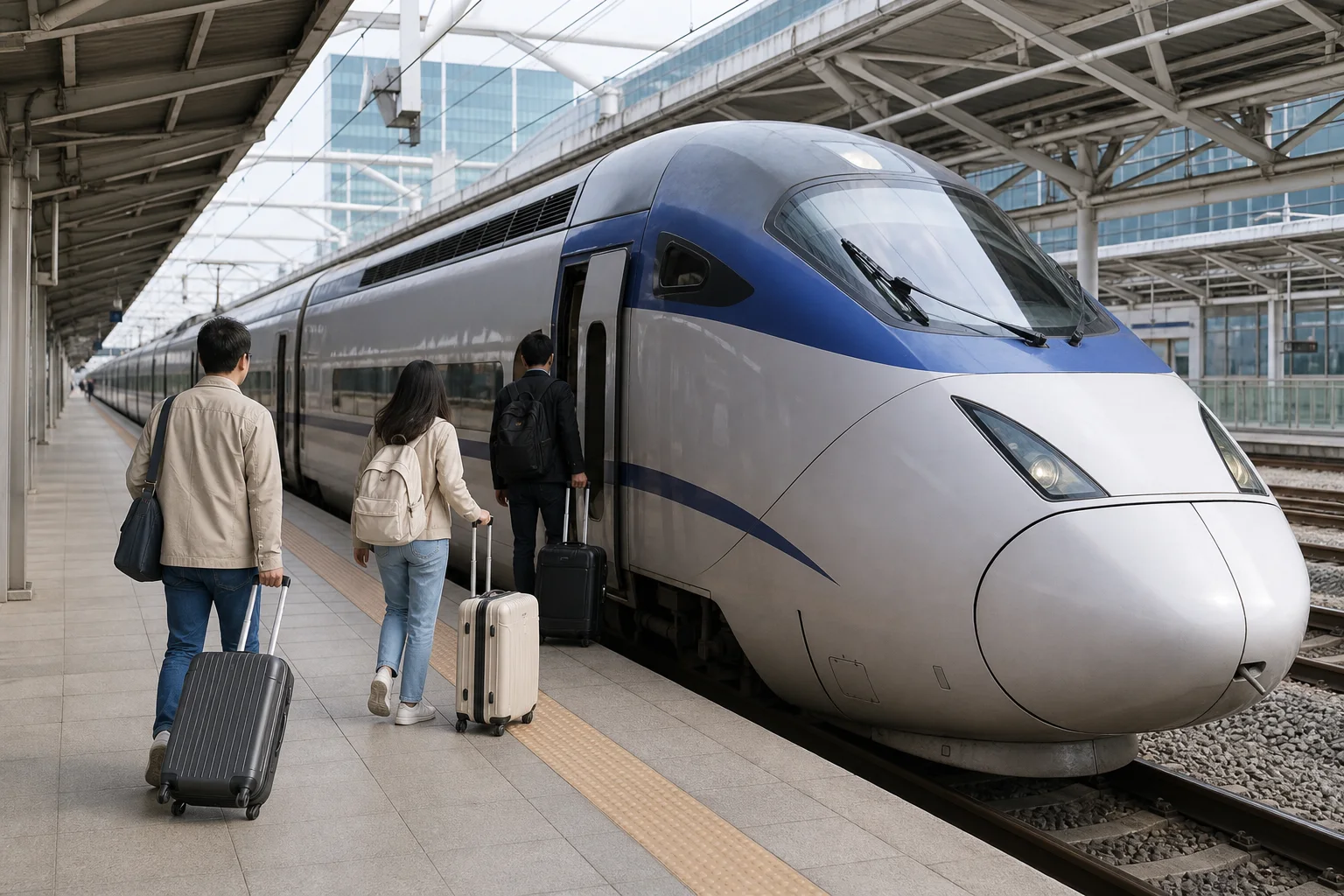
September 1, 2026 brought a major change to Korean high-speed rail. KORAIL and SR began integrated operations, SRT services were incorporated into the KTX system, and the unified KORAIL+ app became the main place to search services from both Seoul and Suseo. KORAIL’s official integration announcement says average KTX fares fell by about 10 percent. The standard Seoul–Busan fare changed from ₩59,800 to ₩54,400, a ₩5,400 reduction.
That ₩54,400 figure is the regular adult standard-class fare cited by KORAIL for the corridor. Your checkout total may differ if you select first class, receive an eligible discount, use a pass, change the origin station, or choose a service with a different route. A traveler leaving from Suseo should search Suseo rather than assuming every result departs from Seoul Station.
KORAIL’s official KTX timetable file effective September 1, 2026 lists direct Seoul–Busan trains throughout the day. In the checked timetable, the fastest direct run takes about 2 hours 18 minutes. Many practical daytime trains take around 2 hours 30 minutes to 2 hours 50 minutes, while services with more stops or a different routing can take more than three hours. Do not select a train based only on the KTX label; compare the actual departure and arrival times shown for that train number.
The timetable also shows an early daily departure from Seoul at 05:13 and daily departures continuing into the late evening. Service days vary, and some later or faster trains run only on selected weekdays or weekends. Treat those examples as planning context, not a promise for every date. The official KORAIL reservation search is the final source for your day, seat class, and availability.
What the KTX fare buys you
The time saving is only part of the value. Seoul Station connects directly to Seoul Subway Lines 1 and 4, the Gyeongui-Jungang Line, and airport rail services. Busan Station sits on Busan Subway Line 1 and is close to Choryang, Nampo, Jagalchi, and the port district. If you arrive from Incheon Airport, our AREX Express vs All-Stop guide can help you plan the transfer to Seoul Station without paying for an unnecessary backtrack.
KTX also gives you an onboard restroom, the ability to stand and stretch, overhead storage, and luggage areas near carriage ends. There is no airline-style checked baggage service for an ordinary ticket. You carry your own bags, so arrive early enough to find an appropriate rack and keep valuables with you. Large suitcases are easiest to manage before the carriage becomes crowded.
Express Bus Fares After October 1, 2026
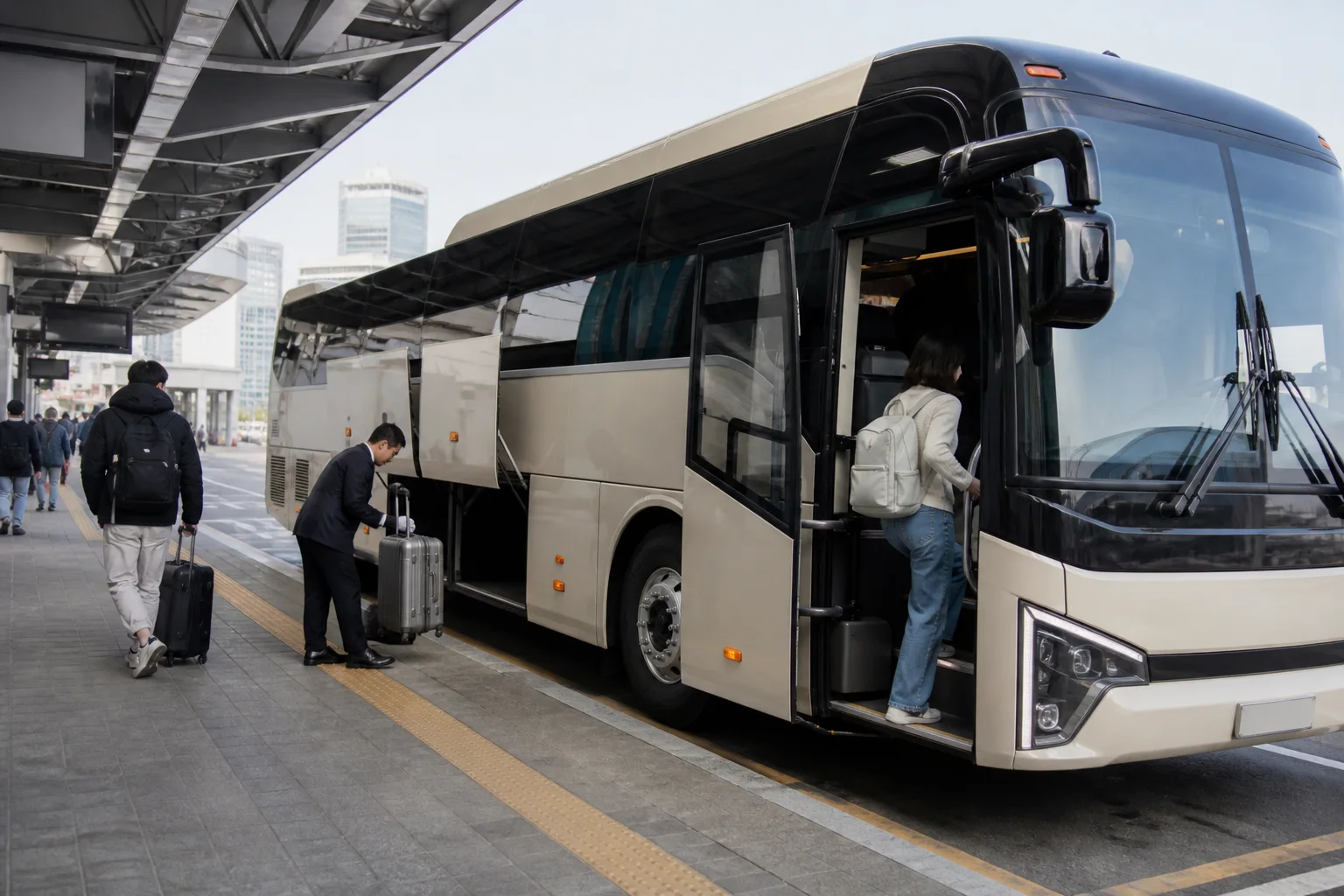
The main express-bus route uses Seoul Express Bus Terminal and Busan Central Bus Terminal. The Korea Tourism Organization’s updated express and intercity bus guide identifies Seoul Express Bus Terminal as the main terminal for Busan and explains that Korean long-distance buses are separated into express and intercity systems. For this comparison, use the express-bus route in KOBUS rather than assuming every Busan result leaves from the same Seoul terminal.
The official October 1 change concerns fare ceilings, not a confirmed price for every departure. Do not multiply an old blog fare by 1.09 and treat the result as a ticket quote. The price displayed for your chosen departure in KOBUS is the figure to compare with KTX.
| Bus grade | What to compare before paying |
|---|---|
| Standard express | Entry-level seating; check that a departure at this grade fits your schedule |
| Excellent | Wider seating than standard; compare its actual fare rather than the route’s lowest advertised price |
| Premium | More private, deeply reclining seating on selected departures; decide whether that comfort is worth the price |
| Late-night grades | Check the night surcharge, arrival time, and availability of onward transport from Nopo |
The previously checked July 23 public-data route snapshot showed a scheduled four-hour trip. Use that only as a dated planning estimate. Check the current timetable, grade, fare, and terminal in KOBUS; temporary services, holidays, roadworks, and sold-out seats can change your choices.
Compare complete journey costs: add your train or bus ticket, transport to the Seoul departure point, and transport from the Busan arrival point to your hotel. Then compare door-to-door time. A small ticket saving may be poor value if Nopo adds a long transfer; an overnight departure may be worthwhile when it fits your sleep and arrival plans. These are trip-specific choices, not a fixed saving promised by the route name.
The scheduled four hours is not guaranteed
Bus arrival time depends on traffic. Friday evening departures, holiday weekends, accidents, construction, and congestion near Seoul or Busan can turn a four-hour schedule into a longer trip. Build a buffer before a flight, ferry, timed tour, restaurant reservation, or hotel check-in deadline.
Long-distance buses do not normally have onboard restrooms. KTO says mid- and long-distance routes stop at highway service areas, where passengers can use restrooms and buy food. Listen for the driver’s instructions, remember the vehicle and bay, and return before the stated departure. A rest stop makes the journey more comfortable, but it is not flexible personal break time.
How to Book KTX or an Express Bus
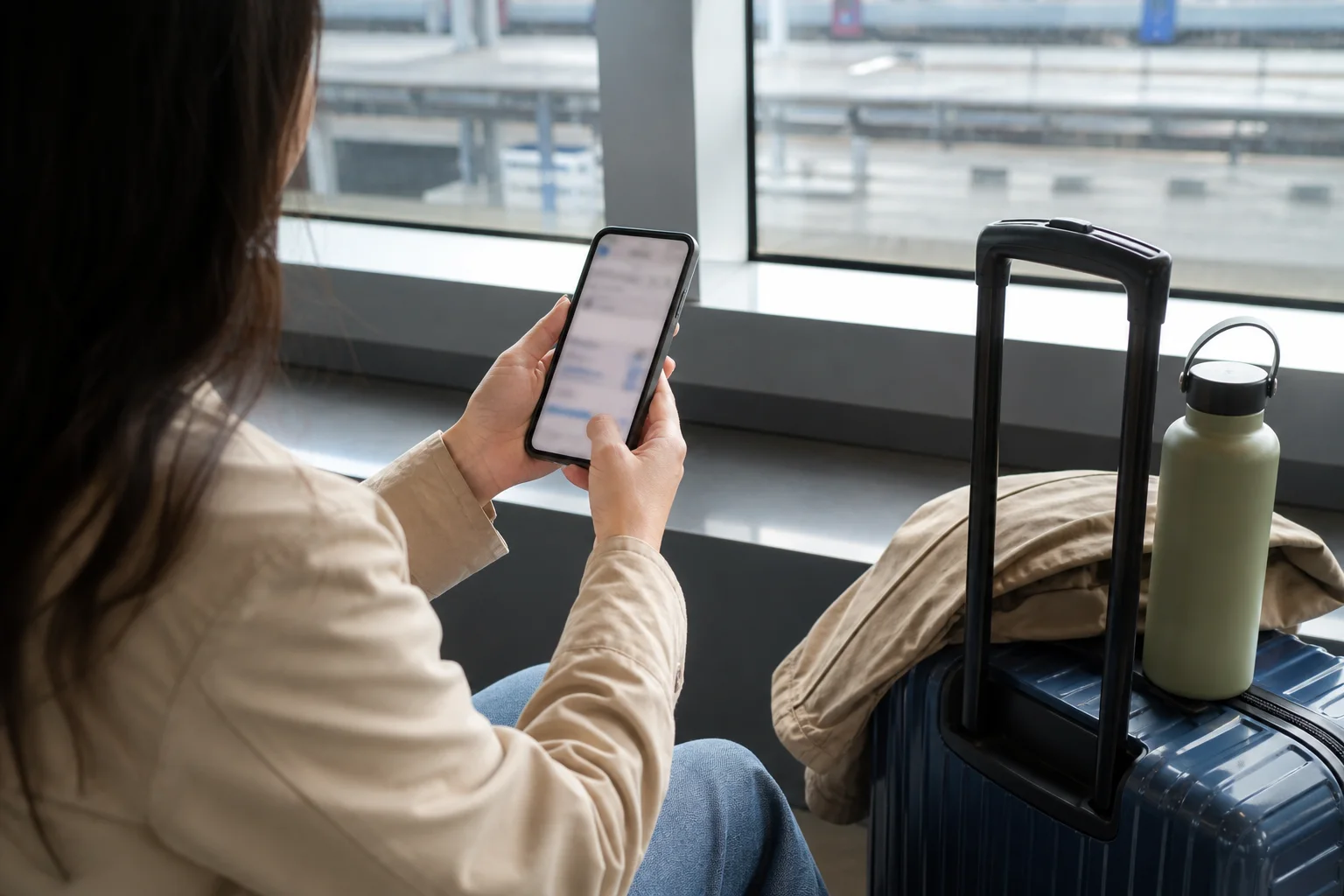
Booking KTX
For ordinary tickets, see the October 2026 change to KTX’s two-month booking window before deciding when to reserve. Holiday releases and pass reservations need their own checks.
- Open the official KORAIL reservation site or the KORAIL+ app.
- Search Seoul to Busan for your date. If your hotel is in southern Seoul, run a separate Suseo to Busan search and compare door-to-door time.
- Check the exact origin, destination, train number, departure time, arrival time, and seat class.
- Select a reserved seat and pay through the available official method.
- Save the ticket where you can access it without mobile data, but recheck the live departure board at the station.
Korea Tourism Organization’s 2026 transportation payment guide says foreign-issued credit cards are accepted at KTX ticket machines and counters. Online acceptance can depend on the card issuer and authentication flow. If a foreign card fails online, allow time to try an official station machine or staffed counter rather than buying from an unknown reseller.
Booking the express bus
- Open KOBUS and choose Seoul Gyeongbu or the equivalent Seoul Express Bus Terminal origin.
- Select Busan and confirm the arrival is Busan Central Bus Terminal at Nopo.
- Compare standard, excellent, premium, and late-night departures rather than sorting by price alone.
- Check whether your booking method issues a mobile ticket or requires ticket collection or printing.
- At the terminal, confirm the platform on the departure monitor and be ready to board five to ten minutes early.
KTO’s bus guide, updated June 5, 2026, says KOBUS supports Korean, English, Japanese, and Chinese, though regional access or payment restrictions can still affect some overseas users. Tickets are also sold at terminal counters and kiosks. Keep enough time for an in-person purchase if your card or browser does not complete the online booking.
For either mode, do not rely on an undated screenshot from a blog or social post. Search the official system again after schedule releases, and read the current cancellation conditions before payment. Refund fees can depend on when you cancel, the fare product, and the departure time.
Terminal Location Can Change the Winner
Onboard time is not door-to-door time. Add the journey from your hotel to the departure terminal, a sensible arrival buffer, and the local trip from the Busan terminal to your accommodation.
Seoul Station is central and especially convenient from Myeongdong, City Hall, Hongdae via a rail connection, or Incheon Airport via AREX. Travelers based around Gangnam, Jamsil, or southern Seoul may find Suseo easier after the 2026 high-speed rail integration. Run both station searches instead of assuming the traditional Seoul Station route wins.
Seoul Express Bus Terminal is connected to Subway Lines 3, 7, and 9. It can be very convenient from Gangnam, Banpo, or neighborhoods along those lines. Make sure you enter the correct terminal section: the Busan express route uses the Gyeongbu side, while the adjacent Central City terminal focuses on southwestern destinations.
Busan Station is a strong arrival point for Nampo, Jagalchi, Choryang, the port, and many central hotels. It also gives straightforward Line 1 access and connections to city buses and taxis.
Busan Central Bus Terminal is at Nopo Station on Subway Line 1. Busan Metropolitan City’s official transportation page confirms the Nopo location and the Seoul express route. Nopo can work well for northern Busan, Beomeosa, Yangsan, or a nearby connection. It is less convenient for Nampo, Seomyeon, Gwangalli, and Haeundae, where the extra local ride can erase much of the bus’s ticket saving in time and energy.
Before choosing, pin all four points—your Seoul hotel, departure terminal, arrival terminal, and Busan hotel—on a map. The best transport option is the one with the best complete journey, not simply the lowest fare or fastest vehicle.
Comfort, Luggage, and Workability
KTX is usually easier for travelers who get motion sickness, need a restroom nearby, want to work on a laptop, or dislike uncertain arrival times. You can stand briefly and stretch, though aisles and vestibules should remain clear. Power access can vary by train type and seat, so carry a charged power bank rather than assuming every seat has the outlet you need.
The express bus offers a more cocooned seat experience, especially in excellent or premium class. A premium seat may feel more restful than a standard train seat, and underfloor luggage storage keeps a large suitcase out of the passenger cabin. Keep passports, cash, medication, electronics, and other valuables in a small bag with you. Weather and handling make a protective luggage cover sensible for delicate bags.
Neither choice is universally more comfortable. A train gives movement and facilities; a premium bus gives a wider reclining seat. A traveler who sleeps easily on buses may prefer the night service, while someone sensitive to road motion or traffic uncertainty will probably be happier on KTX.
Which Option Fits Your Trip?
Choose KTX when:
- you have only two or three days in Busan;
- you want to arrive before lunch and start sightseeing immediately;
- your hotel is near Busan Station, Nampo, or central Line 1;
- you are connecting to a timed ferry, tour, or event with a healthy buffer;
- you need an onboard restroom or want to move around;
- predictable arrival time matters more than the fare difference shown for your date.
Choose the standard express bus when:
- its live quote is the lowest complete journey cost for your trip;
- a standard departure matches your schedule;
- you can tolerate a longer journey and traffic risk;
- Nopo is convenient for your Busan plan.
Choose an excellent or premium bus when:
- you value a wider, more reclining seat;
- a late-night departure lets you avoid losing daytime sightseeing hours;
- Seoul Express Bus Terminal is much easier than Seoul Station;
- the fare difference versus KTX still matters after you include local transport.
For a family or group, multiply each live per-person quote by the number of travelers before deciding, then add local transport. Include any child discounts that actually apply to your booking and decide what several additional travel hours are worth to the group. A four-person comparison based on old bus fares can overstate the saving.
For a same-day Seoul-to-Busan trip, KTX is the practical option. The bus consumes too much of the day and adds traffic uncertainty. If Busan is your final destination for several nights, the bus is easier to justify.
Plan the Rest of Your Busan Arrival
After choosing your intercity ticket, plan the first local leg before departure. If you arrive at Busan Station, save your subway exit and hotel address. If you arrive at Nopo, calculate the Line 1 or taxi trip before deciding the bus is cheaper overall.
Still deciding where to sleep? Use the Busan hotel-area comparison to compare Nampo, Seomyeon and the beach areas against your daily plans. Its trip-cost calculator includes the local transport you would actually pay, so a lower nightly rate does not hide a higher total.
For sightseeing, compare the routes in our Busan City Tour Bus pass guide. If your first stop is shopping and food around the old downtown, use our Nampo-dong shopping guide to build a practical arrival-day plan.
Next step: open the official KORAIL and KOBUS searches side by side for your date, then write down four numbers—ticket price, terminal travel time, onboard time, and Busan transfer time. The better complete journey will become obvious.