
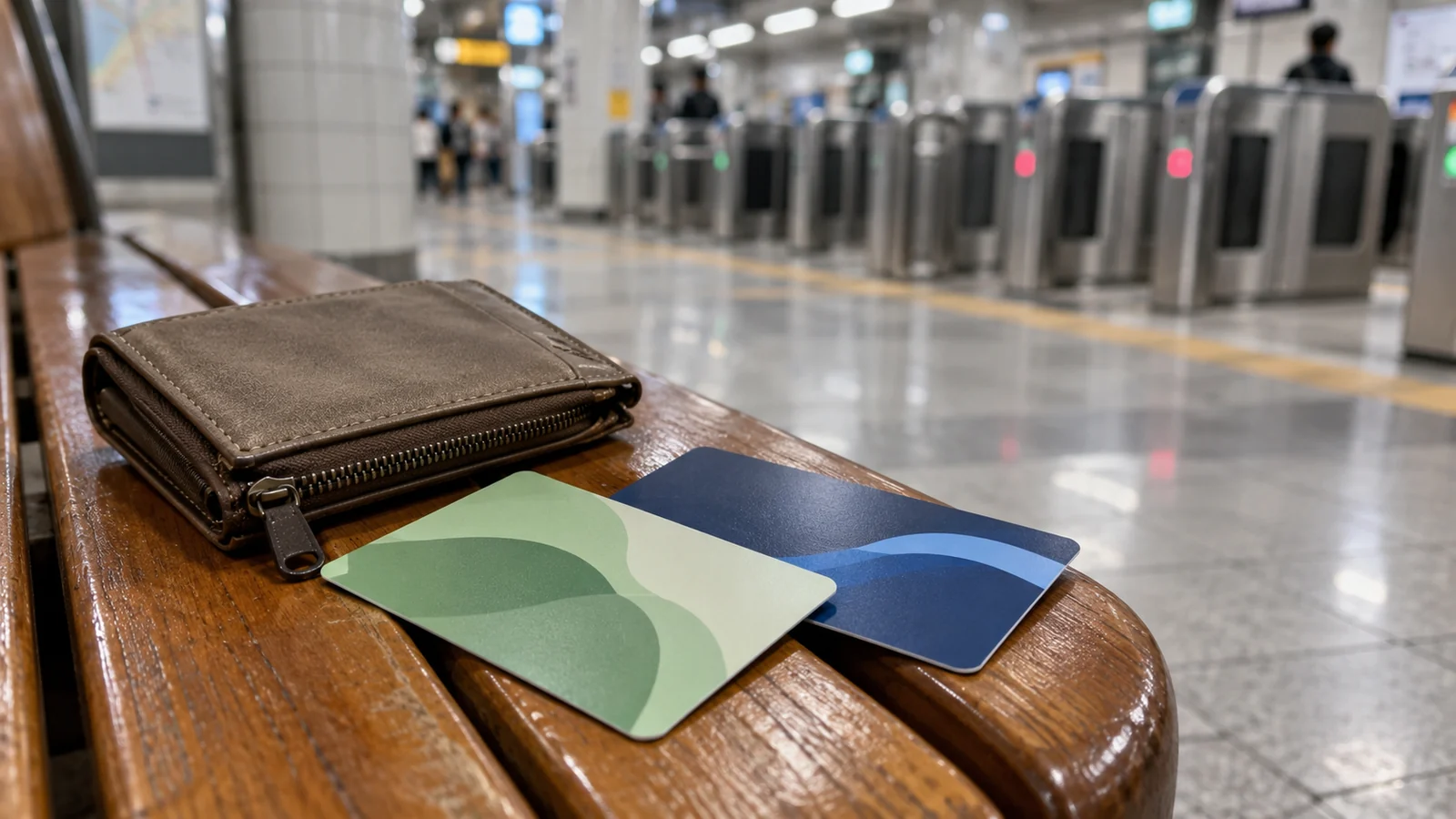
A ₩20,000 seven-day Climate Card costs ₩23,000 if you need the physical card. In our base-fare example, 14 subway journeys cost ₩21,700 on a T-money card you already own. The unlimited pass would cost ₩1,300 more, before any payment fees. Count the journeys your pass will actually replace before buying it.
Official sources checked October 22, 2026. The comparisons below are our calculations for an adult visitor, not a promise about your route or a record of a personal trip.
Start with the card you already own
Korea Tourism Organization’s transport-card guide lists a standard physical Climate Card at ₩3,000, separate from the pass. Keep that purchase cost separate from the money loaded for travel.
| Your starting point | What to compare |
|---|---|
| You have T-money but no Climate Card | Expected covered fares versus the pass, a new Climate Card and payment fees |
| You already have both cards | Expected covered fares versus the pass and payment fees; the old card purchases are already paid for |
| You have neither card | Include the actual purchase cost of each card you need; do not assume T-money itself is free |
| You will need T-money for other journeys anyway | Its purchase cost belongs in both plans; compare the extra Climate Card expense with the fares it replaces |
KTO lists ordinary T-money cards at ₩3,000–₩5,000, depending on the card. Use the price of the specific card you intend to buy, especially for a souvenir design.
How many subway journeys make the pass cheaper?
The short-term loads are ₩5,000, ₩8,000, ₩10,000, ₩15,000 and ₩20,000 for 1, 2, 3, 5 and 7 days respectively. These prices and the separate card cost are listed in the KTO guide.
Calculation assumptions: you already own T-money; every journey is within Climate Card coverage and costs the ordinary adult subway card base fare of ₩1,550, as listed in Seoul’s current subway fare table. There are no payment fees, distance supplements or discounts in this simplified example. The counts are totals over the pass period, not daily targets.
Journey thresholds: “Card owned” means an existing Climate Card; “New card” includes its ₩3,000 purchase. Each count is the first total at which the pass costs less.
| Pass | Load | Card owned | New card |
|---|---|---|---|
| 1 day | ₩5,000 | 4 | 6 |
| 2 days | ₩8,000 | 6 | 8 |
| 3 days | ₩10,000 | 7 | 9 |
| 5 days | ₩15,000 | 10 | 12 |
| 7 days | ₩20,000 | 13 | 15 |
For example, a new card plus a seven-day load costs ₩23,000. Fourteen base-fare journeys cost 14 × ₩1,550 = ₩21,700; fifteen cost ₩23,250. The pass first becomes cheaper at 15 journeys, with just ₩250 of headroom before fees.
If you already own the Climate Card, the same seven-day load costs ₩20,000. Thirteen journeys cost ₩20,150, so the decision changes without changing the itinerary.
Count paid journeys, not every train you board
A subway transfer can be part of the same paid journey. Do not count a change of lines as another ₩1,550 saving. Bus–subway transfers also have integrated-fare rules; Seoul’s fare guide specifies tapping on and off and a transfer time limit, normally 30 minutes, or 60 minutes from 9 p.m. to 7 a.m.
For your own comparison, add the actual pay-as-you-go fares of covered journeys during the pass’s validity, then compare that total with the pass, any additional card purchase and fees. Longer trips, bus fares and discounted fares need their own amounts. Money loaded onto T-money and left unspent is not a fare already consumed.
Foreign-card payment can change a close result
Seoul’s March 17, 2026 payment announcement says the new vending machines at 273 stations on Lines 1–8 accept internationally issued credit and debit cards for Climate Card purchases and short-term loads. It also states an average service fee of approximately 3.7%. Check the machine’s actual total before confirming payment; your card issuer may have separate charges.
Illustrative fee calculation: if 3.7% were applied to a ₩23,000 card-and-pass total, the cost would become ₩23,851. Against fifteen ₩1,550 journeys costing ₩23,250, the pass would then cost ₩601 more. This is a sensitivity example using the published average, not an exact machine quote.
That small margin is a good reason to compare the final amount rather than planning extra trips just to justify a pass. The announcement covers Climate Card and single-journey ticket payments; it does not establish that an ordinary T-money balance can be topped up with your foreign bank card.
Check your airport direction and uncovered trips
Use Seoul’s Climate Card coverage guide for the exact stations and bus operator before treating a fare as a saving.
| Journey | How to budget it |
|---|---|
| Covered Seoul station → Incheon Airport T1/T2 on AREX All Stop | Getting off at the airport is permitted with a valid pass after a qualifying journey |
| Incheon Airport T1/T2 → Seoul | Boarding at those airport stations is not covered; budget the arrival fare separately |
| AREX Express or airport limousine bus | Budget separately; the Climate Card is not the required ticket |
| Sinbundang Line or another uncovered journey | Exclude it from the pass-saving calculation |
The AREX comparison explains Express versus All Stop. For an airport bus, check the ticket and T-money payment guide for the particular service. A Climate Card does not replace every transport payment on your trip.
A late recharge can waste most of a one-day pass
Short-term validity starts on the charging date. Seoul’s example says a one-day pass runs through that date’s last bus/subway service; it is not a rolling 24-hour pass.
Planning example: if you reach central Seoul late in the evening and need only one more ride, compare that fare with a pass that starts that evening. Loading it the following morning may fit your sightseeing day better. Buying the physical card and loading a pass are separate decisions.
KTO also says a short-term pass cannot be changed or reloaded until it expires. For Seoul → Busan → Seoul, compare separate Seoul travel blocks instead of assuming one uninterrupted pass will suit the whole trip.
The tourist passes still exist after the 2026 change
The resident-focused monthly transition caused confusion, but Seoul’s August 20 transition notice explicitly retains 1-, 2-, 3-, 5- and 7-day Climate Card passes. The new Climate Pass benefits are based on Seoul residence. A visitor comparing short-term transit should use the tourist-pass prices above rather than assuming a resident monthly reimbursement applies.
Choose for the trip you will actually take
- Mostly walking around one area each day: price the outward and return journeys first. Unlimited travel may add little value.
- Several covered journeys on consecutive Seoul days: use the threshold table, then replace its flat fare with your route estimates.
- Mixed cities, uncovered lines or uncertain plans: keep a separate transport budget; count only the fares the Climate Card can remove.
- Considering a sightseeing bus: compare its experience and route using our city tour bus versus subway guide. An attraction-style tour ticket solves a different travel decision.
Choose the pass when it suits both the route and the final cost. A small expected saving is not a reason to reorganize a holiday around extra train rides.