
Quick Info
- 📍 Area: English-friendly studios are concentrated in Myeongdong, Hongdae, Gangnam, and central Seoul
- 🕒 Best time: Book early in your trip so you can use the result while shopping for makeup and clothes
- 💰 Budget: Current verified studio examples run about KRW 80,000-150,000 for focused to complete one-person sessions
- 🚇 Getting there: Choose a branch near a subway station and save both its Korean address and map pin
- 👥 Best for: Travelers who want practical color guidance, English service, and a reusable shopping reference
- ✅ TL;DR: Compare the language, duration, deliverables, deposit, and cancellation policy—not just the four-season label—and arrive with little or no makeup.
Seoul Personal Color Analysis at a Glance
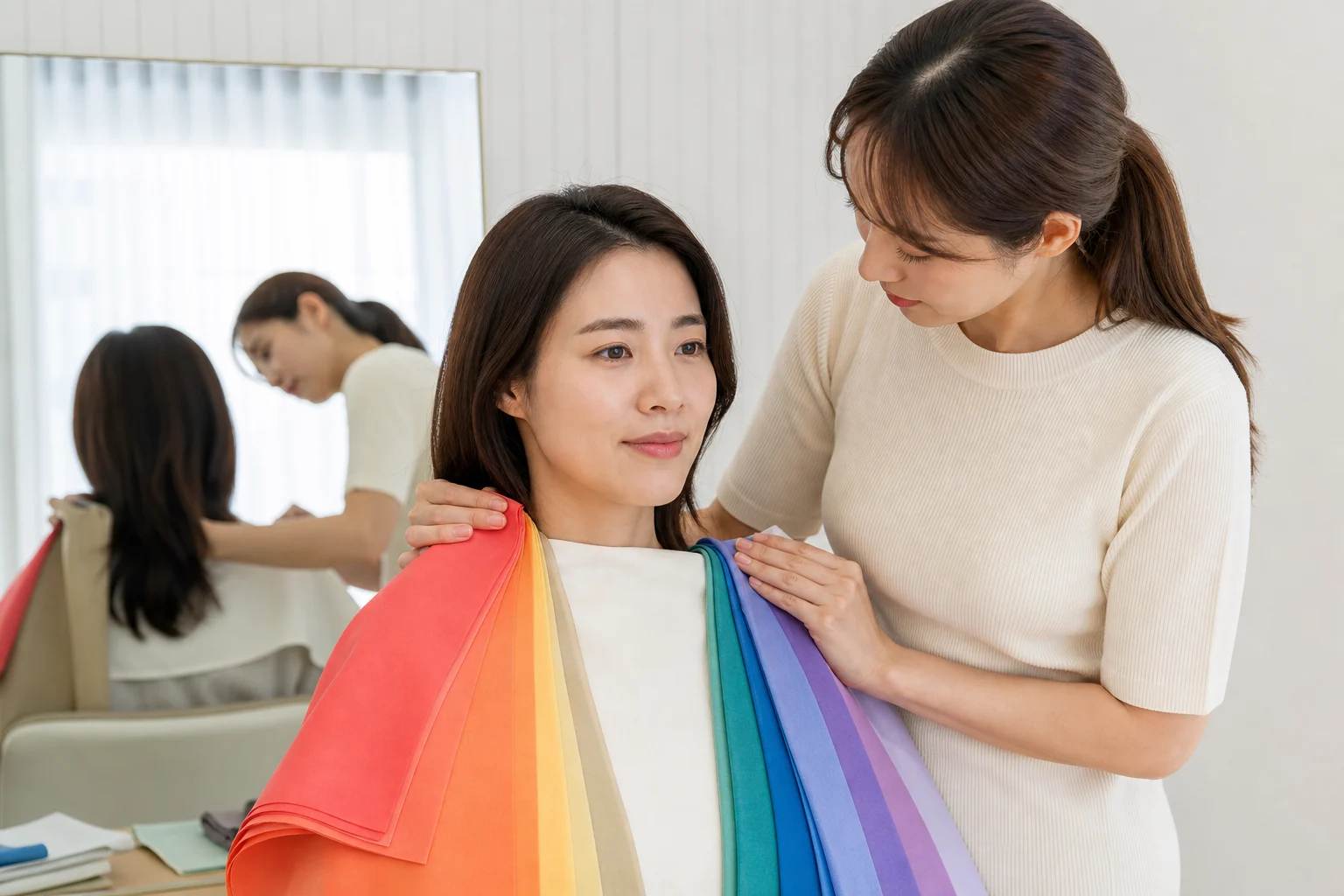
A Seoul personal color analysis is a styling consultation that compares colors beside your face and translates the result into choices for clothing, makeup, hair color, and accessories. You may receive a familiar spring, summer, autumn, or winter result, but a useful appointment goes further. It should explain temperature, brightness, depth, saturation, and contrast in language you can apply after the session.
This is not a medical diagnosis, and the result should not become a rule that bans half your wardrobe. Think of it as a structured way to notice why a dusty rose, bright coral, soft navy, or deep burgundy changes the way your complexion appears under controlled light. A good consultant also explains how to wear a difficult color rather than simply declaring it wrong.
The information below was checked on August 25, 2026 against the Korea Tourism Organization, the Seoul Tourism Organization, and current studio pages. Programs, prices, branches, languages, and discount conditions can change. Recheck the studio’s own booking page immediately before paying a deposit.
| Choice | Typical focus | Current planning range | Best for |
|---|---|---|---|
| Free or quick AI experience | Fast skin-tone or personal-color screening | Free where offered; reservation or on-site queue may apply | Curious travelers who want a short introduction |
| Makeup color analysis | Foundation direction, lip, blush, and eye colors | Around KRW 80,000 in a current verified studio example | Shoppers mainly interested in cosmetics |
| Fashion color analysis | Draping, clothing palette, contrast, and accessories | Around KRW 100,000 in a current verified studio example | Travelers focused on wardrobe decisions |
| Complete analysis | Fashion and makeup guidance, report, cards, and broader application | Around KRW 150,000 in a current verified studio example | First-time clients who want one reusable system |
| Premium add-on program | Makeup application, lesson, body or face-shape analysis, or photos | Varies widely; request the full inclusion list | Travelers who value a longer experience over a basic label |
The range is a planning tool, not a market-wide promise. As one current primary example, Color Lume’s official program page listed 40-minute makeup, 60-minute fashion, and 80-minute complete sessions at KRW 80,000, 100,000, and 150,000 respectively when checked. Other studios use different systems and may charge separately for interpretation, makeup, group size, reports, or weekend appointments.
If you plan to shop afterward, save our Olive Young skincare shopping guide and cushion vs foundation guide before your appointment. Your result is more useful when you can compare it with actual product textures, finishes, and shade availability rather than buying every recommended color immediately.
What Happens During a Personal Color Session
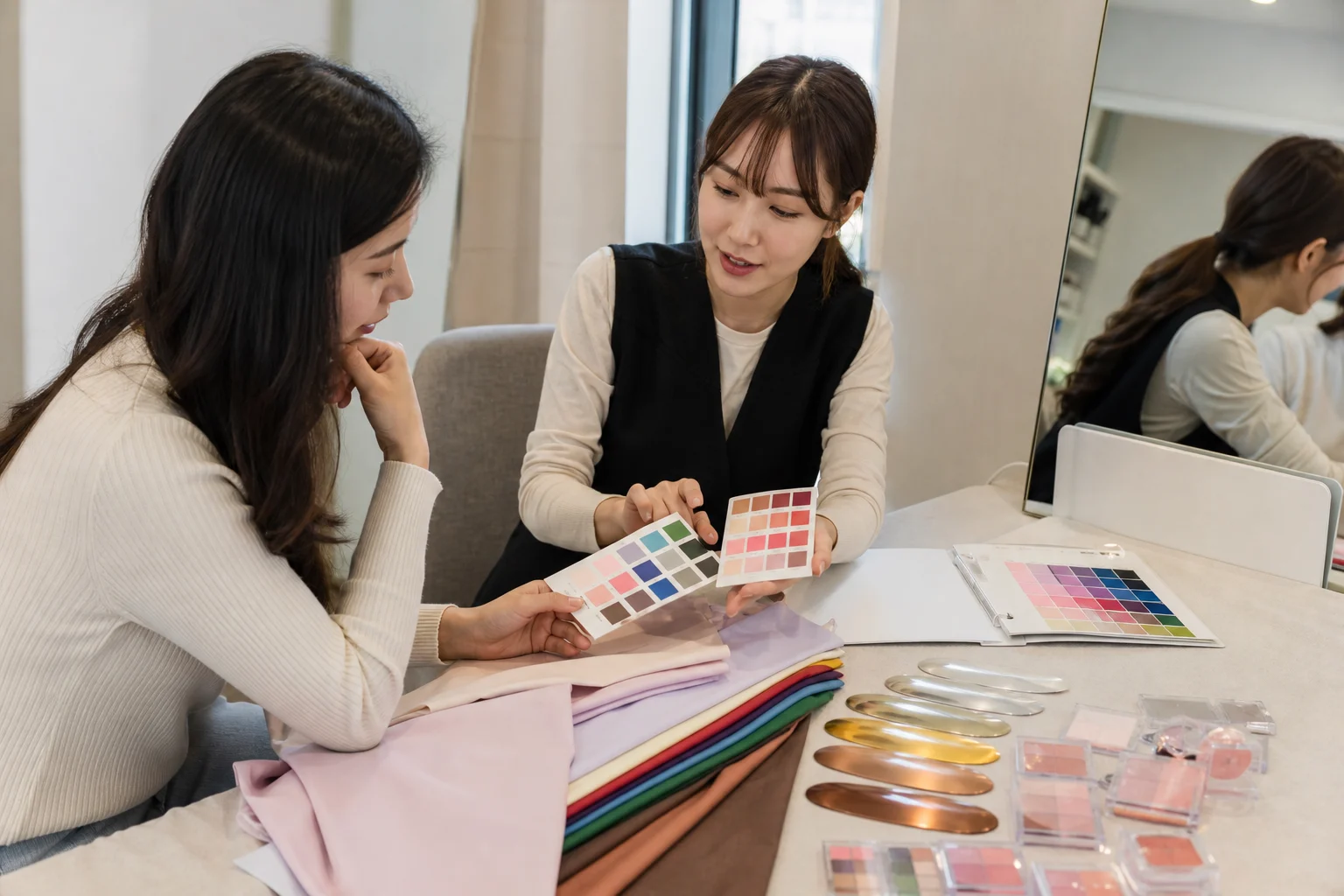
Studios differ, but most detailed appointments follow a recognizable sequence. First, the consultant asks about your goals. Say whether you care most about makeup, work clothes, casual fashion, hair color, jewelry, or simply understanding the seasonal system. This prevents a fashion-heavy session when your real question is which lip and blush colors to buy.
Next comes a neutral baseline. You may be asked to remove makeup, cover your hair and clothing, and sit under controlled lighting. Some studios visually assess the skin, eyes, and natural hair; others add a color-measurement device. The consultant then compares neutral whites, dark and light values, warm and cool groups, muted and clear colors, and different contrast levels.
Fabric draping is the part most travelers recognize. The consultant places colored cloth close to the face and compares pairs or families. Watch your jawline, shadows, redness, and the clarity of your features rather than staring only at whether you like the fabric. Personal preference still matters, but it is a separate question from the effect being demonstrated.
The Korea Tourism Organization’s personal-color experience report describes a questionnaire, white drapes, comparisons of brightness and saturation, a makeup-pouch review, and a digital reference sent after the visit. The article is useful for understanding the sequence, but KTO also warns that its individual venue details were last updated in September 2024. Use it as a process example, not a current price sheet.
A complete session may continue with several of these steps:
- Comparing gold, silver, rose gold, or other metal tones
- Testing lip, blush, and eye-color families
- Reviewing makeup you already own
- Discussing hair depth and warmth before a salon visit
- Identifying useful neutrals for coats, suits, or everyday basics
- Explaining patterns, contrast, or fabric finish
- Creating a digital report, physical card, or shopping palette
Before leaving, ask the consultant to explain the result without seasonal shorthand. You should understand at least three practical variables—for example, cool + muted + medium depth—and receive examples of flexible colors, not only a single named season. Photograph any physical drapes or cards only with permission, and confirm how and when digital material will arrive.
If hair color is one of your goals, take those variables to the salon instead of sharing only a season label. Our Seoul hair salon booking guide explains how to pair a color reference with your chemical history, maintenance routine, and an all-in price check.
Session Types, Prices, and What Is Worth Paying For
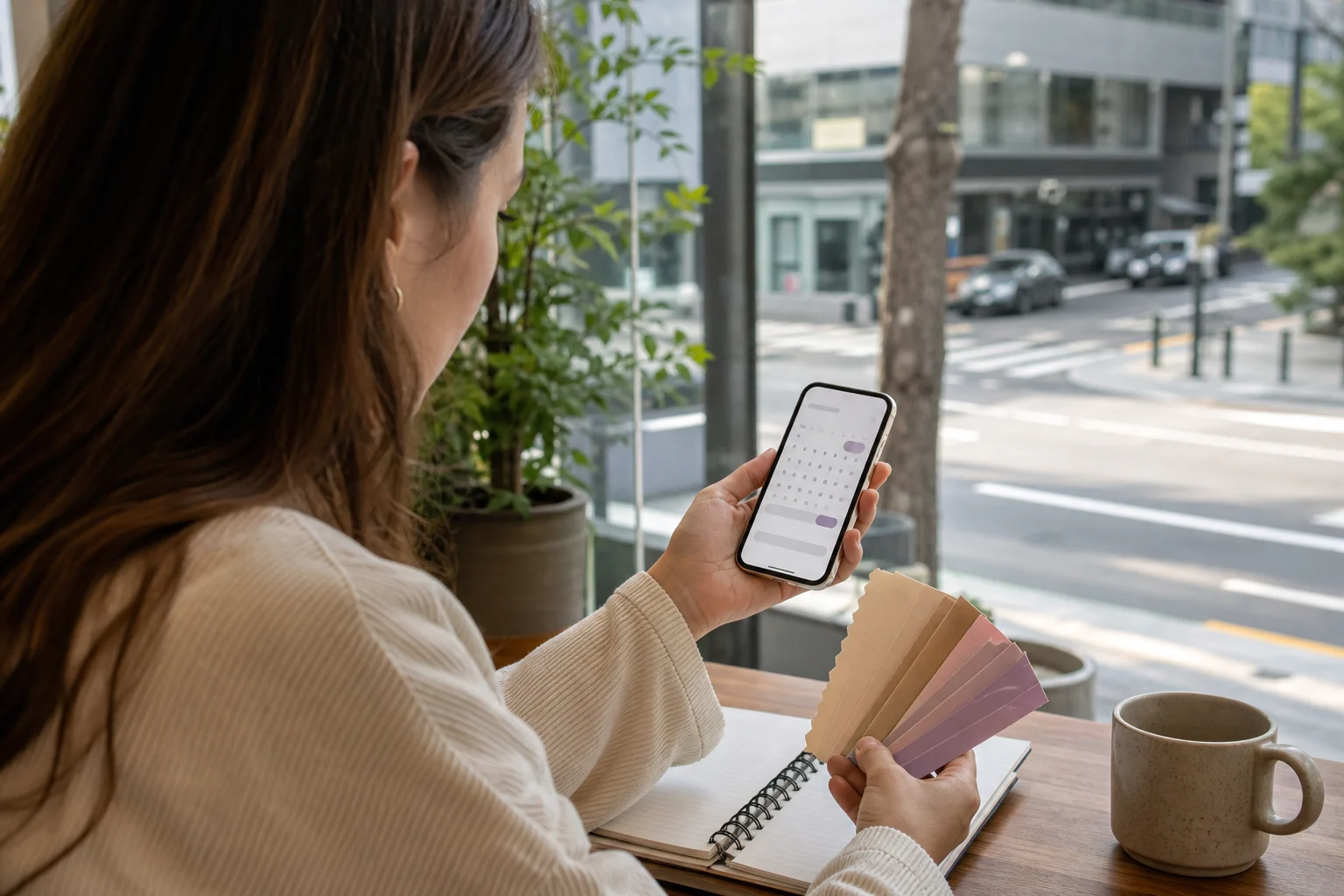
The cheapest session is not automatically the best value, and the most expensive package is not automatically more accurate. Value comes from the time spent comparing colors, the consultant’s ability to communicate with you, and the usefulness of what you take home.
The Color Lume program prices were rechecked October 4, 2026 and span KRW 80,000-150,000 for focused to complete sessions. The studio advertises English sessions and says a small deposit secures the booking, with the balance paid at the studio. Confirm the language for your appointment and any group discount in the actual quote; no group reduction is included in the prices above. These are one provider’s listed programs, not standard Seoul prices.
Use this comparison checklist when two offers look similar:
- Language: Is the consultant personally fluent in English, or is an interpreter added? Is interpretation included in the displayed price?
- Duration: Does the stated time include setup, makeup removal, translation, and report explanation?
- Draping depth: Will the appointment compare broad warm/cool groups, a four-season system, or more detailed tone variations?
- Deliverables: Do you receive a physical card, digital PDF, product list, photos, or follow-up questions?
- Makeup scope: Does “makeup analysis” mean shade recommendations, testing, a finished application, or a lesson where you practice?
- Group format: Are two people analyzed separately, or is one appointment time divided between them?
- Deposit and changes: How much is prepaid, when is the balance due, and what happens if you are late?
Paying more can make sense when the package solves a real problem. A traveler replacing work clothes may benefit from fashion neutrals and contrast guidance. Someone planning a large cosmetics purchase may value a makeup-pouch review and written shade directions. A full makeover is less useful if you only want an everyday color card and have a packed itinerary.
Be cautious with vague promises such as “celebrity method,” “100% accurate,” or “perfect shades forever.” Ask what the analyst actually compares and what you receive. Lighting, tanning, hair dye, makeup, contact lenses, and a consultant’s system can influence the conversation, so practical explanation matters more than a dramatic label.
How to Book an English-Friendly Studio
Start with primary sources: the studio’s official site, its official booking form, or an official tourism listing that links to the business. Social media can show recent work, but a direct message without written payment and cancellation terms is a weak place to send a large deposit.
The Korea Tourism Organization currently features COCORY COLOR with Myeongdong, Yeonhui, Gangnam, and Hongdae locations. Its 2026 promotion says international travelers can receive 10% off through December 31, 2026 by booking online in advance and presenting the KTO coupon on site. The same page says reservation changes are allowed once when requested at least three days in advance, and arrival more than ten minutes late is treated as a no-show. Those terms belong to that promotion; do not assume another studio uses them.
Send or verify these questions before paying:
- Is the session available fully in English on my selected date?
- Is the listed price per person, and does it include interpretation and tax?
- What is the total appointment time for one person or my group?
- Are draping, makeup analysis, and a digital or physical report included?
- Should I arrive without makeup, sunscreen, colored contacts, or freshly dyed hair?
- How much is the deposit, and which payment methods work for foreign cards?
- What are the cancellation, rescheduling, late-arrival, and no-show rules?
- Which branch is booked, and what is the Korean address?
After confirmation, save a screenshot of the reservation, receipt, branch name, phone number, and policy. Put the Korean address into Naver Map or KakaoMap as well as your usual map app. Similar branch names can be far apart, and some studios sit inside office buildings without obvious street-level signs.
Book the appointment near the beginning of your Seoul stay if you want to shop with the results. Leave a buffer before and after; a session can run long when interpretation or makeup testing is included. Avoid placing it between two fixed tickets on opposite sides of the city.
How to Prepare Before Your Appointment
Preparation should reveal your normal coloring without making the day uncomfortable. Follow the studio’s instructions first, because requirements vary.
Follow the studio’s preparation instructions. If makeup or tinted sunscreen needs to come off, ask whether you can remove it at the studio; reapply suitable sun protection before going outdoors afterward. Heavy foundation, color-correcting base, strong blush, contour, lipstick, tinted sunscreen, and colored contacts can change what the consultant sees. Bring gentle remover if the studio asks you to remove products there, but do not aggressively scrub your skin immediately before analysis.
Wear a simple neutral top with an easy neckline. The studio may provide a white cape, yet a bright collar can still reflect color near the face while you are waiting or taking reference photos. Keep hair accessible so it can be covered or pulled away. If your hair is dyed, tell the consultant your natural color and whether you plan to maintain the dye.
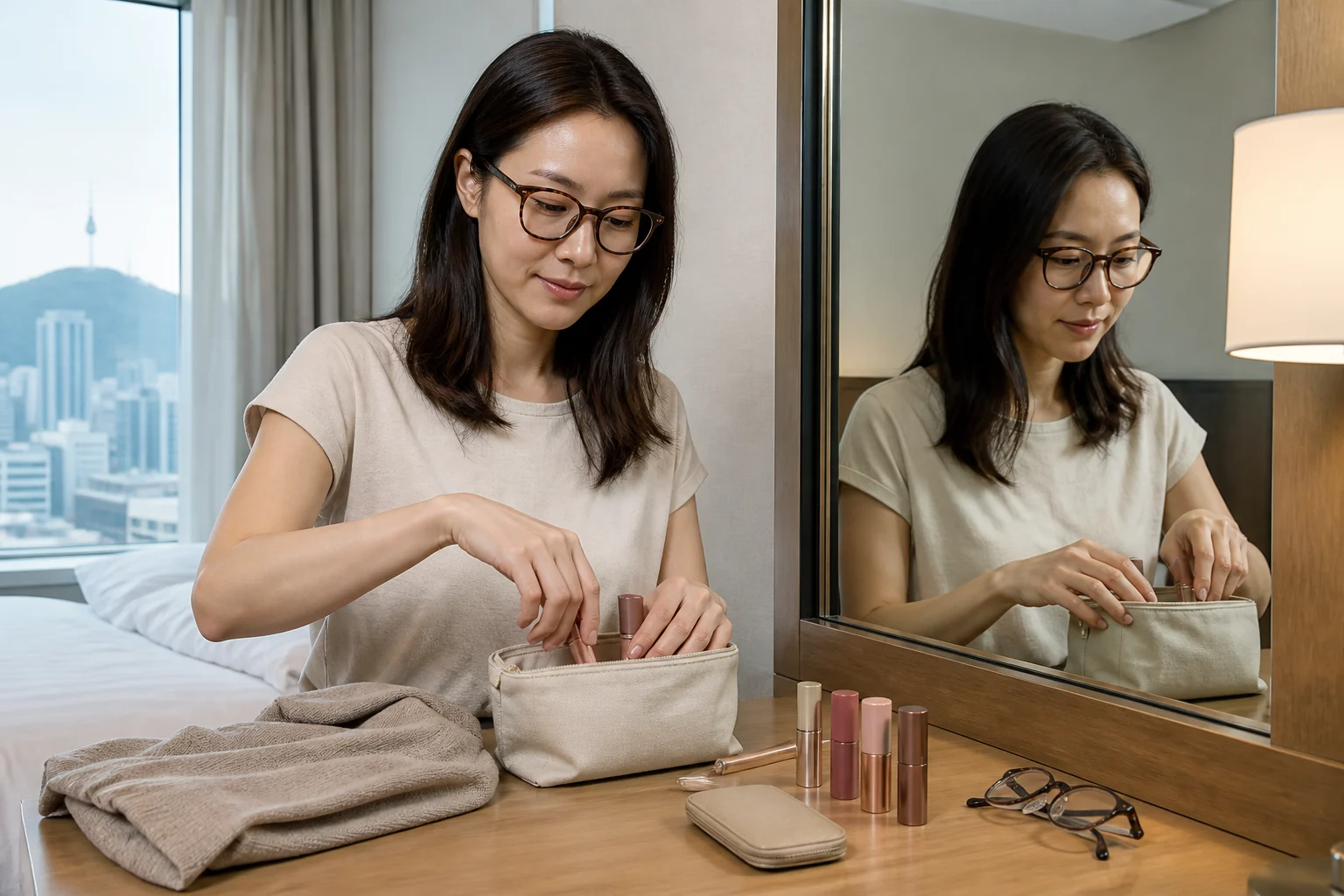
Bring a compact, useful kit:
- Two or three lip products you wear often, including one you suspect is unflattering
- A base product or cushion if shade direction is one of your goals
- Your usual glasses and any clear contact lenses
- Photos of favorite outfits in daylight
- A note listing the wardrobe or makeup decisions you want help with
- A phone with enough storage and battery for the report and permitted photos
Do not carry your entire cosmetics collection across Seoul. A small, representative sample creates a better discussion than a bag of nearly identical shades. If you have sensitive skin or allergies, do not let anyone apply shared testers without appropriate hygienic applicators, and feel free to decline product application. Color guidance does not require risking irritation.
Free AI Tests vs Paid Consultant Sessions
Travelers who are curious but not ready to pay can start with a short public experience. The Seoul Tourism Organization’s current Beauty Play Hongdae listing describes AI personal-color and skin diagnostics that take about five minutes. When checked on August 25, 2026, the listing showed Monday-Saturday hours of 10:00-19:00 and Sunday closure. Confirm the program, queue, reservation method, and hours before making a special trip.
A quick AI screen is useful for orientation. It can introduce undertone or color-family language and help you decide whether a longer appointment sounds interesting. It cannot replace the back-and-forth of a detailed consultation that compares many fabrics, checks your own products, explores contrast, and explains alternatives.
Choose the free or quick option when you want a low-commitment activity, have limited time, or mainly want to learn the basic vocabulary. Choose a paid session when you want a reusable report, English conversation, detailed draping, or personalized shopping help. Neither choice needs to define your identity; the practical goal is better decisions with less guesswork.
Turn Your Result Into Smarter Seoul Shopping
Wait until you understand the result before buying products. A seasonal name alone is too broad. Write down your best temperature, depth, clarity, contrast, and a few reliable neutrals. Then decide what you actually need.
For makeup, begin with one lip or blush family and test it in store lighting, then near a window if possible. Foundation and cushion should still match your skin depth and undertone rather than a season label. Our Korean glow makeup guide explains how finish and wear time affect a look after you choose a color direction.
For clothing, start with items near the face: tops, scarves, coats, and glasses. Trousers, bags, and shoes can use colors outside the recommended palette without changing facial contrast. Keep beloved “wrong” colors and adjust them with a better neutral, makeup shade, or distance from the face.
If you buy unopened cosmetics to take home, review the Korea tourist tax-refund guide before checkout. A personal-color appointment is a service and is not treated like an exportable cosmetic purchase, but eligible goods bought afterward may qualify at participating stores under the current rules.
Take one pass through the store before purchasing. Compare the analyst’s product list with your budget, skin needs, existing collection, and local availability at home. A useful analysis should reduce duplicate buying, not turn into permission for an oversized haul.
Plan Your Seoul Color Appointment
Shortlist two studios, compare their live inclusions and policies, and send the same questions to both. Once booked, prepare a neutral top, a small makeup sample, and three decisions you want the consultation to solve. The best result is not simply a season name—it is a clear, flexible guide you can still use after Seoul.