
Measure the broth as carefully as the gochujang. Three tablespoons of paste in a small splash of water makes a different pan from the same paste in three cups of broth. Start with the quantities below, then adjust after the rice cakes soften and the sauce reduces.
This is an adapted, research-based starting recipe, not a recipe tested in LoveKorea’s kitchen. The images are illustrations, not photographs of a batch we cooked. Brand, pan width and rice-cake thickness will change the result.
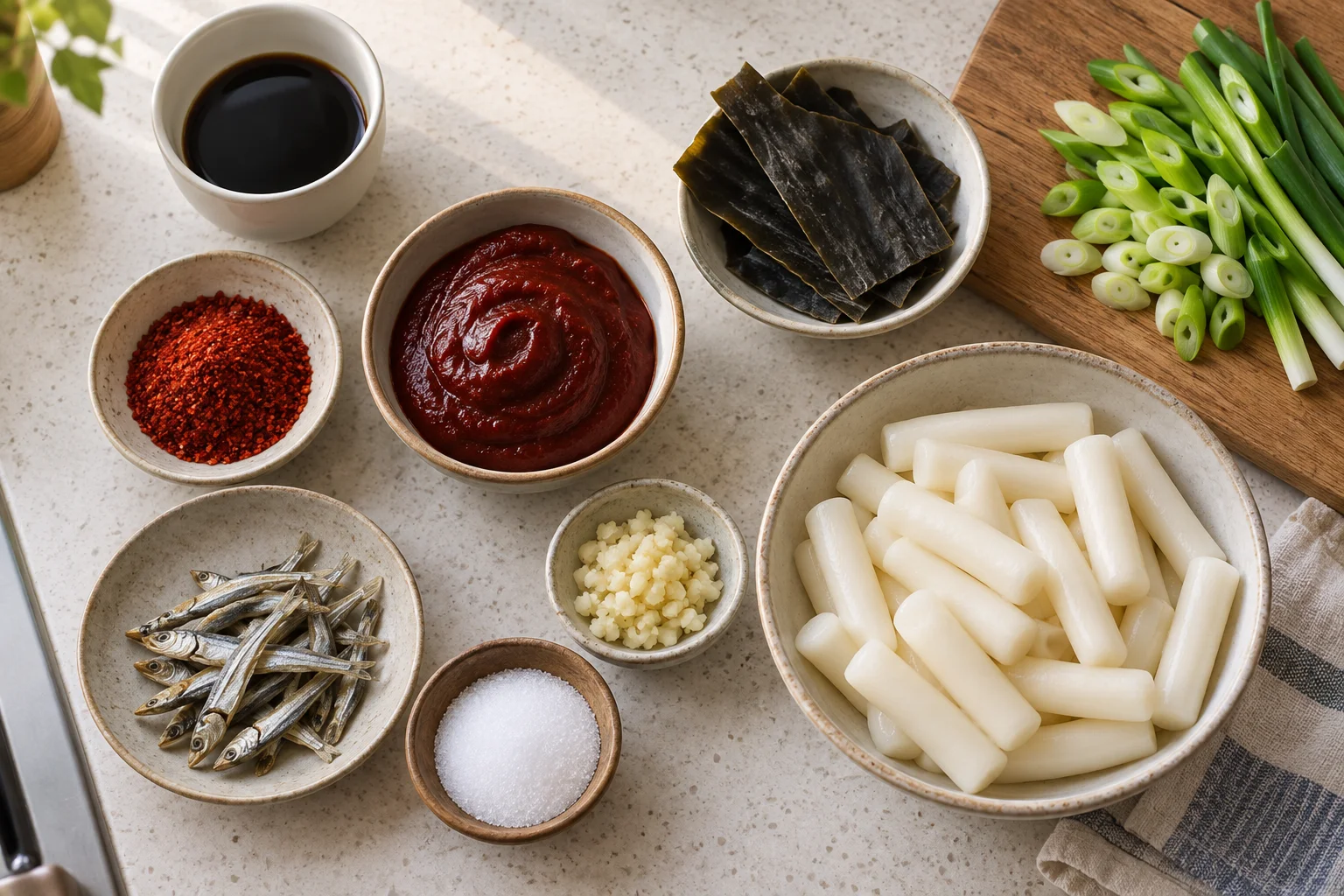
Starting quantities for two generous snack portions
| Ingredient | Amount | Check first |
|---|---|---|
| Cylinder-shaped tteokbokki rice cakes | 450 g | Package preparation and storage directions |
| Unsalted broth or water | 710 ml / 3 US cups total | Reserve any sauce-mixing liquid from this measured amount |
| Gochujang paste | 3 tablespoons | Use paste, not a separately seasoned pourable sauce |
| Gochugaru | 1 teaspoon to start; optional | Omit for less added chili heat |
| Soy sauce | Up to 1 tablespoon | Use less with salty broth or paste |
| Sugar | 1 tablespoon to start | Adjust in teaspoons later |
| Minced garlic | 1 teaspoon | Optional according to preference |
| Scallions | 2, sliced | Add near the end |
| Cabbage / fish cake / cooked egg | Optional | Ingredients, allergens and extra liquid needs |
Use standard measuring spoons. The base is adapted from Korean Bapsang’s tteokbokki recipe, with a lower starting sugar amount and gradual seasoning. Maangchi’s recipe provides a separate stock-and-sauce approach. They are different recipes, not evidence that every brand needs one universal ratio.
Check the rice cakes and ingredients
Prepare fresh, refrigerated or frozen tteok according to its package. Separate the pieces without forcing a frozen block apart. Do not assume every kind requires the same soak; thickness and storage form matter. If a package supplies a complete sauce kit, follow that kit first rather than adding this whole sauce on top.
Read labels for dietary needs. Rice cakes may contain wheat; gochujang and soy sauce can also contain wheat or soy. Fish cake and anchovy broth add fish ingredients, and fish cake may have other allergens. Vegetable broth alone does not make every other ingredient vegan or allergy-safe.
For a first attempt, use the base and scallions. Adding noodles, dumplings, cheese and processed meat together changes liquid, salt and cooking requirements, making the result harder to diagnose.
Cook in five steps
- Prepare everything first. Measure the rice cakes and the full 710 ml of liquid. Mix the paste, optional flakes, soy sauce, sugar and garlic with a few spoonfuls taken from that liquid.
- Use the remaining measured broth. Pour it into a wide pan and stir in the sauce mixture. The combined starting liquid is still 710 ml, not three cups plus extra mixing water. Bring to a steady simmer.
- Add prepared rice cakes. Stir gently and scrape the bottom regularly. Keep the pan uncovered so you can observe reduction. A rough 8–15-minute window is a starting guide; follow any package cooking requirements and check that the center is tender and hot.
- Adjust liquid before adding more paste. If the sauce thickens while the center stays firm, add a small amount of hot water and continue cooking. If the rice cakes are ready but the sauce is loose, briefly reduce it, stirring to avoid scorching.
- Finish and taste carefully. Add scallions near the end. Let a small spoonful cool before tasting. Adjust sugar or chili in small measured amounts. Stop slightly looser than your preferred serving texture because the sauce thickens as it stands.
If using optional fish cake or another prepared topping, follow its heating directions. Do not improvise raw meat additions into a pan whose timing was written for rice cakes. Cook optional eggs separately until whites and yolks are firm, following FoodSafety.gov’s egg guidance.
Fix the problem you actually have
| Result | First adjustment | Avoid |
|---|---|---|
| Hard center and thick sauce | Add hot water a little at a time; keep cooking | Adding more gochujang |
| Tender rice cakes but watery sauce | Brief uncovered reduction in a wider pan | Assuming extra starch is always needed |
| Too salty | Add unseasoned rice cakes/liquid if expanding the batch is practical | Treating sugar as removal of salt |
| Too sweet | Dilute by expanding the unseasoned ingredients | Adding large amounts of chili to hide it |
| Too spicy | Use less chili in the next batch; expand the unseasoned portion if practical | Assuming cheese makes it mild for everyone |
| Too thick after standing | Loosen gently with a little water during safe reheating | Pulling a cold solid mass apart forcefully |
For a noodle version, make a separate plan for the noodles’ liquid and cooking directions. Do not add a dry packet to a nearly finished thick sauce and assume it will cook evenly. For a non-spicy soy-based dish, use a dedicated gungjung-tteokbokki recipe; removing red paste alone does not create that recipe.
Store leftovers safely
Refrigerate perishable leftovers in shallow containers within two hours, or one hour above 90°F/32°C. Keep them cold and use within three to four days, following a shorter ingredient instruction where applicable. USDA leftover guidance, checked October 4, 2026.
Reheat leftovers to 165°F/74°C throughout, checking with a food thermometer; FoodSafety.gov gives that temperature for leftovers. Add a little water to loosen the sauce without assuming a hot surface means the center is hot. Discard mishandled food; reheating does not rescue unsafe storage.
Make the second batch more predictable
Note the rice-cake brand, paste brand, starting liquid and the final extra sugar/chili. Change one variable next time. That record is more useful than promising the same glossy result from every supermarket product.
For shopping, see gochujang, doenjang and ssamjang. For a different use of your pantry, compare kimchi fried rice. The ramyeon guide explains packet versus cup preparation before you attempt a noodle variation.