2025 Complete Guide to Visiting Korea’s Historic Palaces: Tips, Tickets, and the Best Times to Go
Quick Info
- 📍 Area: Seoul (Jongno-gu & Jung-gu)
- 🕒 Best time: Spring (Mar–May) and Autumn (Sep–Nov); go early morning for fewer crowds
- 💰 Budget: ₩3,000 per palace typical; ~₩10,000 integrated pass; free entry with hanbok (policy-based)
- 🚇 Getting there: Subway + short walks; most palaces are within 10–25 minutes by transit from central Seoul
- 👥 Best for: First-time Seoul visitors, culture/history lovers, photographers, families
- ✅ TL;DR: Choose 2–3 palaces, check closed days and last entry times, consider the integrated pass, and visit early for the best photos.
Before you dive in
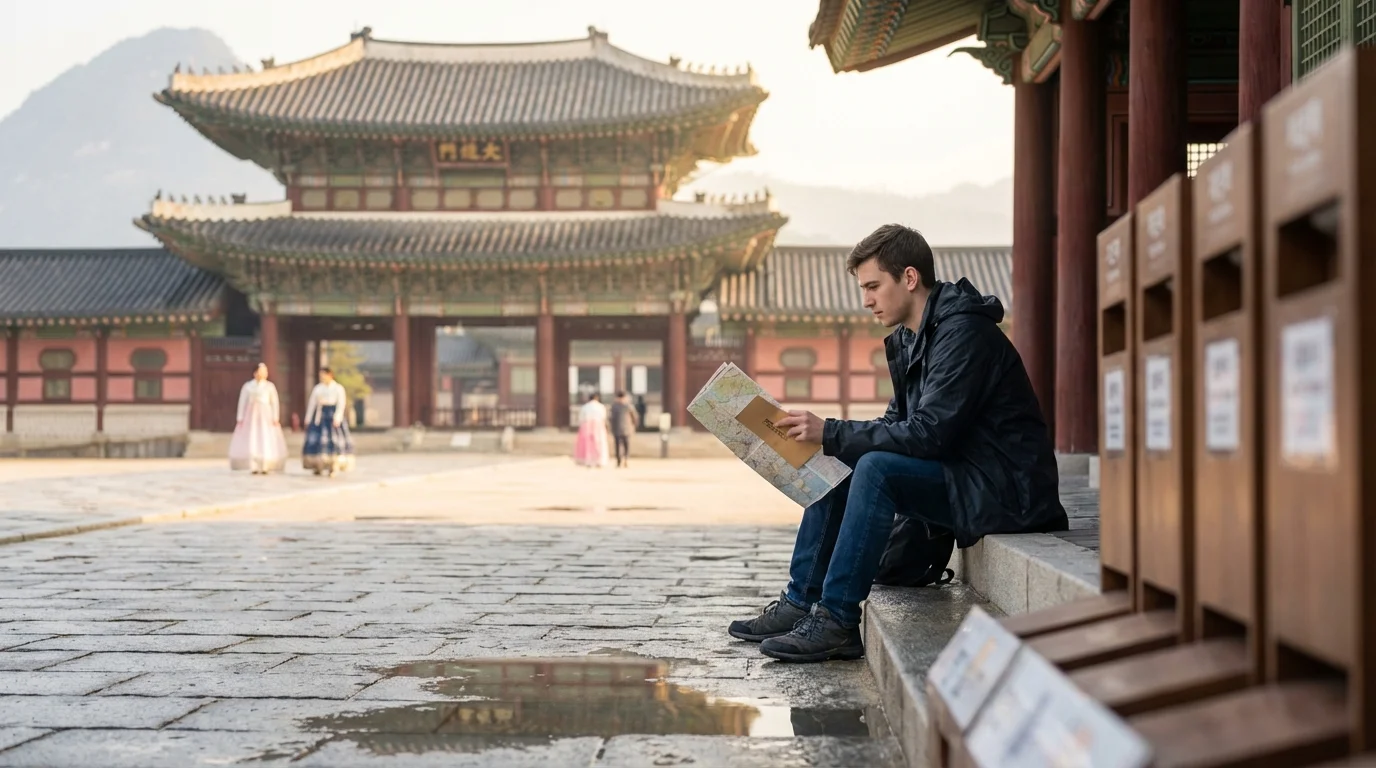
If any part of this guide feels useful, take 10 seconds to bookmark it.
Seoul is one of the few global capitals where you can step from a neon shopping street straight into a royal courtyard built for a dynasty. Visiting Korea’s historic palaces isn’t just “something touristy to do”—it’s one of the most direct ways to understand Joseon-era aesthetics, values, and daily life through architecture, gardens, and ceremonial spaces.
If you’re planning a Korea trip in 2025, this guide will help you decide which palaces to prioritize, when to go for the best light and the smallest crowds, how tickets work (including the integrated pass and hanbok free entry), and how to build an easy 1-day or 2-day palace itinerary without burning out. Along the way, you’ll also find practical tips on etiquette, photography, and common mistakes that can quietly ruin your timing.
Complete Guide to 한국의 역사적인 궁궐 방문하기 (Visiting Korea’s Historic Palaces)
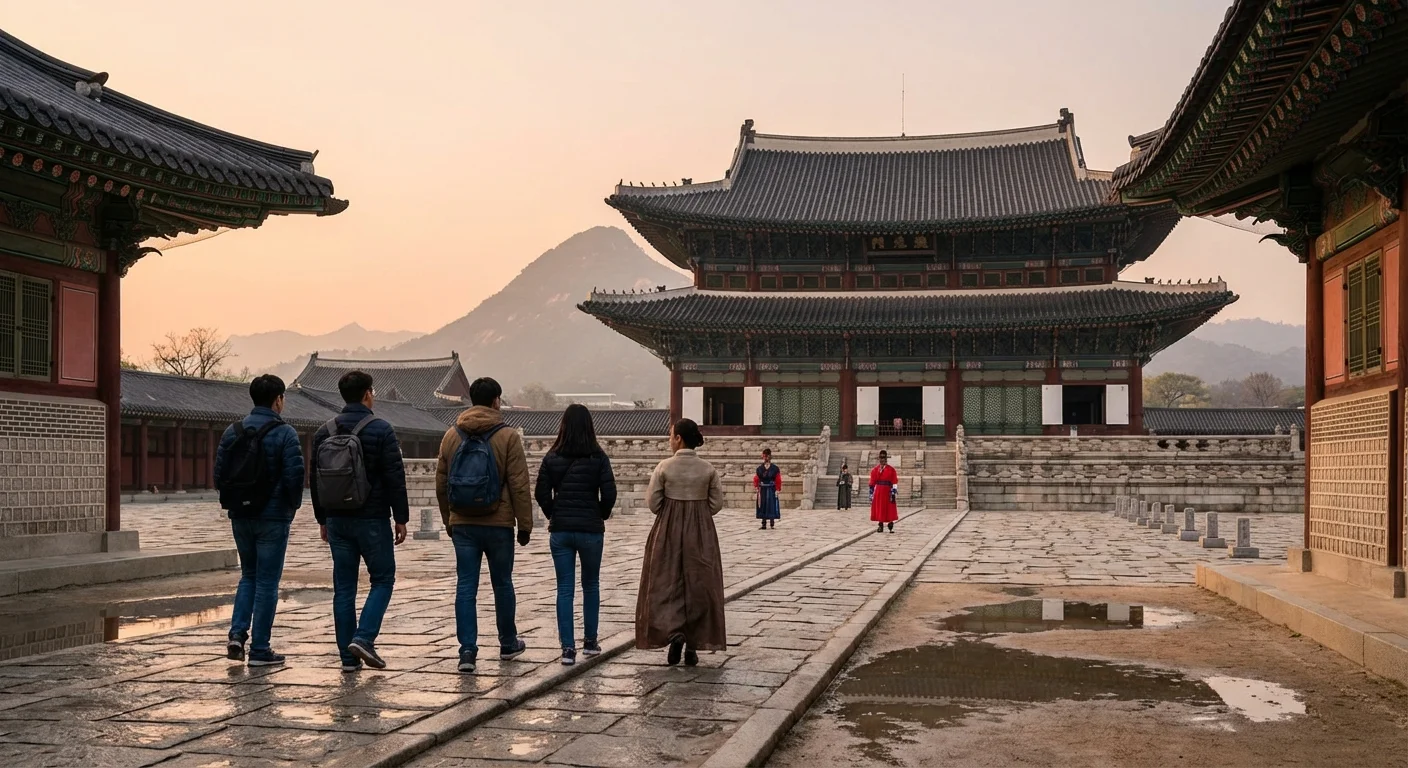
Korea’s “Five Grand Palaces” (plus nearby royal sites) are deeply tied to the Joseon Dynasty, and they’re not interchangeable. Each palace has its own personality: some are all about grand symmetry and iconic gates, others feel like a calm walk through landscaped hills, and one even blends traditional and Western-style architecture.
A few quick truths that help with planning:
- You don’t need to see every palace to feel the history. One or two well-chosen sites, visited at the right times, can feel more meaningful than rushing through all of them.
- The “best” palace depends on your travel style. First-time visitors often want the most iconic views; photographers may prioritize gardens and seasonal color; history lovers might prefer the palace with the most intact storytelling.
- Ticket strategy matters. If you plan to visit multiple sites, an integrated pass can be the cheaper, simpler option (details below). If you’re wearing a hanbok, entry may be free—making your “best value” plan totally different.
For decision-making, think of your priorities:
- Iconic “Seoul palace” experience + big courtyards: start with Gyeongbokgung.
- UNESCO site + famous garden setting: choose Changdeokgung.
- Cherry blossoms and a unique greenhouse vibe: add Changgyeonggung.
- Traditional meets Western-style architecture: visit Deoksugung.
- Quieter, smaller, historically meaningful stop: consider Gyeonghuigung.
Also, palace visits are very sensitive to timing. The same place can feel overcrowded and hot at midday, then calm and cinematic in the first hour after opening. Planning your day around that reality is the difference between “I saw it” and “I experienced it.”
The 5 Must-Visit Palaces in Seoul: What Makes Each One Special
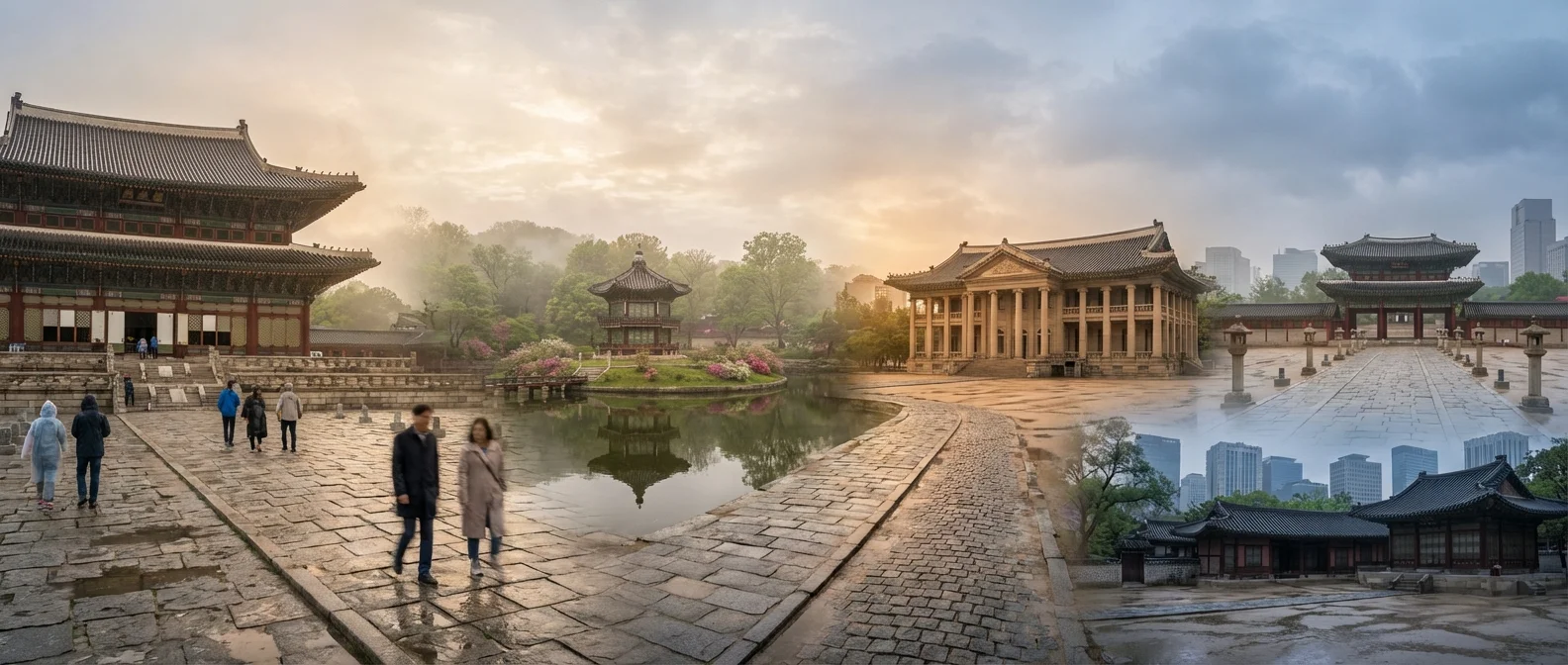
Below are the five palace picks from the Seoul area that most travelers build around—plus how to choose based on what you actually want to do.
1) Gyeongbokgung (경복궁): The grand, iconic must-see
Gyeongbokgung is the main palace of the Joseon Dynasty and the one most people picture when they think “Korean palace.” It’s also the largest and most visually dramatic, with broad courtyards, major gates, and classic postcard angles.
Go here if you want:
- The most recognizable palace photos
- Big open spaces, strong symmetry, and a “capital city palace” feel
- A first palace that sets context for everything else
Potential downside: Because it’s the most famous, it can be the busiest. If crowds stress you out, go right at opening or later in the day rather than mid-afternoon.
2) Changdeokgung (창덕궁): UNESCO heritage + the famous garden
Changdeokgung is a UNESCO World Cultural Heritage site and known for its beautiful rear garden (Huwon). Compared with the grand openness of Gyeongbokgung, Changdeokgung often feels more integrated with nature and topography.
Go here if you want:
- A palace that feels “lived in” and landscape-oriented
- A UNESCO site on your itinerary
- A calmer, more walking-focused visit
Plan-smart note: Some special areas and guided-style experiences may require separate procedures or reservations at times. If this palace is a priority, check current policies and availability early so you don’t arrive and find your preferred option sold out.
3) Changgyeonggung (창경궁): Spring blossoms + unique structures
Changgyeonggung is beloved for spring scenery and is known as a cherry blossom spot, and it also has distinctive features such as the Daeonwon greenhouse (대온실), which gives it a slightly different atmosphere than the other palaces.
Go here if you want:
- Seasonal beauty, especially in spring
- A palace visit that feels a bit different from the “standard” layout
- A less overwhelming option to pair with another palace nearby
Best pairing: Many travelers connect Changgyeonggung with Changdeokgung because of location and vibe—great for a “palace day” with minimal transit time.
4) Deoksugung (덕수궁): Where traditional meets Western-style
Deoksugung stands out for the way Western-style architecture harmonizes with traditional palace elements, with Seokjojeon (석조전) being the most famous example.
Go here if you want:
- A palace that shows Korea’s historical transitions visually
- A compact visit that still feels substantial
- A mix of architectural styles in one place
Time-saving tip: If you’re tight on time, Deoksugung can be a high-impact stop because it’s often easier to “do well” in a shorter window compared with the largest palace grounds.
5) Gyeonghuigung (경희궁): Smaller, quieter, historically meaningful
Gyeonghuigung is smaller in scale but carries deep historical significance. It’s a good option if you’re palace-curious but want something less crowded and less “mainstream,” or if you’re building a relaxed itinerary with breathing room.
Go here if you want:
- A lower-key palace experience
- A meaningful stop without the biggest crowds
- An easy add-on rather than the main event
Reality check: Because it’s smaller, don’t expect the same “wow” factor as Gyeongbokgung. Think of it as a calm chapter, not the whole book.
Ticket Basics: Single Admission, Integrated Pass, and Hanbok Free Entry
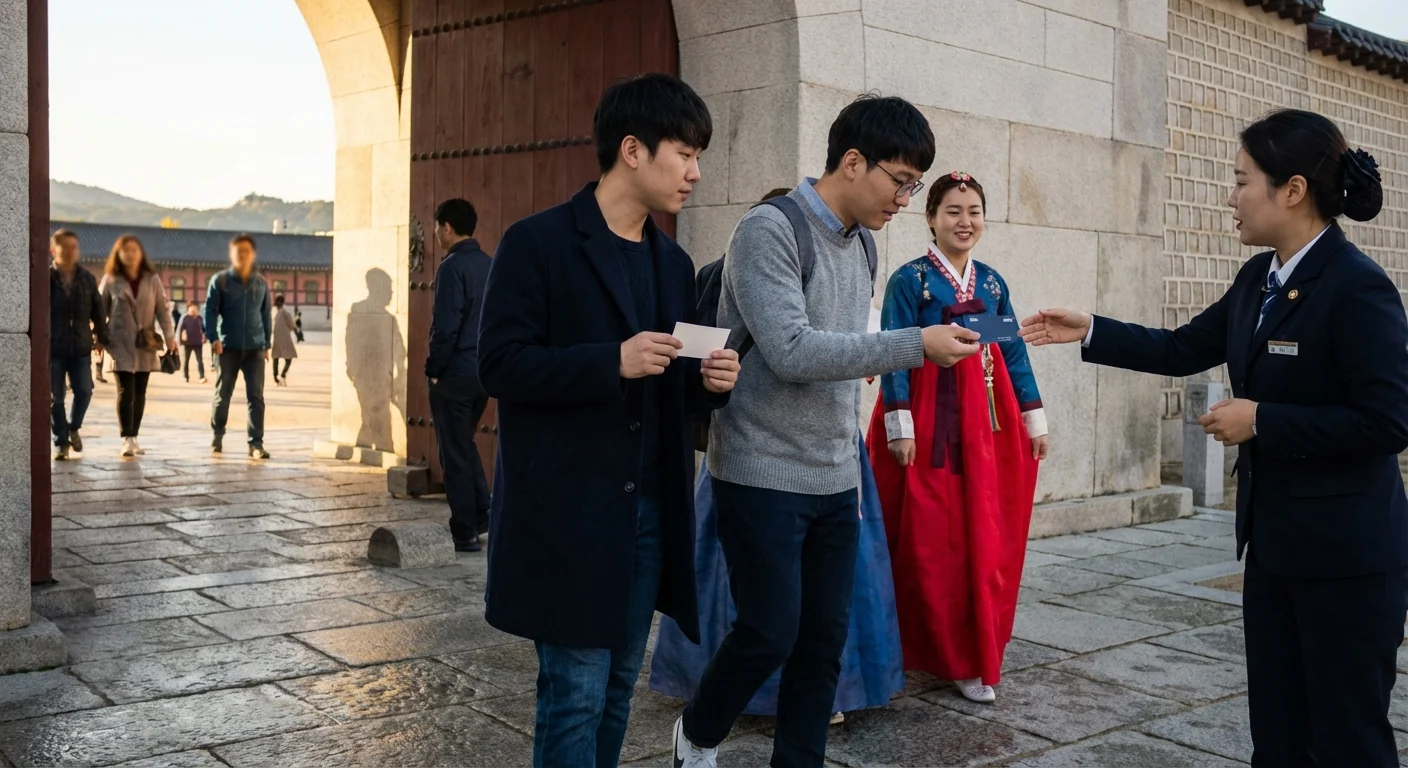
Tickets are straightforward once you know the three big options: single admission, the integrated pass, and free entry with hanbok. Your cheapest choice depends on how many palaces you’ll visit and whether you plan to wear hanbok.
Single admission (one palace)
According to the research summary, adult admission is generally in the ₩1,000–₩3,000 range (typical range; check current prices), depending on the palace. This is the simplest option if you’re only visiting one palace and you’re not wearing hanbok.
Best for:
- Travelers visiting just one palace
- People who want maximum flexibility without planning multiple stops
Integrated pass (multiple sites)
There is an integrated ticket that covers Gyeongbokgung, Changdeokgung, Changgyeonggung, Deoksugung, and Jongmyo, with a price around ₩10,000 in the research summary. Since pricing and inclusions can change, treat this as around ₩10,000 (typical; check current prices), as of 2025/2026.
How to decide if it’s cheaper:
- If you’ll visit several palaces (and possibly Jongmyo), the integrated pass is often the better value than paying individual admissions.
- If you’ll only visit one palace, single admission is usually cheaper.
Planning tip: The pass only helps if you genuinely have the time and energy to visit multiple sites. Don’t buy it “because it’s a deal” if your schedule only comfortably fits one palace and a museum or café afternoon.
Hanbok free entry
A major cost-saver: visitors wearing hanbok can enter for free (based on the research summary). This can flip your entire budget logic.
What this means for decision-making:
- If you plan to wear hanbok, you might not need an integrated pass at all.
- If your group is split (some wearing hanbok, some not), compare options: it may still be worth getting an integrated pass for the non-hanbok visitors if you plan multiple palaces.
Budget note: Hanbok rental pricing varies widely by shop and season, so it’s best to compare deals and check current prices close to your travel dates (as of 2025/2026). Also factor in the time cost: changing outfits and returning rentals can take a meaningful chunk of your day.
Tips for First-Time Visitors (Timing, Routes, Photos, Etiquette)
Your palace day goes best when you treat it like a light hike plus a cultural site—not like a quick “attraction stop.”
Timing: when to arrive (and when to avoid)
- Best time: arrive at opening for cooler temperatures, fewer crowds, and cleaner photo backgrounds.
- Second-best time: late afternoon for softer light and a more relaxed pace.
- Most crowded: midday, especially in peak seasons.
If you only do one palace in your whole trip, plan your morning around it. The difference in crowd levels can be huge.
Simple route strategy (so you don’t backtrack)
A common first-timer mistake is wandering without a plan, then realizing you missed key halls and have to retrace steps.
- Start with the main gate area and central axis first (the most iconic views are usually here).
- Then branch into side courtyards and quieter paths.
- Finish with garden-like areas if the palace has them, so your visit ends on a calm note.
If you’re visiting two palaces in a day, pair ones that are geographically close and similar in “walking style,” so you’re not doing maximum steps twice.
Photography tips (without breaking rules)
Palaces are a dream for photos, but a few practical rules keep things smooth:
- Indoor exhibition spaces may prohibit photography. Follow on-site signs and staff instructions.
- For the best photos, prioritize:
- early morning light
- side angles (not only straight-on shots)
- details: rooflines, painted patterns, door hardware, stone paths
- If you’re wearing hanbok, consider going early. You’ll get more elegant shots without crowds behind you.
Etiquette: how to be a respectful visitor
- Keep voices low in enclosed or ceremonial areas.
- Don’t climb on structures or lean on fragile wooden elements.
- Stay on marked paths where indicated (especially near landscaped areas).
- Be mindful of others’ photos—palace visits are a shared experience.
Small gestures matter here: a calm pace and spatial awareness make you feel more connected to the site—and make everyone’s visit better.
What to Know Before You Go (Hours, Closed Days, Reservations, Accessibility)
This is where most trip plans go wrong: people assume “a palace is a palace” and show up without checking operations. In reality, hours, last entry times, and closed days can differ by palace, and they can change by season or special events.
Hours & closed days: always verify
From the research summary: check opening hours and closed days in advance. Build your schedule around confirmed operating times, not guesses.
Decision-making tip: If your trip has only one palace day, verify hours twice—once when planning and again the day before. If something is closed, swap in another palace rather than losing the whole day.
Reservations: when you might need them
Some special viewing areas, guided programs, or interpretive experiences may require advance reservations (the research summary notes this possibility). This is most relevant when a site has a high-demand garden component or timed entry.
What to do:
- Decide your must-have experiences (for example, “I really want the garden portion”).
- If reservations apply, book as early as practical.
- If you can’t get a slot, go anyway—but adjust expectations and focus on the main palace grounds.
Accessibility & comfort planning
Even without exact facility details, you can plan realistically:
- Wear comfortable shoes—palace grounds involve a lot of walking on stone, packed earth, and uneven surfaces.
- Summer: bring sun protection (hat, sunscreen) and water.
- Winter: bring warm layers; open courtyards can feel colder than city streets.
If you’re traveling with someone who has mobility considerations, consider choosing a palace that’s easier to navigate in a shorter visit (often a more compact site) and prioritize the most accessible paths you see on-site.
Season-by-Season Palace Experience: Spring Blossoms to Winter Snow
The best “time to go” depends on what you want to feel and photograph. Korea’s palaces change dramatically with the seasons, and your strategy should change too.
Spring (March–May): blossoms + peak vibes
Spring is famous for flowers and mild weather. According to the research summary, it’s a prime time to enjoy palace beauty with cherry blossoms, and Changgyeonggung is particularly well known for spring blooms.
How to do spring well:
- Go early to avoid crowds and get clearer photos.
- If you want blossom scenery, build flexibility into your itinerary—blooms can peak earlier or later than expected.
- Consider pairing a palace visit with a relaxed café break rather than trying to stack too many sites in one day.
Summer (June–August): heat management is everything
Summer can be hot and humid. The research summary recommends visiting in the morning or late afternoon.
Your summer success checklist:
- Aim for opening time, then retreat indoors midday (museum, café, shopping).
- Bring sun protection and water.
- Choose one main palace rather than trying to “collect” all of them under the sun.
Autumn (September–November): the most photogenic season
Autumn is known for beautiful fall foliage across palace grounds (from the research summary). It’s often the best balance of comfortable temperatures and dramatic scenery.
How to do autumn well:
- Plan at least one palace visit specifically for leaf color photos—wide courtyards plus colorful trees can be stunning.
- Weekdays are your friend. If you can shift your palace day off the weekend, you’ll feel the difference.
Winter (December–February): quiet, crisp, and magical with snow
Winter is all about atmosphere. The research summary highlights the unique scenery of snow-covered palaces, with the reminder to dress warmly.
How to do winter well:
- Dress in layers; courtyards can be windy.
- If snow falls, go as soon as you can safely—fresh snow creates the most dramatic contrast in photos.
- Expect fewer crowds, which can make the experience feel more personal and contemplative.
Easy 1-Day and 2-Day Palace Itineraries in Seoul
These itineraries are designed to be realistic—meaning you’ll still have energy for food, neighborhoods, and spontaneous discoveries.
1-Day Palace Itinerary (iconic highlights without rushing)
Goal: See Seoul’s palace culture at its most recognizable, with a second site if you still feel fresh.
Option A: The classic first-timer day
- Morning: Gyeongbokgung (arrive at opening for the best experience)
- Midday: Lunch + indoor break (especially important in summer)
- Afternoon: Deoksugung for a shorter, contrasting visit (traditional + Western-style architecture)
Why this works: You get the “grand Joseon palace” feel first, then a different architectural story later without overloading your legs.
Ticket decision:
- If you’re only doing these two palaces, compare the integrated pass (around ₩10,000; check current prices, as of 2025/2026) versus paying two single admissions (typically within the ₩1,000–₩3,000 adult range per palace; check current prices).
- If you’re wearing hanbok, free entry may make single-site planning more cost-effective.
Option B: The garden-and-blossom style day
- Morning: Changdeokgung (prioritize any reservation-only components first, if applicable)
- Afternoon: Changgyeonggung (especially rewarding in spring)
Why this works: You keep your route compact and cohesive—more strolling, less commuting.
2-Day Palace Itinerary (see more, enjoy more)
Goal: Cover multiple palaces at a comfortable pace, with time to appreciate details.
Day 1: Big icons + city energy
- Morning: Gyeongbokgung (opening time)
- Afternoon: Deoksugung (shorter visit; great contrast)
Day 2: UNESCO + seasonal atmosphere
- Morning: Changdeokgung (plan ahead if reservations apply)
- Afternoon: Changgyeonggung (especially in spring or autumn)
- Optional add-on if you have energy: Gyeonghuigung for a quieter final stop
Ticket decision:
If you’re doing three to four palaces across two days, the integrated pass often becomes the simplest choice (and may be cheaper than multiple single admissions), while hanbok free entry can still beat everything if your group is committed to renting and wearing it. Either way, check current prices and choose based on your real schedule rather than an idealized plan.
Budget expectations (palace entries only)
Using the research summary ranges (and keeping things flexible as of 2025/2026):
- Single-palace visit: typically ₩1,000–₩3,000 adult admission (check current prices)
- Multi-site approach: integrated pass around ₩10,000 (typical; check current prices)
- Hanbok plan: potentially free palace entry, but budget separately for hanbok rental (typical range varies; compare deals and check current prices)
A practical approach is to decide your “palace count” first, then pick the ticket strategy that matches it—rather than buying a pass and forcing yourself into an exhausting schedule.
Korea’s palaces reward slow travel, so pick the sites that match your interests, plan around opening hours and seasons, and you’ll leave with memories that feel genuinely personal and alive.
FAQ
Q: Which palace should I visit first if I only have half a day?
Start with Gyeongbokgung for the most iconic scale and photo spots, then add a nearby stop like Changdeokgung or Bukchon depending on timing.
Q: Do I need to reserve in advance for any palace areas?
Some special areas and guided programs (notably Changdeokgung’s Huwon/Secret Garden-style visits) may require timed entry or reservations—check the official site before you go.
Q: What’s the best time of day to avoid crowds and heat?
Arrive at opening time for quieter courtyards and cleaner photos; in summer, aim for early morning or late afternoon to avoid peak heat.
Q: Is the integrated palace ticket worth it?
It’s usually worth it if you plan to visit 3+ sites included in the pass (commonly the major palaces plus Jongmyo). If you’ll only visit 1–2, single tickets may be better.
Q: Can I enter for free if I wear a hanbok?
Many palace sites offer free admission to visitors wearing hanbok, but exact conditions can vary—confirm on-site rules and any exclusions for special exhibits.
Q: What are common mistakes first-time visitors make?
Not checking weekly closure days, arriving too late for last entry, wearing uncomfortable shoes for gravel paths, and missing photo/filming restrictions inside certain buildings.
What you can do next
Pick just one action from this guide and do it today—small steps add up.