Seoul City Tour Bus 2026: How to Book Tickets, Routes, and Prices
Quick Info
- 📍 Area: Seoul (Gwanghwamun and central city highlights)
- 🕒 Best time: Clear spring/fall days; night route on dry evenings
- 💰 Budget: ₩27,000 adult / ₩17,000 child per course (typical)
- 🚇 Getting there: Subway to Gwanghwamun Station for ticket booth; hop-on style city touring
- 👥 Best for: First-timers, short-stay travelers, families, photographers
- ✅ TL;DR: Reserve online in advance (same-day online not available). If you need same-day, buy at Gwanghwamun booth early—weekends sell out.
Before you dive in
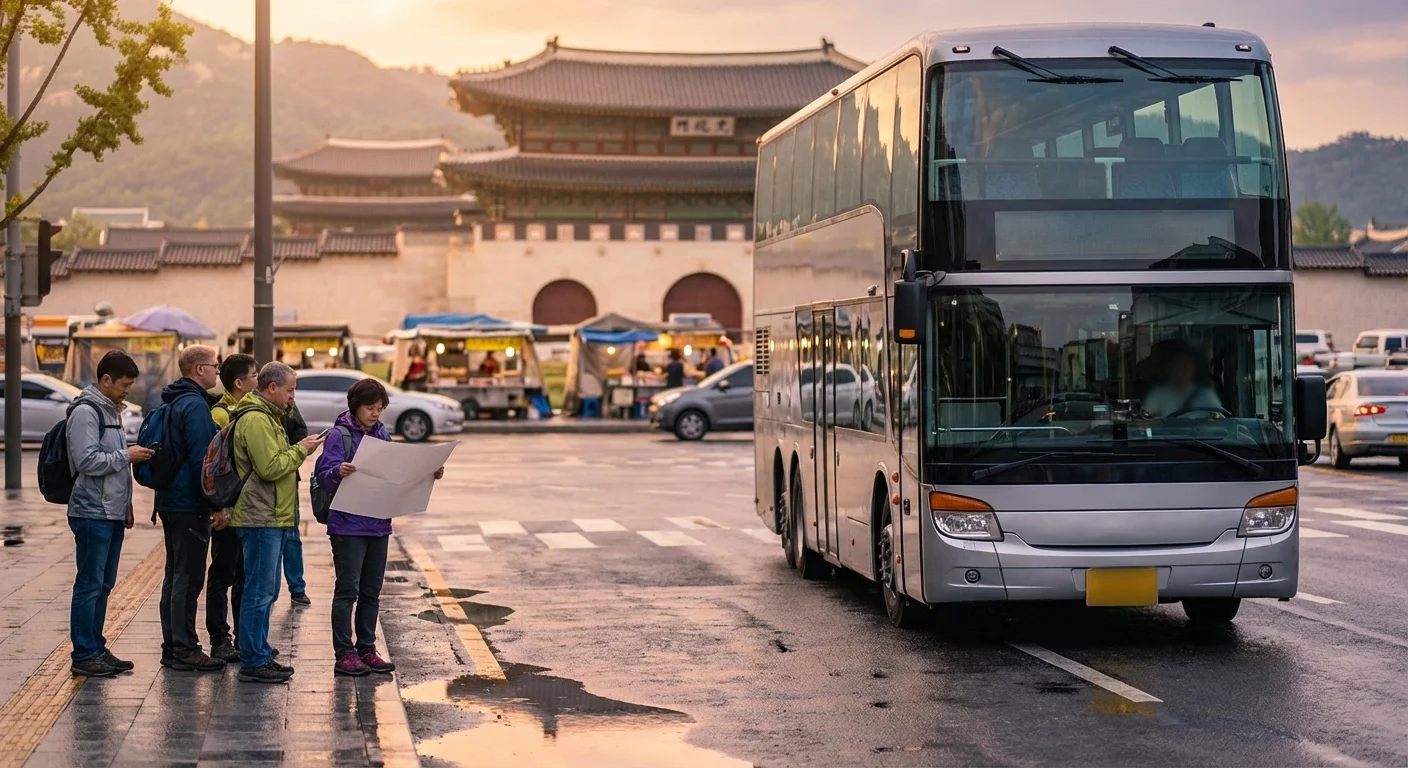
If any part of this guide feels useful, take 10 seconds to bookmark it.
If you’re visiting Seoul in 2026 and want a simple, low-stress way to see the city’s headline sights, the Seoul City Tour Bus is one of the most practical options. It’s designed for travelers who want to connect major attractions—palaces, shopping streets, viewpoints, and riverside scenery—without constantly navigating the subway map or juggling multiple taxi rides.
The main draw is the open-top double-decker experience: you get an elevated view of Seoul’s mix of modern skylines and royal-era landmarks, plus an onboard audio guide in multiple languages to keep the scenery from turning into “pretty buildings with no context.” It’s also a solid choice for short stays, jet-lag days, families, and anyone who’d rather sightsee than plan logistics.
This guide focuses on the essentials for decision-making: where to book (and what’s actually possible), whether online or on-site is better for your schedule, typical prices and budget planning, the two flagship routes (Downtown Palace vs. Night View), and the key rules and tips that prevent common mistakes.
Where to Book 서울 시티투어 버스 예약 방법 Tours and Tickets
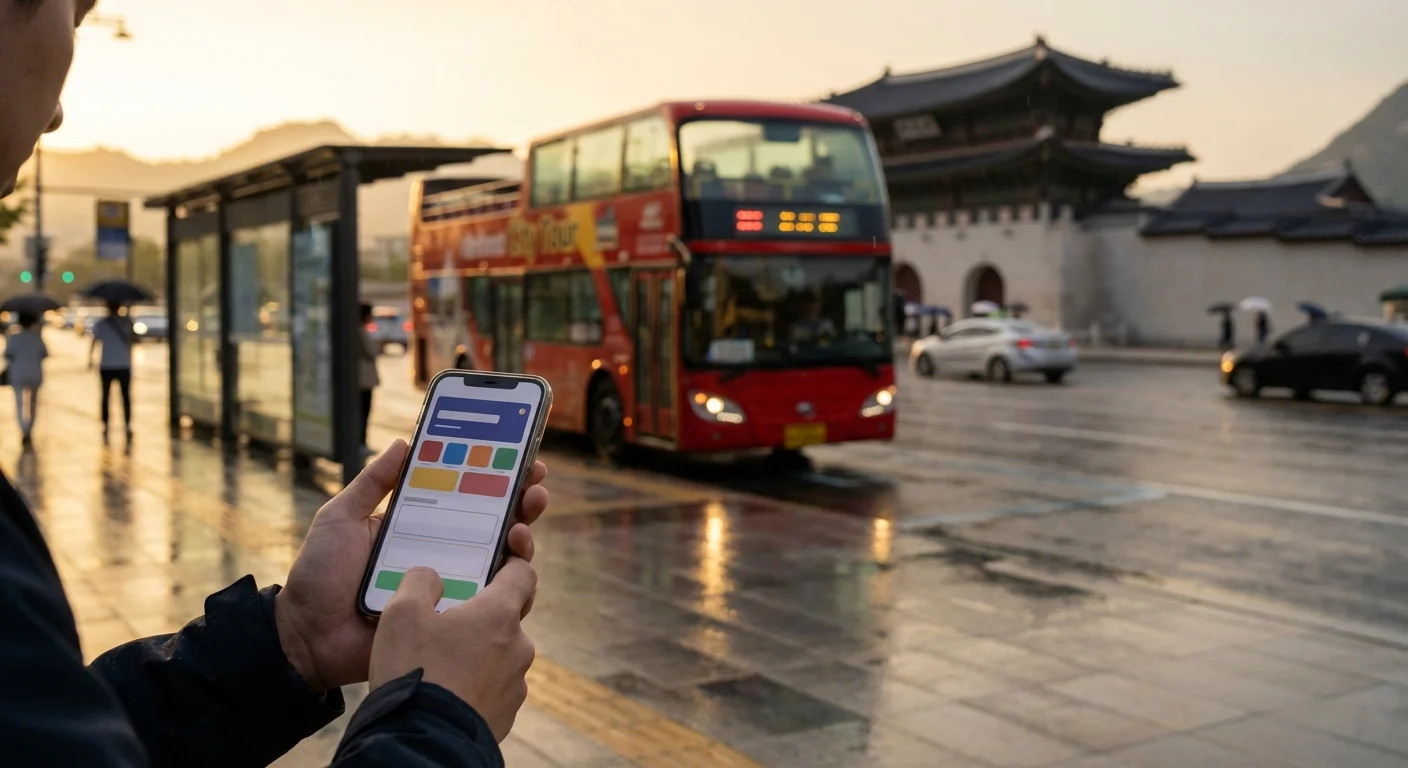
You have two realistic booking channels: online reservation or on-site purchase at a ticket office. Which one you should choose depends less on “saving money” and more on locking in a seat and avoiding disappointment—especially on weekends and during peak travel periods.
Option 1: Online reservation (recommended for planning and peace of mind)
Online booking is the best fit if:
- You’re traveling during a busy season (spring blossoms, autumn foliage, long weekends).
- You have a tight itinerary and need certainty.
- You want to choose a specific date and course ahead of time.
From the operator’s guidance, advance booking is required online and same-day online booking isn’t available, so treat online reservations as something you do at least a day ahead. If you tend to decide plans at breakfast based on weather, this matters.
Decision tip: Use online reservations to “protect” your top choice (especially the Night View course). Then keep your daytime plans flexible around it.
Option 2: On-site purchase at the Gwanghwamun Station ticket office
On-site purchase can work if:
- You prefer spontaneity.
- You’re nearby and want to ride that day.
- Online reservation windows are closed for your date.
However, the key trade-off is availability: weekends and event periods can sell out. If you’re counting on a specific departure time (or you’re traveling with a group), you’ll want to contact or check availability in advance rather than assuming you can just walk up.
Decision tip: On-site is convenient, but it’s not a guaranteed backup plan in peak periods. If this tour is a “must-do,” reserve in advance and avoid building your day around a maybe.
What to avoid
- Assuming you can book online the same day. The online system generally requires advance reservation, so don’t leave it until the last minute.
- Treating the ticket office like a guarantee. It’s a possibility, not a promise—especially on weekends.
Step-by-Step: Online Reservation vs. On-Site Ticket Purchase
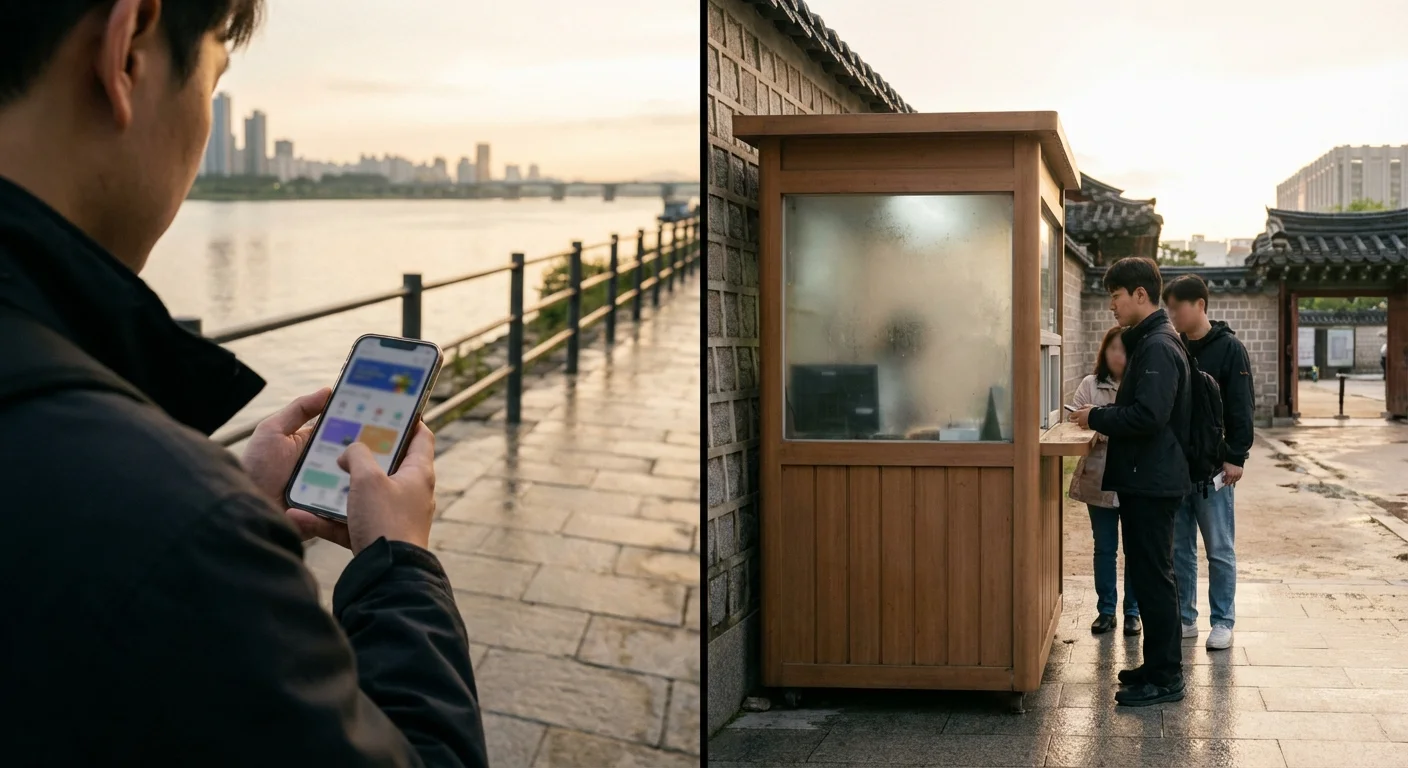
Here’s how to choose and execute each method without the common pitfalls.
Online reservation: step-by-step
-
Choose your course first (Downtown Palace or Night View).
Your choice affects not just what you see, but also what to wear and how you plan meals (more on that later). -
Pick a date that avoids the closure day.
The service has a weekly closure on Mondays (with a shift when Monday is a public holiday—details below). Before you get attached to a date, confirm operations for that week. -
Reserve early for weekends and popular months.
Seats can fill quickly. If you’re visiting in a high-demand period, book as soon as your travel dates are firm. -
Double-check the departure area and boarding instructions.
Seoul is busy and intersections around major landmarks can be confusing. Give yourself buffer time to locate the stop and queue. -
On the day, arrive early for better seats.
Even with a reservation, boarding order and timing can affect seat choice on an open-top bus.
When online is the better choice:
- You’re traveling with family or a group.
- Your schedule is packed and you need predictability.
- The Night View course is your priority.
On-site ticket purchase: step-by-step
-
Go to the ticket office at Gwanghwamun Station.
This is the primary on-site purchase point mentioned in the operating guidance. -
Ask about the next departures and availability.
Don’t assume the bus you want has seats—especially on weekends or during festivals. -
Confirm the route you’re buying.
“City tour bus” can refer to multiple services in big cities; make sure you’re purchasing the course you intend (Downtown Palace vs. Night View). -
Board early if you want the best photo-friendly seats.
Seat quality matters a lot on open-top buses; the difference between “great skyline photos” and “mostly the back of someone’s head” can be timing.
When on-site is the better choice:
- You’re flexible and okay with whichever departure has availability.
- The weather is uncertain and you prefer last-minute decisions.
- You’re already near Gwanghwamun and want an easy add-on activity.
Which option is cheaper?
The research summary doesn’t indicate that online is cheaper than on-site (or vice versa). In practice, the bigger “cost” is missing out due to a sell-out. If the tour is important to your trip, the safer value is booking ahead and avoiding the risk of having to replace it with pricier last-minute alternatives.
Typical Prices & Budget Examples

Prices can change year to year, so for planning purposes it helps to think in ranges and then check current prices close to your travel date.
Ticket price expectations
Based on the provided fare information, the Seoul City Tour Bus is typically priced in the mid-range for a city attraction: more than a single museum ticket, less than a full-day private tour.
- Adults: typically around ₩25,000–₩30,000 (as of 2026/2027; check current prices)
- Children (roughly ages 6 through high school): typically around ₩15,000–₩20,000 (as of 2026/2027; check current prices)
These ranges align with the published adult and child fares in the research summary, while leaving room for seasonal updates or fare revisions.
Budget examples (all ranges, as of 2026/2027)
Your real cost depends on what you pair the bus with—palace entry, coffee stops, shopping, and how you move before/after the tour.
-
Budget travelers: ₩35,000–₩70,000 for a day
Includes one city tour bus ticket (adult) plus simple meals/snacks and a couple of transit rides. You’ll keep costs down by doing free viewpoints and limiting paid attractions. -
Mid-range travelers: ₩70,000–₩150,000 for a day
Includes the bus ticket plus paid attraction entries (like palaces or museums), café breaks, and possibly a nicer dinner—especially if you do the Night View course. -
Families (2 adults + 1 child): ₩80,000–₩160,000 just for tickets and basics
Add meals, attraction entries, and souvenirs and this can climb quickly—so it’s smart to plan where you’ll eat before boarding, since onboard eating isn’t allowed.
Decision tip: If you’re torn between routes, budget extra for the Night View day. Evening plans tend to add “invisible costs” like dinner, dessert cafés, or taxis home.
Routes Overview: Downtown Palace Course vs. Night View Course
Seoul’s city tour bus experience is really two experiences: one that’s best for history and daytime sightseeing, and one that’s best for mood and skyline views.
Downtown Palace Course (도심고궁코스)
This route is built around the classic Seoul highlights—royal palaces and central landmarks—and it’s ideal if you want your photos to include gates, tiled rooftops, and a sense of the city’s historical layers.
Who it’s best for:
- First-time visitors who want an efficient “Seoul 101.”
- Travelers interested in history, architecture, and cultural context.
- Anyone who wants easy connections to major central neighborhoods.
What you’ll like:
- Daylight makes it easier to appreciate palace details and city textures.
- The route suits a “hop-on, hop-off” style day if you want to stop, explore, then continue (confirm your ticket conditions when booking).
Potential downside:
- Midday crowds can be intense in peak seasons.
- Daytime heat or winter wind can be more noticeable on an open-top upper deck.
Decision tip: Pick this course if you want a structured overview and plan to walk around stops. It’s the most efficient way to orient yourself in central Seoul.
Night View Course (야경코스)
The Night View course is about Seoul’s after-dark personality—lit bridges, glowing towers, and skyline contrast. It’s a great option when you’ve already seen palaces (or you’re not palace-focused) and want a “Seoul at night” memory without planning a complex multi-stop route.
Who it’s best for:
- Couples and photographers.
- Short-stay travelers who want a high-impact experience.
- Anyone who prefers cooler temperatures (especially in summer evenings).
What you’ll like:
- City lights make the ride feel cinematic.
- The open-top deck is especially satisfying at night when the air is cooler and the city looks expansive.
Potential downside:
- Weather matters more. Haze, rain, or strong wind can reduce visibility and comfort.
- You’ll want to plan your dinner timing carefully because eating on the bus isn’t allowed.
Decision tip: If you’re choosing just one route and you love skyline views, prioritize Night View—but reserve early, because it’s often the one people build their evening around.
Timetable, Frequency, and Weekly Closures (Mondays)
This is the section that saves trips. Even travelers who book perfectly sometimes miss the experience because they didn’t align the operating calendar with their itinerary.
Weekday operating pattern
- First bus: 9:30
- Last bus: 16:50
- Frequency: every 40 minutes
These times are particularly relevant if you plan to hop off for a palace visit and hop back on later. The last departure time also means you should avoid starting too late in the afternoon if you want a relaxed ride.
Weekend & public holiday operating pattern
- First bus: 9:20
- Last bus: 16:50
- Frequency: every 30 minutes
Weekends offer better frequency, but also higher demand. If you’re trying for prime seats on the top deck, arrive early even if your departure time feels “not that busy.”
Weekly closures (important)
- Regular closure: every Monday
- If Monday is a public holiday: closure shifts to Tuesday
Decision tip: If your Seoul itinerary starts on a Monday, plan your palace visits and walking neighborhoods that day, and schedule the city tour bus for Tuesday onward.
Practical planning scenarios
- If you only have one full day: prioritize the course you care about most and arrive early for boarding.
- If you have two days: do Downtown Palace first to get oriented, then Night View later for atmosphere and contrast.
- If you’re visiting in winter or peak summer: consider how the open-top experience will feel at different times of day; comfort can be as important as the route itself.
Always check current operating times close to your travel date, especially around festivals or city events.
Money-Saving Tips
The Seoul City Tour Bus is already a convenience purchase—what you’re really buying is time, reduced navigation stress, and curated coverage. That said, you can keep your overall day affordable with a few smart choices.
Reserve early to avoid costly Plan B options
When tours sell out, the replacement plan is often more expensive: multiple taxi rides, last-minute paid tours, or rushed point-to-point transport. Booking ahead can be the cheapest choice indirectly, because it prevents “panic spending.”
Choose the route that matches your priorities (not just your schedule)
- If you care about palaces and cultural sites, the Downtown Palace course can reduce transit and decision fatigue.
- If you care about skyline photos, the Night View course can replace multiple viewpoint hops that might otherwise require extra transport.
The best value is the route that prevents you from duplicating costs elsewhere.
Plan meals around the ride (because you can’t eat onboard)
Since food and drinks aren’t allowed onboard, you’ll save money (and stress) by:
- Eating a proper meal before boarding.
- Packing a snack for after you get off.
- Planning café stops at or near major stops—so you’re not buying overpriced convenience food out of urgency.
Use free viewpoints and walking stops
Seoul has plenty of areas where the “attraction” is simply being there: scenic streets, plazas, riverside walks, and neighborhood lanes. Pair your bus ride with free or low-cost stops to keep the day within budget.
Compare options if you’re traveling with a group
If you’re a solo traveler, the tour bus often feels like good value. For a group, it depends on your pace:
- A group that wants to stop frequently may get more value from a structured bus route.
- A group that wants to linger in one neighborhood might be better served by focusing on a few areas and using transit.
Before committing, compare the bus plan to the cost of your likely alternative transport and how much time you’d spend navigating.
Best Seats, Weather Prep, and Onboard Rules (Audio Guide, No Food)
A few small choices make the difference between “fun and scenic” and “uncomfortable and inconvenient.”
Best seats for views and photos
- Upper deck, very front: usually the most panoramic view and best for wide shots.
- Upper deck, side seats: great for street-level city scenes and landmark passing shots.
If your priority is photography, arrive early and be ready to board promptly. On busy days, the top deck prime spots go first.
Weather prep: what to bring for comfort
Because it’s an open-top bus, you’ll feel the weather directly.
- Evenings: Bring a light jacket or thin outer layer. Even in warmer months, temperature drops and wind can make it feel colder than expected.
- Sunny days: Sunglasses and sun protection help, especially on the upper deck.
- Windy days: Secure hats and loose items.
- Rainy days: The operator may provide rain gear or switch to an indoor vehicle depending on conditions, but your comfort still improves if you’re prepared.
Decision tip: If the forecast is borderline, Night View is more sensitive to visibility. A clear day usually delivers a much better night panorama.
Onboard rules to know before you board
- No eating or drinking onboard. Plan your meals and coffee stops accordingly.
- Audio guide available in 12 languages. This is a major value-add if you want context while passing landmarks. Bring wired or compatible audio accessories if required by the system used on the day, and consider having a backup like your phone notes for place names in case it’s busy or you miss an explanation.
Common mistakes (and how to avoid them)
-
Mistake: Trying to book online on the same day.
Fix: Decide your route and date early and reserve in advance. -
Mistake: Forgetting Monday closures.
Fix: Build your itinerary with Mondays as walking/museum days, and put the bus on another day. -
Mistake: Dressing for street-level weather, not open-top wind.
Fix: Add one layer more than you think you need, especially for night rides. -
Mistake: Counting on buying tickets on-site during peak times.
Fix: If it’s a must-do, reserve; if it’s optional, arrive early and have a backup plan.
Seoul is a city that rewards both planning and spontaneity, and the Seoul City Tour Bus lets you combine the two—reserve your seat, show up prepared for the weather, and enjoy the ride with the confidence that you’re seeing the best of the city efficiently and comfortably.
FAQ
Q: Can I book the Seoul City Tour Bus online on the same day?
Online booking requires advance reservation; same-day online reservations aren’t available. For same-day use, buy a physical ticket at the Gwanghwamun ticket booth.
Q: Where do I buy tickets on-site and what’s the risk?
You can purchase at the Gwanghwamun Station ticket booth, but seats can sell out on weekends or during events—arrive early or call ahead if possible.
Q: How much are the tickets for the main routes?
Typical fares are ₩27,000 for adults and ₩17,000 for children (about age 6 through high school) for both the Downtown Palace route and the Night View route.
Q: Is the bus running every day, and when is it closed?
It operates most days but is regularly closed on Mondays. If Monday is a public holiday, the closure shifts to Tuesday.
Q: What are the first/last bus times and frequency?
Weekdays: first 9:30, last 16:50, about every 40 minutes. Weekends/holidays: first 9:20, last 16:50, about every 30 minutes.
Q: Are there extra costs or rules onboard (food, audio guide, rain)?
Food and drinks are not allowed onboard. An audio guide is available in 12 languages. In rain, ponchos may be provided or service may switch to an indoor vehicle.
What you can do next
Pick just one action from this guide and do it today—small steps add up.